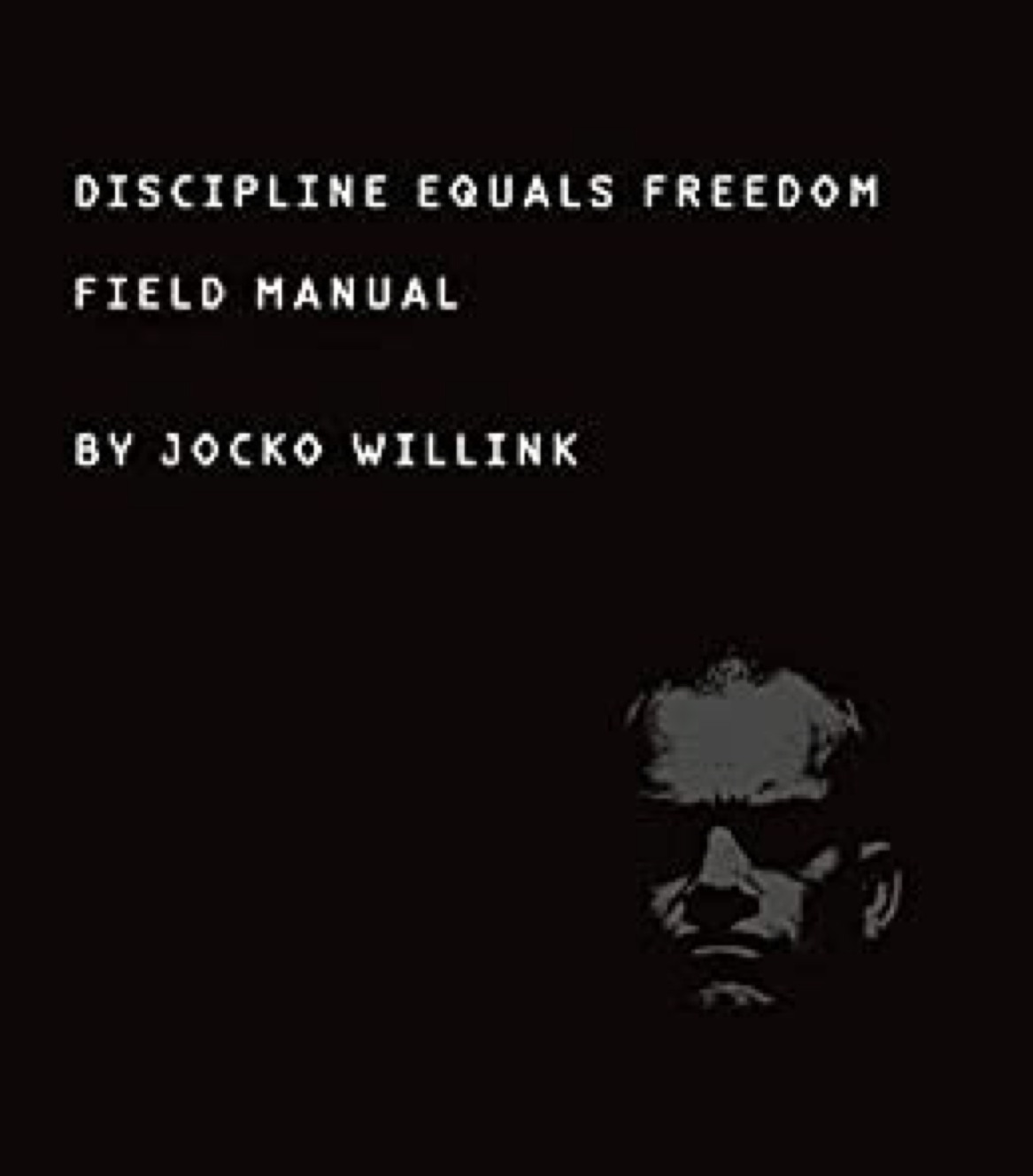
Discipline Equals Freedom: Field Manual
Applying the lessons from "Discipline Equals Freedom: Field Manual" by Jocko Willink to your life can be a transformative catalyst for peak performance across every professional and personal domain. Here are some ways you might integrate these lessons:
-
Execute Extreme Ownership in Leadership: - As a leader in healthcare or venture capital, you must adopt the mindset that there are no bad teams, only bad leaders. When a project fails or a medical outcome is suboptimal, you should look first at your own instructions and oversight rather than blaming subordinates. This builds a culture of absolute accountability where your team feels supported and clear on their mission objectives.
-
Prioritize Physical Readiness for High-Stakes Roles: - Whether you are in the cockpit of an aircraft or the high-pressure environment of the emergency department, your physical stamina directly impacts your cognitive function. By maintaining a rigorous, non-negotiable fitness routine, you ensure that fatigue does not compromise your decision-making abilities during critical moments when lives or significant capital are at stake.
-
Leverage the 4:30 AM Strategy for Strategic Focus: - In a life filled with disparate roles—physician, attorney, entrepreneur—time is your most scarce resource. By rising before the world, you create a dedicated "black box" of time for deep work, whether that is reviewing legal documents, analyzing investment decks for Xcellerant Ventures, or writing. This discipline ensures your most important work happens before the tactical noise of the day begins.
-
Apply the "Good" Mentality to Entrepreneurial Setbacks: - In the volatile world of healthcare startups, things will inevitably go wrong—funding will fall through, or regulations will change. Instead of reacting with frustration, adopt the "Good" mindset. A failed acquisition is an opportunity to refine your model; a delayed product launch is a chance to improve quality. This stoic detachment allows you to remain a calm, stabilizing force for your organizations.
-
Systematize Your Health with Dietary Discipline: - View your nutrition as a critical component of your professional gear rather than a source of entertainment. By removing the decision-making process regarding "what to eat" and sticking to a strict fuel-based protocol, you eliminate decision fatigue. This discipline ensures you have the sustained energy required for long shifts or marathon board meetings without the crashes associated with poor nutritional choices.
-
Detaching from Chaos to Maintain Tactical Awareness: - In both law and medicine, it is easy to become overwhelmed by the volume of information. Practice the discipline of detaching—stepping back mentally to see the whole picture. This allows you to prioritize the most critical tasks and lead your team through the chaos with clarity and purpose.
By integrating these lessons, you move beyond the search for motivation and instead rely on a hardened system of self-regulation. This approach doesn't just improve your efficiency; it creates a standard of excellence that permeates your law practice, your medical work, and your leadership at Xcellerant Ventures. Ultimately, you prove to yourself and your peers that freedom is not found in the absence of structure, but in the mastery of it.
What the book covers
"Discipline Equals Freedom: Field Manual" by Jocko Willink is a stark, visually aggressive manifesto on the necessity of self-control as the foundation for personal autonomy. It distills the hard-earned wisdom of a former Navy SEAL commander into a guide for overcoming procrastination, weakness, and excuses. The book serves as both a philosophical primer on the warrior mindset and a practical manual for physical and mental optimization, asserting that true liberty is only found through rigorous structure. By removing the fluff of traditional self-help, Willink presents a direct, uncompromising path toward peak performance.
Summary:
-
The Core Philosophy of Discipline: - Willink posits that discipline is not a set of restrictive rules, but rather the essential framework that enables freedom in all areas of life. He argues that by mastering one's impulses and sticking to a rigorous schedule, an individual gains the time, health, and financial independence that most people only dream of possessing. - This philosophy demands a rejection of the "easy path" in favor of the "hard path" consistently. It suggests that every choice made throughout the day either moves you toward your goals or away from them, leaving no room for neutral ground in the pursuit of personal excellence.
-
Overcoming the Resistance: - The book addresses the psychological battle of procrastination and the internal voice that advocates for comfort and sloth. Willink emphasizes that motivation is fickle and unreliable; instead, one must rely on discipline to execute tasks regardless of emotional state, environmental conditions, or personal desire. - He introduces the concept of the internal struggle against laziness as a daily war. The solution provided is immediate action—or "getting after it"—which involves starting the most difficult tasks immediately upon waking up to build an unbreakable momentum for the remainder of the day.
-
The Pre-Dawn Advantage: - A significant portion of the manual focuses on the tactical advantage of waking up early, specifically at 4:30 AM. Willink argues that this provides a psychological win over the "enemy" and allows for uninterrupted focused work and physical training before the rest of the world begins its demands. - This early start is not just about time management; it is a daily exercise in discipline that proves to oneself that they are in control of their actions and their environment. It sets a tone of dominance and preparation that carries through high-stress situations.
-
Physical Optimization and Combat Fitness: - The text outlines a specific approach to physical fitness centered on functional strength, mobility, and metabolic conditioning. It stresses that a leader must be physically capable of handling any situation, advocating for movements like pull-ups, squats, and sprints over purely aesthetic bodybuilding. - Willink provides tiered workout programs to ensure that there are no excuses for physical weakness. He views the body as a machine that must be maintained through grueling effort to support the mental demands of leadership, business, and high-stakes decision-making.
-
The Warrior's Diet and Fueling: - Nutrition is presented as a matter of discipline rather than indulgence. Willink advocates for a diet high in protein and healthy fats while strictly eliminating sugar and refined carbohydrates, aligning with Paleo principles to maintain steady energy levels and cognitive clarity. - He suggests that food is fuel for the mission, and eating poorly is a sign of lack of discipline that will ultimately hinder performance. Fasting is also introduced as a tool to reset the body and regain control over hunger impulses, further reinforcing the mind's dominance over the body.
-
The "Good" Mentality and Resilience: - One of the book's most impactful concepts is responding to any setback or disaster with the word "Good." This reflects a mindset where every failure is seen as an opportunity to learn, improve, or find a better solution. - By detaching from the immediate frustration of a problem, an individual can maintain tactical awareness and find a way to win. This mental callousness allows the practitioner to endure suffering and remain effective when others would succumb to the pressure.
This book is a foundational text for anyone seeking to reclaim control over their time and health. It serves as a blunt reminder that there are no shortcuts to success, only the relentless application of self-discipline and the refusal to accept excuses from oneself.