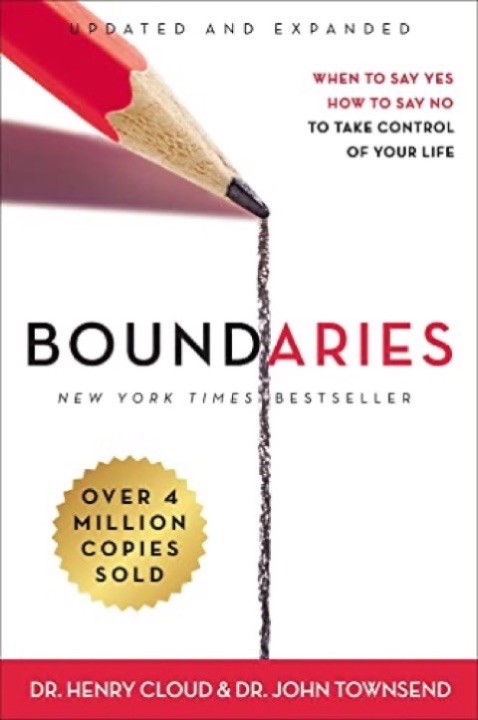
Boundaries, Updated and Expanded Edition: When to Say Yes, How to Say No to Take Control of Your Life
Applying the lessons from "Boundaries: When to Say Yes, How to Say No to Take Control of Your Life" by Dr. Henry Cloud and Dr. John Townsend can help you enhance various aspects of your life, given your unique experiences, beliefs, and values. Here are some ways you might apply these lessons:
-
Understanding and Setting Boundaries: - Reflect on areas in your life where boundaries might be lacking or could be strengthened, such as in your professional life, personal relationships, or even with yourself. Given your busy schedule and diverse interests, setting clear boundaries can help you manage your time and energy more effectively.
-
Saying No: - Practice saying no to commitments or activities that do not align with your core values or priorities. This can help you focus on what truly matters to you, like spending time with your family, pursuing your hobbies, or engaging in activism and advocacy work.
-
Responsibility and Ownership: - Use boundaries to clarify what you are responsible for and what you are not. This can prevent you from overextending yourself, especially in your professional life as a physician, where the demands can be high.
-
Healthy Relationships: - Apply the principles of boundaries to maintain balanced and respectful relationships with family, friends, and colleagues. This can be particularly useful in navigating complex dynamics, such as those with your children or in your advocacy work.
-
Overcoming Guilt and Fear: - Work on overcoming any guilt or fear associated with setting boundaries. Remember that establishing boundaries is not selfish; it is essential for your well-being and allows you to be more present and effective in your interactions with others.
-
Personal Growth: - Embrace the continuous process of setting and maintaining boundaries as part of your personal growth journey. This aligns with your mindset of being in a constant state of beta and aspiring to be a lifelong learner.
-
Spiritual Alignment: - Consider how your boundaries align with your spiritual beliefs and values. Although you do not adhere to organized religion, you can still ensure that your boundaries reflect your personal philosophy and ethical beliefs.
-
Handling Resistance: - Be prepared for resistance when you set new boundaries, whether from others or within yourself. Use the strategies from the book to address and overcome this resistance, ensuring that your boundaries remain intact.
By integrating these lessons into your life, you can achieve a greater sense of balance and fulfillment, allowing you to focus on what truly matters and continue living a life aligned with your values and aspirations.
What the book covers
"Boundaries: When to Say Yes, How to Say No to Take Control of Your Life" by Dr. Henry Cloud and Dr. John Townsend is a comprehensive guide on understanding and establishing healthy boundaries in various aspects of life. The book is designed to help readers identify and set limits in order to achieve a balanced and fulfilling life. Here is a thorough summary of the book, along with key takeaways and lessons:
Summary:
Introduction: The book begins by defining what boundaries are and why they are essential. Boundaries are described as personal property lines that define who we are and who we are not. They influence all areas of our lives, including physical, mental, emotional, and spiritual boundaries.
Part 1: What Are Boundaries? - Chapter 1: A Day in a Boundaryless Life: The authors illustrate a typical day in the life of someone who lacks boundaries, highlighting the chaos and stress that ensue. - Chapter 2: What Does a Boundary Look Like?: This chapter explains the concept of boundaries using metaphors like fences and gates, emphasizing the importance of having control over what we allow into our lives. - Chapter 3: Boundary Problems: The authors discuss common boundary problems, such as compliance, avoidance, control, and non-responsiveness, and how these issues manifest in relationships.
Part 2: Boundary Conflicts: - Chapter 4: How Boundaries Are Developed: This chapter explores how boundaries are formed during childhood and the impact of family dynamics on boundary development. - Chapter 5: Ten Laws of Boundaries: The authors outline ten principles that govern boundaries, such as the Law of Responsibility, the Law of Power, and the Law of Respect. - Chapter 6: Common Boundary Myths: This chapter debunks myths about boundaries, such as the belief that setting boundaries is selfish or that they hurt others.
Part 3: Developing Healthy Boundaries: - Chapter 7: Boundaries and Your Family: The authors discuss the importance of setting boundaries with family members to maintain healthy relationships. - Chapter 8: Boundaries and Your Friends: This chapter focuses on establishing boundaries in friendships to prevent manipulation and maintain mutual respect. - Chapter 9: Boundaries and Your Spouse: The authors provide guidance on setting boundaries in marriage to foster intimacy and partnership. - Chapter 10: Boundaries and Your Children: This chapter emphasizes the role of boundaries in parenting, helping children develop responsibility and self-control. - Chapter 11: Boundaries and Work: The authors address the challenges of setting boundaries in the workplace to prevent burnout and maintain productivity. - Chapter 12: Boundaries and Digital Life: This chapter explores the impact of technology on boundaries and offers strategies for managing digital interactions. - Chapter 13: Boundaries and God: The authors discuss the spiritual aspect of boundaries, emphasizing the importance of aligning personal boundaries with spiritual values.
Part 4: Measuring Success with Boundaries: - Chapter 14: Resistance to Boundaries: This chapter addresses the resistance people may face when setting boundaries and offers strategies for overcoming opposition. - Chapter 15: How to Measure Success with Boundaries: The authors provide criteria for evaluating the effectiveness of boundaries and making necessary adjustments.
Key Takeaways and Lessons:
-
Understanding Boundaries: Boundaries are essential for defining personal identity and maintaining healthy relationships. They help individuals take responsibility for their own lives while respecting the autonomy of others.
-
The Importance of Saying No: Learning to say no is crucial for protecting one's time, energy, and resources. It allows individuals to prioritize their needs and commitments.
-
Responsibility and Ownership: Boundaries help individuals understand what they are responsible for and what they are not. This clarity prevents overextending oneself and enables healthier interactions.
-
Healthy Relationships: Establishing boundaries is vital for maintaining balanced and respectful relationships, whether with family, friends, or colleagues.
-
Overcoming Guilt and Fear: Many people struggle with setting boundaries due to guilt or fear of rejection. The book encourages readers to overcome these emotions by understanding the long-term benefits of healthy boundaries.
-
Boundaries and Personal Growth: Setting and maintaining boundaries is a continuous process that contributes to personal growth and self-improvement.
-
Spiritual Alignment: For those with spiritual beliefs, aligning boundaries with spiritual values can enhance one's sense of purpose and fulfillment.
Overall, "Boundaries" provides practical advice and insights for anyone seeking to improve their personal and professional lives by establishing and maintaining healthy boundaries.