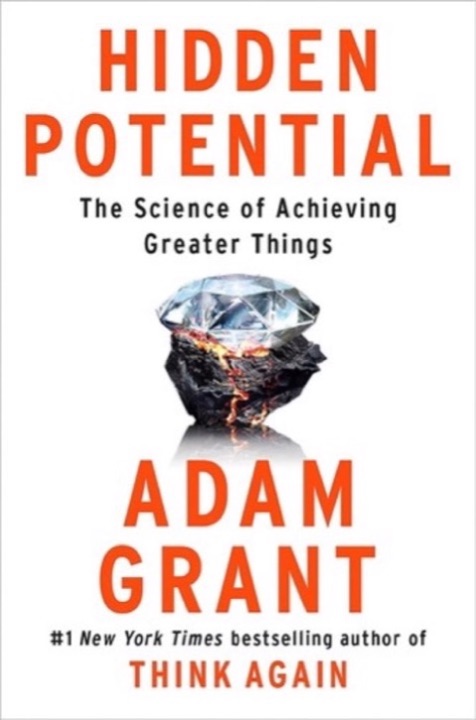
Hidden Potential: The Science of Achieving Greater Things
Applying the lessons from "Hidden Potential: The Science of Achieving Greater Things" by Adam Grant to your life can be a transformative exercise in redefining your limits and the limits of those you lead. Here are some ways you might integrate these lessons:
- Evaluate Character Over Pedigree: - In your ventures and medical practices, look beyond the prestigious degrees on a resume. When hiring or selecting partners, prioritize the "distance traveled"—the obstacles they have overcome and the character skills they have developed—rather than just their starting point or innate IQ.
- Embrace the Discomfort of New Frontiers: - Whether you are mastering a new aircraft, navigating a complex legal case, or launching a new healthcare startup, recognize that feeling like a novice is a sign of growth. Don't shy away from the "clunky" phase of learning; instead, view your discomfort as biological evidence that you are expanding your capabilities.
- Build Scaffolding for Your Teams: - As a leader and mentor, identify where your employees or students are hitting plateaus. Provide the specific "scaffolding"—be it a new system, a specific piece of feedback, or a temporary resource—that allows them to clear that hurdle themselves, rather than stepping in to solve the problem for them.
- Adopt an Imperfectionist Mindset: - In high-stakes environments like medicine and law, the pressure to be perfect is immense, but it can lead to paralysis. Practice the art of knowing which tasks require 100% precision and where 80% is sufficient, allowing you to conserve your cognitive energy for the most critical decisions and avoid entrepreneurial burnout.
- Utilize the Tutor Effect for Mastery: - Solidify your own lifelong learning by teaching what you know. Whether it’s writing books, mentoring young physicians, or speaking to fellow entrepreneurs, use the act of teaching as a tool to sharpen your own understanding and stay humble in your expertise.
- Foster Deliberate Play in High-Stress Roles: - To maintain your "Stay Hungry" mantra, find ways to inject play into the serious work of entrepreneurship and medicine. By gamifying aspects of your routine or finding joy in the process of problem-solving, you can sustain the high-octane energy required to lead multiple organizations over decades.
By integrating these lessons, you move away from the myth of the "natural-born leader" or "gifted physician" and toward a more empowering reality: that excellence is a buildable skill. This perspective not only fuels your own relentless pursuit of growth across disparate fields like aviation, law, and business, but also empowers you to build organizations that act as engines for human potential, helping everyone around you reach heights they never anticipated.
What the book covers
"Hidden Potential: The Science of Achieving Greater Things" by Adam Grant is a compelling examination of how individuals can rise to achieve greatness regardless of their starting point or innate talent. Grant, an organizational psychologist, challenges the traditional focus on "natural" ability, arguing instead that the capacity for growth is a set of character skills that can be nurtured and mastered. By synthesizing diverse research and inspiring stories of underdogs who outperformed expectations, the book provides a systematic framework for unlocking latent abilities and creating opportunities for others to do the same.
Summary:
- The Character Advantage: - Grant posits that character skills—such as proactivity, discipline, and determination—are more predictive of long-term success than cognitive intelligence or raw talent. These skills are not fixed traits but are "character muscles" that can be strengthened through intentional practice and the willingness to endure discomfort during the learning process. - High performance is often less about how bright you are and more about how well you handle the friction of acquiring new expertise, suggesting that the most successful people are those who have learned to embrace the awkwardness of the "learning curve."
- Becoming a Sponge: - A key differentiator in achieving hidden potential is the ability to be a "sponge," which involves both the capacity to absorb new information and the filter to determine which information is worth keeping. This requires a shift from seeking ego-boosting praise to seeking constructive criticism that can fuel improvement. - Grant highlights that the most effective learners are proactive in seeking out feedback and are willing to experiment with new methods, even if it means temporary setbacks, in order to achieve long-term mastery.
- The Imperfectionist’s Path: - The book critiques the cult of perfectionism, arguing that the pursuit of flawlessness often leads to burnout and stagnation rather than excellence. Instead, Grant introduces the concept of "wabi-sabi," or finding beauty in imperfection, and suggests that knowing when to be "good enough" allows for better allocation of energy. - By distinguishing between "harmonious passion" (which fuels growth) and "obsessive passion" (which leads to anxiety), individuals can find a sustainable rhythm that prioritizes progress over the appearance of being perfect.
- Scaffolding for Success: - Grant emphasizes that nobody reaches their potential alone; we all require "scaffolding," which refers to temporary support structures like mentors, coaches, or systems that help us bridge the gap between our current ability and our goals. - Effective scaffolding is not about doing the work for the individual, but about providing the necessary tools and psychological safety to help them overcome specific obstacles at critical junctures in their development.
- The Power of Deliberate Play: - To sustain motivation over the long haul, Grant advocates for "deliberate play," which integrates enjoyment into the practice of skill-building. This approach prevents the grind of repetition from becoming soul-crushing and helps maintain the curiosity necessary for innovation. - By turning practice into a game or finding ways to make the process inherently rewarding, individuals can persist through the "middle slump" where many others give up.
- The Tutor Effect: - One of the most effective ways to solidify one's own potential is to teach others. Grant explores the "tutor effect," where the act of explaining concepts and guiding someone else forces the teacher to clarify their own understanding and increases their confidence. - This reciprocal relationship fosters a growth mindset and reinforces the idea that potential is realized through collective effort and the sharing of knowledge.
- Measuring Distance Traveled: - The book concludes by advocating for a change in how organizations and schools evaluate potential, suggesting we should look at the "distance traveled" rather than just the final destination. This means valuing individuals who have overcome significant adversity or started from a lower baseline. - By focusing on the trajectory of growth rather than a static snapshot of achievement, society can identify and elevate brilliant minds that are often overlooked by traditional metrics.
Ultimately, Grant’s work serves as a powerful reminder that our peak is rarely where we think it is. By shifting our focus from innate gifts to character-building and supportive systems, we can uncover a reservoir of potential that allows us to achieve things we previously thought impossible.