Reach's Rules
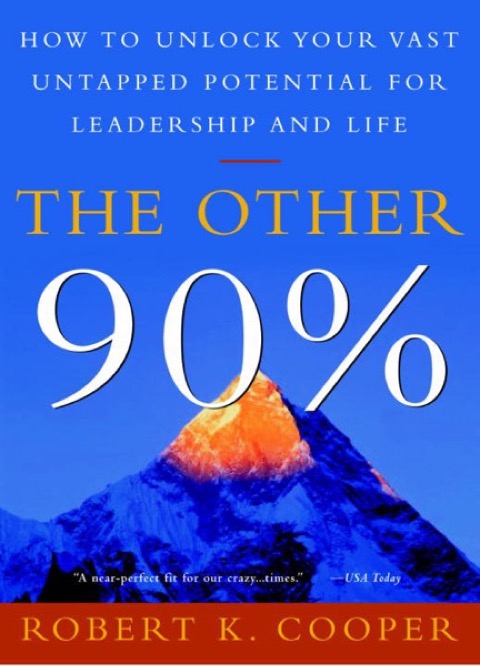
Applying the lessons from "Reach's Rules" by Robert K. Cooper to your life can be the catalyst for moving from standard success to a legacy of truly extraordinary impact. Here are some ways you might integrate these lessons:
-
Manage Your Biological Energy: - In demanding fields like emergency medicine or high-stakes entrepreneurship, you cannot afford to manage only your calendar; you must manage your biology. Practice the book’s concept of "micro-bursts" of recovery—taking 30-to-60-second mental breaks throughout the day to reset your nervous system, ensuring you remain as sharp for the final patient or meeting as you were for the first.
-
Define Your Horizon: - Use the "Rule of Direction" to evaluate your current business ventures. If a project or role keeps you busy but doesn't move you closer to your long-term legacy or "North Star," it is likely a distraction of "motion." Regularly recalibrate your focus to ensure your entrepreneurial efforts are additive to your ultimate goals, not just occupying your time.
-
Stretch Your Capacity deliberately: - View moments of extreme pressure—whether in the cockpit, the courtroom, or the boardroom—as "capacity-building exercises." Instead of seeking to merely survive the stress, consciously ask how this experience is re-wiring your brain for higher performance. This shift from a survival mindset to a growth mindset is what separates the veteran leader from the novice.
-
Bridge the Gap Between Intent and Impact: - Audit your leadership style by measuring your "wake." In your healthcare clinics or VC firm, don't just focus on the mission statement (intent); look at the tangible results your leadership has on the culture and the individual growth of your team (impact). Ensure that your "Stay Humble" mantra is reflected in the value you provide to others rather than just your internal desires.
-
Embrace the Reach in Lifelong Learning: - Stay hungry by perpetually seeking the "Reach." Just as you have mastered law, medicine, and aviation, look for the next domain that is currently beyond your "Grasp." The discomfort of being a beginner in a new field is the exact biological state required for neuroplasticity and continued intellectual vitality.
-
Pilot Your Life by the Horizon: - Just as a pilot uses the horizon to maintain orientation, use your core values to stay steady during market volatility or healthcare crises. When the "cockpit" of your life gets cluttered with alarms and data points, return to the simple rules of the Reach: prioritize direction, conserve energy for the critical moments, and never stop striving for what others deem impossible.
By integrating these lessons, you embody the essence of the "Reacher"—a leader who remains perpetually curious and humble while possessing the strategic hunger required to dominate complex fields. This approach ensures that your success is not just a collection of titles but a living testament to the limitless nature of human potential.
What the book covers
"Reach's Rules" by Robert K. Cooper is a transformative philosophical and practical guide to high performance, framed through an evocative narrative inspired by the author's grandfather. The book explores the vast, untapped potential of the human brain and spirit, challenging the common assumption that our capabilities are fixed or limited by circumstances. By blending timeless storytelling with insights from neuroscience, Cooper provides a framework for individuals to navigate rapid change and achieve extraordinary success without succumbing to burnout. It serves as both a motivational parable and a tactical manual for those seeking to maximize their impact in leadership and life.
Summary:
-
The Foundational Parable: - The book centers on a story told to Cooper as a boy by his grandfather, a man who lived by a set of "Rules of the Reach." This narrative serves as a metaphor for the human journey, where the "Reach" represents the distance between our current reality and our highest potential, and the "Grasp" represents the safe, known territory of our existing habits and comfort zones. - Through this tale, Cooper introduces the idea that most people stop at their grasp, fearing the uncertainty of the reach, yet it is only in the space of the reach that true growth and breakthrough innovation occur.
-
The Principle of Direction over Motion: - Cooper argues that in a fast-paced world, many people mistake frantic motion for meaningful progress. He emphasizes the "Rule of Direction," which requires a clear, unwavering focus on one's long-term "North Star" or horizon. - This section teaches that without a defined sense of purpose, even the most efficient actions are wasted, and leaders must learn to filter out the noise of immediate demands to stay aligned with their ultimate objectives.
-
Expanding Human Capacity: - Drawing on his background in neuroscience, Cooper explains that the brain is designed for constant expansion through neuroplasticity. He challenges the reader to move beyond "conformity" and instead focus on building the physical and mental capacity to handle greater challenges. - He provides specific techniques for stretching one's capabilities, suggesting that the feeling of being overwhelmed is often a signal that a new level of capacity is ready to be developed rather than a reason to retreat.
-
Energy Management as a Success Metric: - A central theme is the transition from time management to energy management. Cooper posits that time is a finite and often uncontrollable resource, whereas biological energy can be renewed and expanded through specific habits and mental shifts. - He outlines "rules" for maintaining high energy levels, including the importance of brief, strategic pauses, staying hydrated, and managing the body’s physiological response to stress to ensure that one is performing at their peak during critical moments.
-
Impact and the Power of Intentionality: - The book differentiates between intentions—the things we hope to do—and impact—the actual results we produce in the world. Cooper suggests that high performers are judged by the "wake" they leave behind in their professional and personal lives. - He encourages readers to audit their daily actions to ensure they are contributing to a legacy of value, emphasizing that small, consistent acts of excellence are more powerful than occasional, grand gestures.
-
Resilience in Times of Change: - Cooper addresses the inevitability of external pressure and chaos, teaching that the "Rules of the Reach" are designed specifically for times of upheaval. He explains that while most people contract or become paralyzed by change, the "Reacher" uses the momentum of change to propel themselves forward. - By adopting a mindset of "always arriving," individuals can stay agile and responsive, viewing every obstacle not as a dead end but as a necessary data point for recalibrating their path.
"Reach's Rules" is a seminal work for those who refuse to settle for the status quo. It serves as a reminder that the limits we perceive are often self-imposed and that by applying disciplined rules of focus, energy, and direction, we can consistently surpass even our own highest expectations.