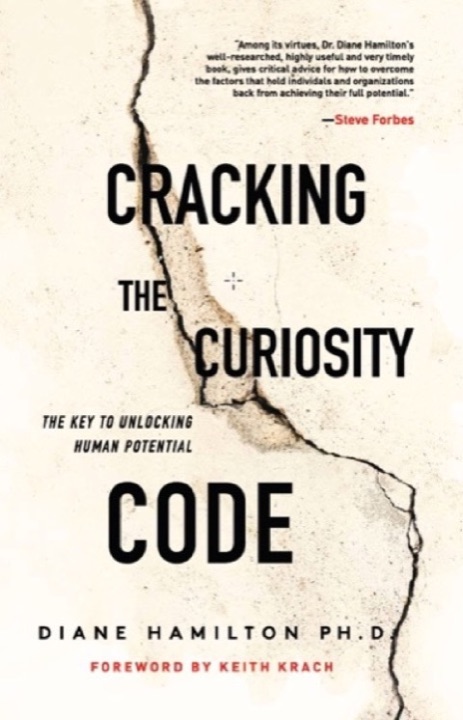
Cracking the Curiosity Code: The Key to Unlocking Human Potential
Applying the lessons from "Cracking the Curiosity Code" by Diane Hamilton, PhD, to your life can enhance both your personal and professional development. Here are some ways you might integrate these insights:
-
Embrace Lifelong Learning: - Given your interest in constant growth and learning, you can use the book's insights to further cultivate your curiosity. Actively seek out new experiences and knowledge in areas that interest you, such as flying, cooking, or even skydiving, which you've always wanted to try.
-
Overcome Curiosity Barriers: - Reflect on the FATE factors (Fear, Assumptions, Technology, and Environment) that might inhibit your curiosity. For instance, consider how assumptions or fear might hold you back from trying new things like skydiving or exploring different perspectives.
-
Foster a Curious Environment: - As someone who values kindness and empathy, you can create an environment that encourages curiosity in your family and professional life. Encourage open dialogue, ask questions, and model curious behavior for your children and colleagues.
-
Enhance Problem-Solving Skills: - Use curiosity to approach challenges with a fresh perspective. In your medical career, apply curious inquiry to explore innovative solutions and improve patient care. Your direct and humorous communication style can also help in engaging others in problem-solving discussions.
-
Cultivate Empathy and Understanding: - Your belief in kindness and empathy aligns with the book's emphasis on curiosity enhancing these traits. Use curiosity to deepen your understanding of others' perspectives, especially in social issues you are passionate about, like equality and anti-human trafficking.
-
Leverage Curiosity for Personal Growth: - Continue to explore new hobbies and interests that align with your values and aspirations. This could include learning to play the guitar or engaging in activities that help you live in the moment, a dream you haven't yet achieved.
-
Model Curious Leadership: - As someone who values resilience and persistence, you can lead by example in fostering a culture of curiosity in your professional and personal circles. Encourage others to question assumptions and explore new ideas, much like you do in your decision-making process.
-
Reflect on Personal Experiences: - Use your past experiences, such as surviving plane crashes, to fuel your curiosity about life and its possibilities. Reflect on how these experiences have shaped your perspective and use them as a foundation for exploring new opportunities.
By integrating these lessons into your life, you can continue to unlock your potential and inspire those around you to do the same.
What the book covers
"Cracking the Curiosity Code: The Key to Unlocking Human Potential" by Diane Hamilton, PhD, explores the pivotal role that curiosity plays in personal and professional development. The book delves into how curiosity can be harnessed to drive innovation, improve communication, and enhance problem-solving skills. Hamilton argues that curiosity is a critical component of success and provides a framework for individuals and organizations to cultivate and leverage it effectively.
Summary:
-
Understanding Curiosity: - Hamilton begins by defining curiosity and its importance in human development. She explains that curiosity is the desire to acquire new knowledge and experiences, which fuels learning and growth. - The book discusses different types of curiosity, such as epistemic (desire for knowledge), perceptual (desire for sensory experiences), and diversive (desire for novelty).
-
The Curiosity Code Index (CCI): - A significant portion of the book is dedicated to the Curiosity Code Index, a tool developed by Hamilton to measure and enhance curiosity. - The CCI identifies four factors that inhibit curiosity: Fear, Assumptions, Technology, and Environment (FATE). Hamilton provides strategies to overcome these barriers.
-
Curiosity in the Workplace: - Hamilton emphasizes the role of curiosity in fostering a culture of innovation and adaptability within organizations. - She provides case studies and examples of companies that have successfully integrated curiosity into their corporate culture, leading to increased employee engagement and improved performance.
-
Developing Curiosity: - The book offers practical advice on how individuals can cultivate their curiosity. This includes questioning assumptions, embracing uncertainty, and seeking diverse perspectives. - Hamilton also highlights the importance of leaders in modeling curious behavior and creating an environment that encourages exploration and questioning.
-
Curiosity and Personal Growth: - Beyond the workplace, Hamilton discusses how curiosity can enhance personal relationships and overall well-being. - She suggests that curious individuals are more open-minded, empathetic, and resilient, which contributes to a more fulfilling life.
Key Takeaways and Lessons:
- Curiosity as a Catalyst for Change: Curiosity drives innovation and change by encouraging individuals to explore new ideas and challenge the status quo.
- Overcoming Barriers: Identifying and addressing the barriers to curiosity (FATE) is crucial for unlocking human potential.
- Creating a Curious Culture: Organizations that prioritize curiosity are more likely to succeed in a rapidly changing world. Leaders play a key role in fostering this culture.
- Lifelong Learning: Curiosity is essential for lifelong learning and personal development. It keeps individuals engaged and adaptable.
- Empathy and Understanding: Curiosity enhances empathy and understanding, leading to better communication and relationships.
In conclusion, "Cracking the Curiosity Code" provides a comprehensive guide to understanding and leveraging curiosity as a powerful tool for personal and organizational growth. Hamilton's insights and practical strategies offer valuable lessons for anyone looking to unlock their full potential.