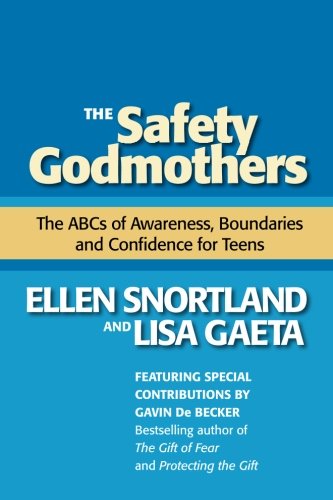
The Safety Godmothers: The ABCs of Awareness, Boundaries and Confidence for Teens
Applying the lessons from "The Safety Godmothers: The ABCs of Awareness, Boundaries and Confidence for Teens" by Ellen Snortland and Lisa Ghisolf to your life can be a transformative step toward personal agency and protective leadership. Here are some ways you might integrate these lessons:
-
Mastering Situational Awareness: - Whether you are in the cockpit, the emergency room, or a boardroom, you must practice the "relaxed alertness" described by the authors. Train yourself to spot anomalies in your environment before they become crises. This proactive observation allows you to lead from a position of readiness rather than reaction, ensuring that you are always three steps ahead of potential complications.
-
The Strategic Power of 'No': - In leadership and law, boundaries are your most effective tool for maintaining focus and integrity. You should apply the book’s lessons on asserting boundaries to your professional life by saying "no" to demands that compromise your values or your team’s mission. Recognizing that "no" is a complete sentence prevents the mission creep that often leads to burnout or ethical shortcuts.
-
Trusting Clinical and Entrepreneurial Intuition: - Just as the book encourages teens to trust their gut, you should leverage your years of experience as a biological and professional alarm system. When a deal feels "off" or a patient’s presentation doesn't match the data, don't dismiss that internal nudge. Use it as a signal to pause, re-evaluate, and dig deeper before proceeding, potentially saving time, capital, or lives.
-
Mentorship as a Protective Asset: - You can act as a "Safety Godmother" (or Godfather) by mentoring the next generation of entrepreneurs and clinicians. Teach your proteges that confidence is a skill developed through practice and that setting boundaries is a sign of strength, not weakness. By fostering a culture of self-advocacy, you create more resilient organizations where individuals feel safe to speak up about risks.
-
Confidence as a Deterrent and a Driver: - Projecting confidence isn't just about personal ego; it is a tactical choice. In high-stakes negotiations or emergency situations, your calm, assertive presence can de-escalate tension and command the room. By internalizing the book's ABCs, you ensure that your confidence is rooted in real competence and awareness, making you a more formidable advocate and leader.
-
Harmonizing Professional and Personal Safety: - Apply the book’s holistic view of safety to your family life by teaching these principles to those you love. Encourage a household culture where intuition is respected and boundaries are honored. This ensures that the people closest to you are equipped with the same level of situational awareness and self-respect that you demand of yourself in your professional endeavors.
By integrating these lessons, you cultivate a life defined not by the avoidance of risk, but by the mastery of it, allowing you to move through the world with a profound sense of security and purpose.
What the book covers
"The Safety Godmothers: The ABCs of Awareness, Boundaries and Confidence for Teens" by Ellen Snortland and Lisa Ghisolf is a proactive empowerment guide designed to equip teenagers with the psychological and physical tools necessary to navigate the world safely. Moving far beyond the outdated and often ineffective "stranger danger" rhetoric, the book focuses on internalizing a sense of agency and personal power. It serves as a mentor-in-print, helping young readers recognize red flags, trust their biological alarm systems, and cultivate the confidence to act decisively in potentially hazardous situations.
Summary:
-
The Core ABC Framework: - The book centers on three pillars: Awareness, Boundaries, and Confidence. Awareness involves scanning environments and recognizing potential threats before they escalate; Boundaries focuses on the verbal and physical limits individuals set to protect their space; and Confidence is the internal state that allows one to enforce those boundaries without apology. Together, these form a comprehensive toolkit for personal safety that applies to physical, social, and digital interactions.
-
Intuition as a Survival Tool: - Snortland emphasizes that intuition is not a "superpower" but a biological imperative developed over millennia. The authors encourage teens to listen to the physiological cues—such as a racing heart or a "gut feeling"—that signal something is wrong, even if they cannot immediately identify the specific threat. By validating these feelings, the book empowers teens to prioritize their safety over social niceties or the fear of being perceived as rude.
-
Deconstructing Social Conditioning: - A significant portion of the book addresses the cultural pressure, particularly on young women, to be "nice" or "polite" even when uncomfortable. The authors argue that this conditioning makes individuals more vulnerable to predators who use social norms to manipulate their targets. The book provides scripts and strategies for breaking these social scripts, asserting that your safety is always more important than an aggressor's feelings.
-
The Mechanics of Boundaries: - The text offers practical advice on establishing and maintaining personal space. This includes the use of assertive body language, eye contact, and the "power of no." The authors explain that clear boundaries act as a deterrent; most predators look for easy targets, and someone who demonstrates clear, firm limits is often bypassed in favor of someone who appears more compliant or distracted.
-
Situational Awareness and Environment: - Readers are taught how to assess their surroundings without living in a state of constant fear. This includes practical tips for walking alone, using public transportation, and identifying "safe havens" in unfamiliar areas. The book encourages a state of relaxed alertness, where the individual is present and observant of the people and exits around them, rather than being buried in a smartphone or distracted by headphones.
-
The Role of Physical Self-Defense: - While the book prioritizes avoidance and de-escalation, it acknowledges that physical intervention is sometimes necessary. It provides an overview of basic self-defense concepts, focusing on targets of opportunity and the mindset required to fight back effectively. The goal is not to turn teens into martial artists, but to give them the permission and basic knowledge to defend their lives if boundaries are violently breached.
-
Navigating the Digital Landscape: - The authors adapt their ABC methodology to the online world, addressing cyberbullying, privacy settings, and the dangers of oversharing. They emphasize that the same intuition used in the physical world applies to digital interactions. Teens are encouraged to set digital boundaries and recognize when an online interaction is moving toward grooming or exploitation, reinforcing that the screen does not negate the need for awareness.
By focusing on empowerment rather than fear, the book transforms the concept of safety from a list of restrictions into a source of personal freedom. It provides a foundational education in self-advocacy that prepares teenagers to enter adulthood with the confidence to protect themselves and those around them.