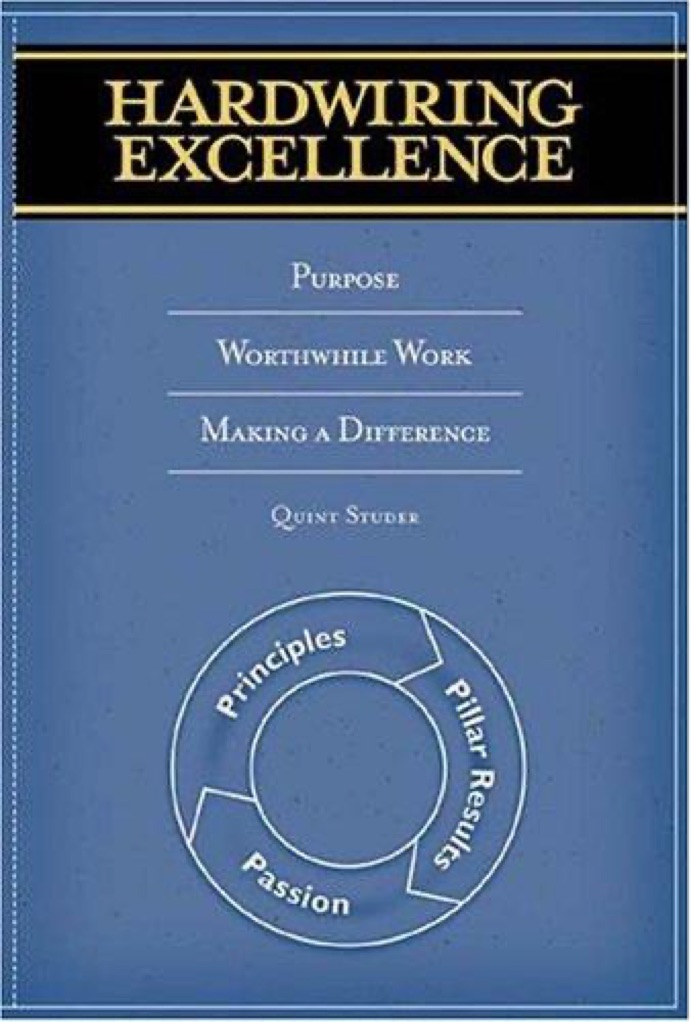
Hardwiring Excellence: Purpose, Worthwhile Work, Making a Difference
Applying the lessons from "Hardwiring Excellence" by Quint Studer to your life can be a transformative journey toward operational mastery and servant leadership. Here are some ways you might integrate these lessons:
-
Implement the AIDET Framework in Every Interaction: - Whether you are in the emergency department, a boardroom, or a legal consultation, use the AIDET model to manage expectations and build trust. By acknowledging the person, introducing your role, explaining the duration and process, and closing with a thank you, you eliminate the uncertainty that breeds anxiety in high-stakes environments.
-
Practice Disciplined Rounding for Outcomes: - In your entrepreneurial ventures or clinical practices, dedicate time to "round" on your team members and stakeholders. Ask specifically what is going well and what tools they lack to be successful; this visibility builds the social capital necessary for high-stakes leadership and ensures you are making decisions based on frontline reality rather than filtered reports.
-
Hardwire Your Success Through Standardization: - Excellence is a habit, not a lucky break. Create standardized checklists and "hardwired" protocols for your most critical workflows—from pre-flight routines in aviation to patient handoffs—to ensure that high performance is repeatable and not dependent on your daily energy levels or temporary motivation.
-
Connect Every Task to the "Why": - As a leader and lifelong learner, always bridge the gap between the mundane "what" and the meaningful "why." When implementing new systems in healthcare or venture capital, remind your team that these protocols are not just administrative hurdles but are the mechanisms that allow them to perform worthwhile work and make a tangible difference in the world.
-
Balance Your Personal Pillars of Excellence: - Evaluate your personal and professional growth using Studer’s five pillars: People, Service, Quality, Finance, and Growth. By maintaining a balanced scorecard for your own life, you avoid the trap of "tunnel vision" and ensure that your successes in business or law are not coming at the expense of your health, family, or the quality of your character.
-
Cultivate a Culture of Radical Recognition: - Adopt the practice of writing handwritten notes to those who go above and beyond. In an age of digital noise, the physical artifact of a leader’s gratitude is a powerful tool for reinforcing the "Stay Humble" portion of your mantra while encouraging the team to "Stay Hungry" for their next achievement.
By integrating these lessons, you move beyond the erratic nature of personality-driven success and toward a systematic, evidence-based approach to excellence. This methodology allows you to scale your impact across multiple disciplines, ensuring that every venture you lead is defined by a culture of purpose, accountability, and a relentless commitment to making a difference.
What the book covers
"Hardwiring Excellence: Purpose, Worthwhile Work, Making a Difference" by Quint Studer is a foundational manual for healthcare leadership that provides a structured approach to cultural and operational transformation. Drawing from his experience as a hospital president and consultant, Studer outlines a comprehensive framework for achieving sustainable results in patient care, employee satisfaction, and financial performance. The book argues that by standardizing leadership behaviors and connecting employees to their intrinsic sense of purpose, organizations can move from being "good" to truly "excellent."
Summary:
-
The Five Pillars of Excellence: - Studer introduces a balanced scorecard approach centered on five key pillars: People, Service, Quality, Finance, and Growth. By organizing every goal and metric under these specific categories, leaders can ensure a holistic focus that prevents operational silos and keeps the human element of healthcare at the forefront of business strategy.
-
The Evidence-Based Leadership Framework: - The book posits that leadership should be a standardized science rather than an art form dependent on individual personality. Studer advocates for "hardwiring" specific leadership behaviors—such as objective accountability systems and consistent communication loops—to ensure that excellence is repeatable across the entire organization regardless of leadership turnover.
-
Rounding for Outcomes: - One of the core tactics described is the practice of intentional rounding, where leaders regularly visit staff and patients to build relationships and identify barriers to performance. This process is designed to harvest "wins," recognize high performers, and address small issues before they escalate into systemic problems, thereby fostering a culture of transparency and mutual respect.
-
The AIDET Communication Tool: - Studer details the AIDET framework—Acknowledge, Introduce, Duration, Explanation, and Thank You—as a critical tool for improving patient and customer interactions. By standardizing these five elements in every encounter, clinical and non-clinical staff can reduce anxiety, increase compliance, and significantly elevate the perceived quality of the service experience.
-
Employee Engagement and Peer Interviewing: - To build a high-performance culture, Studer emphasizes the need for rigorous selection processes, including peer interviewing. This technique involves current team members in the hiring process to ensure that new hires align with the organization's core values, which increases long-term retention and ensures that the team feels ownership over their work environment.
-
The Power of Positive Reinforcement: - A major theme is the use of public recognition and handwritten thank-you notes to reinforce desired behaviors. Studer explains that connecting staff to their "purpose" and "worthwhile work" through specific, sincere praise is more effective for driving long-term performance than traditional top-down mandates, as it validates the individual's contribution to making a difference.
-
Addressing Low Performance: - The book does not shy away from the difficult aspects of leadership, offering a blueprint for managing low-performing employees who refuse to align with the new standards. Studer argues that allowing mediocrity to persist devalues the hard work of high-performing staff and that true excellence requires the courage to move people out of the organization if they cannot commit to the mission.
Ultimately, "Hardwiring Excellence" serves as both a philosophical manifesto and a tactical playbook for healthcare professionals. It remains a significant text for its ability to bridge the gap between clinical compassion and business efficiency, demonstrating that the best way to improve the bottom line is to first improve the experience of those providing and receiving care.