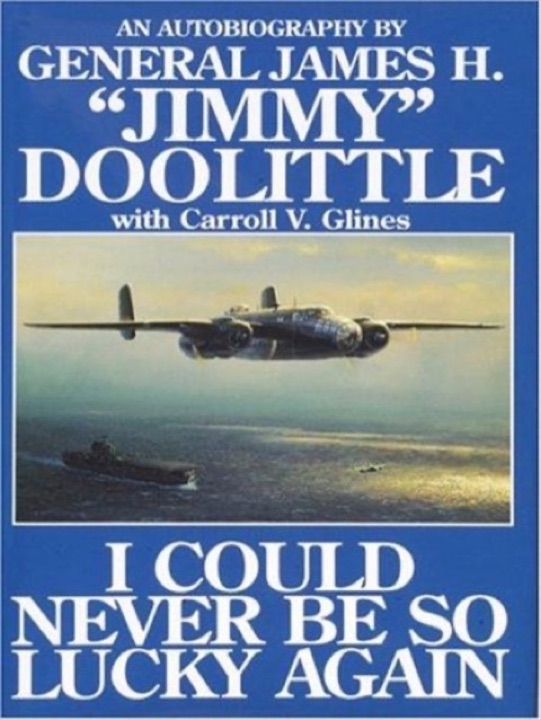
I could never be so lucky again
Applying the lessons from "I Could Never Be So Lucky Again" by General James "Jimmy" Doolittle to your life can be a meaningful way to enhance your personal and professional journey. Here are some ways you might integrate these lessons:
-
Embrace Innovation and Risk-Taking: - Like Doolittle, who was a pioneer in aviation and took calculated risks, you can continue to embrace innovation in your field. Whether it's in your medical career, flying, or personal pursuits, be open to new ideas and technologies that can improve your work and life. Consider trying new activities, like skydiving, to push your boundaries and experience life from a different perspective.
-
Cultivate Leadership and Resilience: - Doolittle's leadership during World War II highlights the importance of resilience and adaptability. You can apply this by continuing to lead with empathy and kindness, especially in high-pressure situations like those in the emergency department. Your ability to remain calm and composed is a valuable asset that can inspire others around you.
-
Understand the Impact of Morale: - The psychological impact of the Doolittle Raid underscores the importance of morale. In your personal and professional life, focus on boosting the morale of those around you, whether it's through humor, support, or encouragement. Your positive outlook and optimism can have a profound effect on others.
-
Commit to Lifelong Learning and Contribution: - Doolittle's pursuit of knowledge and contributions to aviation and military strategy demonstrate the value of lifelong learning. Continue to approach life with a mindset of being in a constant state of beta, seeking new knowledge and experiences. Your dedication to personal growth and development can lead to significant achievements and contributions.
-
Reflect on Your Core Values: - Doolittle's life was guided by his values and beliefs. Reflect on your core values of kindness and empathy, and how they guide your actions and decisions. Use these values as a compass to navigate challenges and opportunities, ensuring that you remain true to yourself.
-
Learn from Failures and Challenges: - Doolittle's experiences show that failures can lead to growth and success. Embrace your past failures as valuable lessons that have shaped who you are today. Use these experiences to inform your future decisions and continue to strive for personal and professional excellence.
-
Focus on Making a Positive Impact: - Doolittle's contributions had a lasting impact on aviation and military strategy. Consider how you can make a positive impact in your field, community, or the world at large. Whether it's through your work in medicine, advocacy for social issues, or personal interactions, aim to leave a lasting legacy of kindness and positive change.
By integrating these lessons into your life, you can continue to grow, inspire others, and make meaningful contributions to the world around you.
What the book covers
"I Could Never Be So Lucky Again" is the autobiography of General James "Jimmy" Doolittle, a pioneering figure in aviation history and a decorated military leader. The book provides a detailed account of Doolittle's life, from his early years and passion for aviation to his significant contributions during World War II and his post-war career.
Summary:
-
Early Life and Passion for Aviation: - Doolittle was born in 1896 in Alameda, California. His early fascination with flight led him to pursue a career in aviation. - He attended the University of California, Berkeley, and later the Massachusetts Institute of Technology, where he earned a doctorate in aeronautical engineering.
-
Aviation Pioneer: - Doolittle became a test pilot and was known for his daring and skill. He set several aviation records, including the first transcontinental flight in under 24 hours. - He was instrumental in developing instrument flying, which allowed pilots to fly safely in poor visibility conditions.
-
World War II and the Doolittle Raid: - Doolittle is best known for leading the Doolittle Raid in April 1942, a daring bombing mission over Tokyo. This was the first American air raid on the Japanese mainland and provided a significant morale boost to the United States. - Despite the raid's limited tactical success, it had a profound strategic impact, forcing Japan to divert resources to homeland defense.
-
Military Leadership: - After the raid, Doolittle continued to serve in various leadership roles, commanding the 12th Air Force in North Africa, the 15th Air Force in Italy, and the 8th Air Force in England. - His leadership and strategic acumen were crucial in the Allied air campaign in Europe.
-
Post-War Career: - After the war, Doolittle worked in the aerospace industry and served as an advisor to the U.S. Air Force. - He remained active in promoting aviation and contributed to various technological advancements.
Key Takeaways and Lessons:
- Innovation and Risk-Taking:
-
Doolittle's career exemplifies the importance of innovation and the willingness to take calculated risks. His work in instrument flying and the Doolittle Raid are prime examples of how bold actions can lead to significant advancements and strategic advantages.
-
Leadership and Resilience:
-
His leadership during World War II highlights the importance of resilience and adaptability in the face of challenges. Doolittle's ability to inspire and lead his men through difficult missions was a key factor in their success.
-
Impact of Morale:
-
The psychological impact of the Doolittle Raid underscores the importance of morale in warfare. Even small victories can have a disproportionate effect on the larger conflict by boosting the spirits of one's own side and sowing doubt in the enemy.
-
Lifelong Learning and Contribution:
- Doolittle's continuous pursuit of knowledge and his contributions to aviation and military strategy demonstrate the value of lifelong learning and the impact one individual can have on an entire field.
Overall, "I Could Never Be So Lucky Again" is not just a recounting of Doolittle's life but also a testament to the spirit of innovation, leadership, and perseverance.