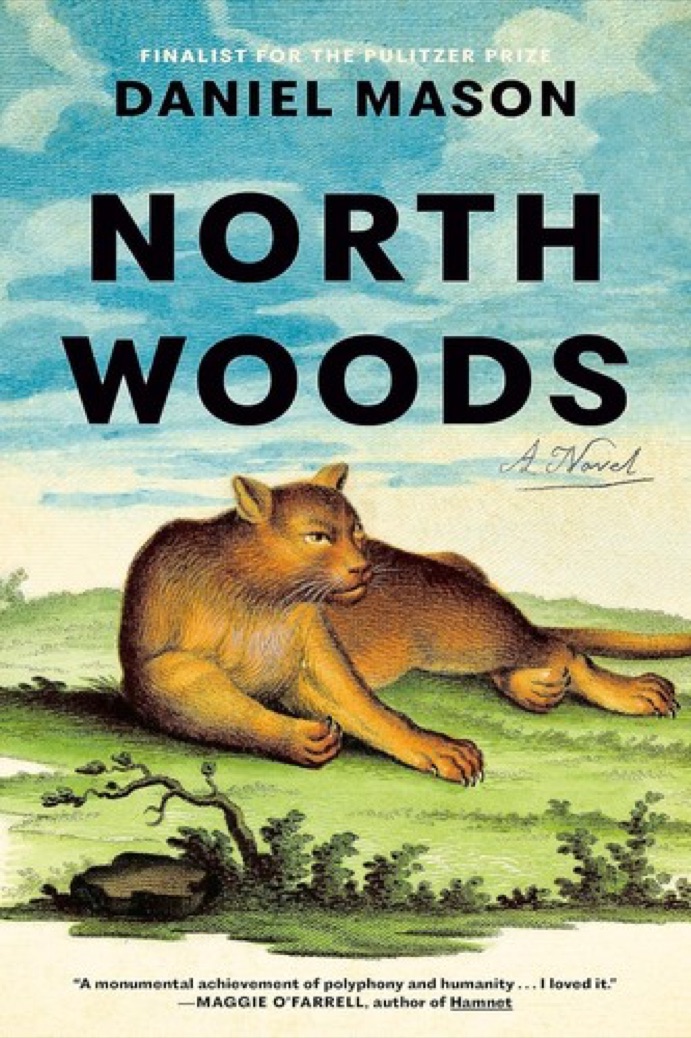
North Woods
Applying the lessons from "North Woods" by Daniel Mason to your life can be a profound exercise in perspective and legacy building, shifting your focus from the immediate to the eternal. Here are some ways you might integrate these lessons:
- Adopt a Multi-Generational Perspective: - In your roles as a leader and entrepreneur, it is easy to focus on quarterly results or five-year exit strategies, but Mason’s narrative encourages you to think in terms of decades and centuries. Consider how your ventures, such as Tribal Health or Xcellerant Ventures, will impact the landscape of healthcare and the lives of patients long after you have moved on, aiming for a legacy that is foundational rather than fleeting.
- Respect the Resilience of Systems: - Whether in medicine, law, or aviation, you operate within complex, pre-existing systems that have their own internal logic and history. This book teaches you to approach these systems with the humility of a steward rather than the arrogance of a conqueror, recognizing that the "forest"—whether it be the human body or a corporate culture—often has its own ways of healing and correcting itself over time.
- Value the Power of Observation: - The characters who find the most meaning in "North Woods" are those who pay the closest attention to their environment, from the apple orchardist to the modern scientist. Sharpening your own "diagnostic" eye to notice subtle changes in market trends, patient symptoms, or legal precedents can be your greatest competitive advantage, reminding you that truth is often buried in the fine details.
- Embody the "Stay Humble" Mantra: - The novel serves as a stark reminder that human ambition is frequently dwarfed by the scale of time and nature. By internalizing this, you can maintain your drive to "Stay Hungry" while remaining grounded, understanding that your greatest achievements are part of a larger continuum and that true leadership involves serving a purpose far greater than one's own ego.
- Integrate Interdisciplinary Knowledge: - Mason, a physician himself, weaves together history, botany, art, and medicine to tell a complete story. This mirrors your own path as an MD/JD/MBA/Pilot, suggesting that the most profound insights come from the intersection of different fields; you should continue to use this "polymathic" approach to solve complex problems in healthcare and venture capital that others might miss by staying in their silos.
- Acknowledge the Persistence of the Past: - Just as the house in the woods is haunted by its previous tenants, your current decisions are shaped by the history of the institutions you lead and the people you treat. Recognizing these "ghosts"—be they cultural traditions or historical traumas—allows you to lead with greater empathy and effectiveness, particularly when working with diverse populations in emergency and tribal medicine.
By integrating these lessons, you can cultivate a leadership style that is both visionary and deeply rooted, ensuring that your work contributes meaningfully to the ongoing story of human progress. Embracing the cyclical nature of success and failure will allow you to navigate the turbulent waters of entrepreneurship and medicine with a steady hand and a clear, long-term focus.
What the book covers
"North Woods" by Daniel Mason is a sweeping, multi-generational saga that traces the history of a single plot of land in the forests of Western Massachusetts over the course of four centuries. Rather than following a single protagonist, the novel serves as a biography of a place, capturing the lives of the various inhabitants who occupy a yellow house from the colonial era to the present day. Through a kaleidoscopic blend of narrative styles—including letters, medical reports, botanical descriptions, and even song lyrics—Mason explores the cyclical nature of life, the persistence of the past, and the indomitable power of the natural world to reclaim and transform human effort.
Summary:
- The Fugitives and the Foundation: - The story begins in the 17th century with a pair of young lovers who flee a restrictive Puritan settlement to build a life in the untamed wilderness. Their initial struggle for survival and the construction of their rudimentary cabin establish the physical and spiritual foundation of the site, marking the first human imprint on a landscape that will eventually witness centuries of transformation, bloodshed, and rebirth.
- The Appleman’s Vision: - During the Revolutionary era, an eccentric soldier named Charles Osgood settles on the land to cultivate a massive orchard of "Osgood’s Wonder" apples. His obsession with botanical perfection reflects the human desire to master nature through industry and science, yet his legacy is eventually reclaimed by the very soil he sought to tame, as the orchard outlasts his own lineage and becomes a permanent fixture of the woods.
- The Twin Sisters and Domesticity: - The narrative shifts to Osgood’s daughters, Mary and Alice, whose lives are defined by a mixture of deep companionship and bitter rivalry. Their story highlights the domestic claustrophobia of the 19th century and the way personal histories become etched into the physical architecture of the home, even as the world outside undergoes radical political and social shifts during the Civil War.
- The Doctor and the Epidemic: - A poignant segment of the book follows a physician during a yellow fever outbreak, offering a clinical yet harrowing look at the limitations of early medicine and the fragility of human life. This section resonates with the persistent threat of disease and the basic human instinct to survive, emphasizing how scientific understanding evolves while the emotional weight of loss remains a constant through the ages.
- The Artist and the Naturalist: - As the centuries progress, the house plays host to a landscape painter searching for the sublime and a naturalist tracking the changes in the environment. These characters represent the different ways humans interpret the natural world—one through the lens of aesthetic beauty and the other through the raw, objective cycle of predation, growth, and environmental decay.
- The Medium and the Haunted Present: - In the later years, a medium visits the house and senses the layers of spirits that remain within its walls. This introduces a supernatural element that suggests no inhabitant ever truly leaves the land; instead, they become part of a spiritual ecosystem where the boundaries between the living and the dead, and the past and the present, are fluid and permeable.
- The Scientist and the Final Cycle: - The novel concludes with a modern-day researcher studying the effects of climate change and blight on the forest. This final perspective brings the narrative full circle, illustrating that while human structures may crumble and individuals may pass away, the forest itself continues its relentless process of growth and transformation, existing on a timeline far greater than our own.
The significance of North Woods lies in its masterful ability to compress time, showing that our lives are but brief moments in a much larger ecological and historical tapestry. Mason challenges the reader to consider their own legacy not as a permanent monument, but as a temporary contribution to a world that was here long before us and will remain long after we are gone.