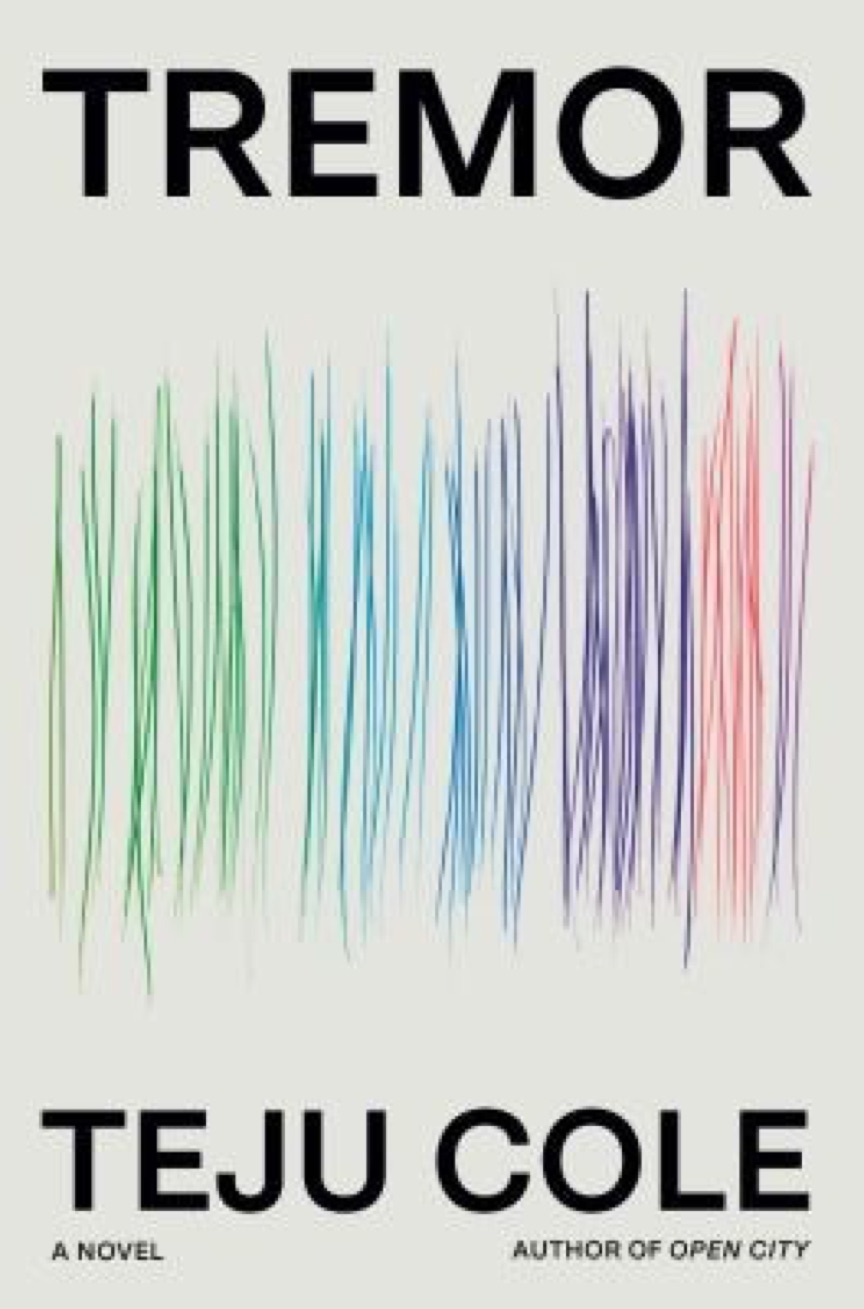
Tremor: A Novel
Applying the lessons from "Tremor: A Novel" by Teju Cole to your life can be a transformative exercise in developing a more rigorous, ethical, and observant way of engaging with the world. Here are some ways you might integrate these lessons:
-
Practice Ethical Observation: - In leadership and medicine, you must recognize that your "gaze" carries power. Just as Tunde questions the intrusion of his camera, you should evaluate how you observe and diagnose others—whether patients or employees—ensuring you see them as whole human beings rather than mere data points or "objects of fascination" within your professional framework.
-
Audit the Provenance of Your Success: - Acknowledge that no achievement exists in a vacuum. As an entrepreneur or investor, investigate the "provenance" of the systems and markets you operate within. Understanding the historical context of your industry allows you to lead with a sense of accountability and to build ventures that contribute to restitution and equity rather than just extraction.
-
Maintain Intellectual Hunger and Humility: - Emulate Tunde’s lifelong learner mindset by seeking out interdisciplinary connections between art, history, and science. However, balance this hunger with the humility to realize that your specialized knowledge—whether in law, surgery, or aviation—is only one lens. True wisdom comes from listening to the "polyphonic voices" of those outside your immediate circle.
-
Navigate Professional Success Without Losing the Self: - As you climb to the heights of your career, remain vigilant against "cultural assimilation" that might erase your unique heritage or values. Like Tunde using music for protection, you must identify the personal anchors—family, tradition, or creative pursuits—that keep you grounded and prevent your identity from being entirely consumed by your professional rank.
-
Acknowledge the Shadow of History: - In your decision-making, recognize that the past is a "tremor" that continues to vibrate beneath the present. Whether analyzing a legal precedent or a healthcare policy, consider the long-term historical impact of your actions. Lead with the awareness that "ordinary things" are often connected to "immortal things" like justice and memory.
-
Nurture the Private Sphere Amidst Public Noise: - Don't let your external ambitions erode your internal relationships. The subtle tensions in Tunde’s marriage serve as a reminder that the most important "work" often happens in the quiet, unexpensed moments at home. Prioritize the maintenance of intimacy with the same rigor you apply to your business or clinical practice.
By integrating these lessons, you move beyond the superficial metrics of success toward a more integrated and conscientious way of living. Embracing this level of self-reflection ensures that your drive for excellence remains anchored in a deep respect for human dignity and an unwavering commitment to historical truth.
What the book covers
"Tremor: A Novel" by Teju Cole is a profound, meditative exploration of art, history, and the ethics of observation through the eyes of a West African photography professor at Harvard. The book eschews traditional plot structures in favor of a fragmentary, perambulatory narrative that mirrors the protagonist's intellectual and physical wandering across Cambridge, Maine, Lagos, and Europe. It serves as a philosophical inquiry into how one can live a meaningful life while remaining acutely aware of the historical violence and colonial extractions that underpin modern comfort.
Summary:
-
The Burden of the Gaze: - The novel introduces Tunde, a photography teacher and artist, whose life is defined by the act of looking. An early encounter with a hostile homeowner while Tunde is attempting to photograph a jasmine hedge sets the tone, highlighting the friction between artistic curiosity and the rigid boundaries of private property and racialized suspicion. - Tunde grapples with the morality of his own medium, questioning whether photography is a tool of empathy or a form of intrusion and "cannibalization" of others' lives. This tension persists as he navigates his professional duties and personal creative impulses, constantly weighing the impulse to capture an image against the ethical cost of doing so.
-
Artifacts and Colonial Provenance: - A central thread follows Tunde to an antique shop in Maine, where he discovers a Bambara ci wara sculpture. This encounter sparks a deep meditation on the "catalog of horrors" inherent in the Western collection of African art, where objects are stripped of their spiritual context to become commodities. - Through Tunde's internal monologue, the book explores the concept of restitution and the uncomfortable reality that even as a member of the academic elite, he is a participant in the systems that historical violence built. He questions the possibility of "owning" beauty that was originally acquired through theft or coercion.
-
The Pedagogy of History: - In a pivotal section, Tunde delivers a lecture at a museum in Leipzig regarding J.M.W. Turner’s painting The Slave Ship. He deconstructs the aesthetic brilliance of the work against the horrific reality of the Zong massacre it depicts, where enslaved people were thrown overboard for insurance claims. - This lecture serves as a microcosm of the novel’s broader argument: that art and history cannot be separated from the suffering that produced them. Tunde challenges his audience—and the reader—to look past the "sublime" brushwork to see the human lives reduced to footnotes in the logic of empire.
-
Polyphonic Echoes of Lagos: - The narrative shifts focus during a visit to Lagos, where Tunde encounters a series of "doubles" and witnesses the vibrant, chaotic pulse of the city. A significant portion of the book is dedicated to a chorus of voices—statements from a diverse cross-section of Nigerians—that temporarily displaces Tunde’s perspective. - These voices provide a raw, unmediated look at survival, faith, and daily life in the metropolis, reinforcing the idea that Tunde’s elite academic viewpoint is only one fragment of a much larger, more complex human tapestry that refuses to be neatly categorized.
-
The Fragility of the Intimate: - Parallel to his intellectual pursuits is Tunde’s relationship with his wife, Sadako. Their marriage is depicted with quiet intensity, marked by mysterious tensions and the "painful silences" that occur when two people drift through shared space while occupied by separate inner worlds. - The novel concludes with a social gathering that alludes to Virginia Woolf’s Mrs. Dalloway, signaling a return to the ordinary. Yet, this domesticity is permanently shadowed by the "tremors" of the past and the awareness of death, suggesting that intimacy requires a constant, conscious effort to bridge the gap between individual experience and collective history.
By weaving together ekphrasis, travelogue, and social critique, Cole creates a work that functions as both a novel and a diagnostic tool for the modern conscience. Its significance lies in its refusal to offer easy consolations, instead demanding that we recognize the interconnectedness of our personal joys and the global histories of pain that make those joys possible.