The worst case Scenario
Applying the lessons from "The Worst-Case Scenario Survival Handbook" to your life involves integrating its principles of preparedness, adaptability, and calmness into your daily routine and mindset. Here’s how you might do that:
-
Preparedness: - Given your experiences with plane crashes and your interest in flying, ensure you are always prepared for emergencies. This could involve regular safety drills, keeping emergency kits accessible, and staying informed about safety protocols. - In your daily life, consider having contingency plans for various scenarios, whether they involve travel, health, or unexpected events.
-
Stay Calm and Think Clearly: - You already emphasize calm decision-making in stressful situations, which aligns perfectly with the book’s advice. Continue practicing mindfulness and stress management techniques to maintain this composure. - In your role as a physician, apply this calmness to patient care and emergency situations, ensuring that you can make clear, effective decisions.
-
Adaptability: - Embrace change and be open to new experiences, such as your aspiration to try skydiving. This mindset will help you navigate life's uncertainties with resilience. - In your personal and professional life, remain flexible and willing to adjust your plans as circumstances evolve.
-
Practical Knowledge: - While the book offers advice for extreme scenarios, apply its practical tips to everyday situations. For example, use its guidance on mechanical failures to ensure your car and plane are well-maintained and you know how to handle minor issues. - Share your knowledge and experiences with others, perhaps through teaching or mentoring, to help them be better prepared for unexpected events.
-
Humor as a Coping Mechanism: - Continue using humor to navigate life's challenges, as it can be a powerful tool for reducing stress and maintaining perspective. - Share your humorous outlook with others, helping to lighten the mood in tense situations and foster a positive environment.
By incorporating these lessons into your life, you can enhance your ability to handle unexpected situations with grace and effectiveness, while also enriching your personal growth and relationships.
What the book covers
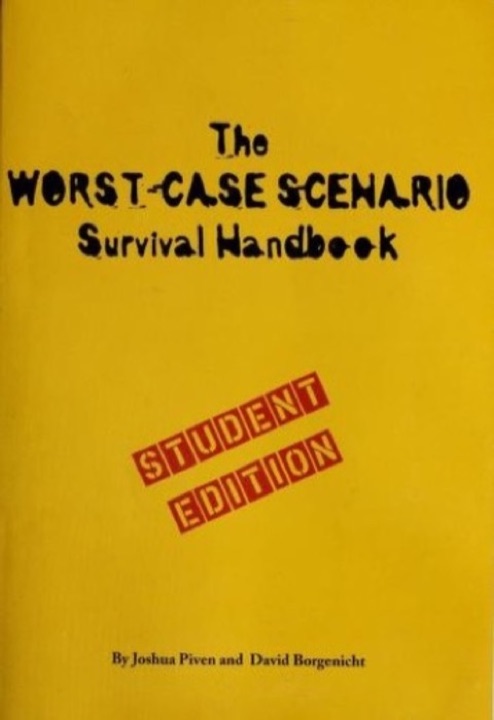
"The Worst-Case Scenario Survival Handbook" by Joshua Piven and David Borgenicht is a humorous yet practical guide that offers advice on how to handle a variety of extreme situations. The book is structured as a series of step-by-step instructions for surviving unlikely but potentially life-threatening scenarios. Here’s a thorough summary of its content and key takeaways:
Summary:
-
Introduction: - The book opens with an engaging introduction that sets the tone for the rest of the content. It emphasizes the importance of being prepared for unexpected situations, no matter how improbable they may seem.
-
Survival Scenarios: - The core of the book is divided into chapters, each focusing on different categories of emergencies. These include natural disasters, animal encounters, mechanical failures, and human threats. - Natural Disasters: Instructions on surviving earthquakes, tornadoes, and quicksand. For example, during an earthquake, it advises taking cover under sturdy furniture and staying away from windows. - Animal Encounters: Tips on dealing with dangerous animals like sharks, alligators, and bears. For instance, if attacked by a shark, it suggests hitting the shark on the nose and trying to stay calm. - Mechanical Failures: Guidance on handling situations like brake failure in a car or a stalled engine in a plane. It includes practical steps like pumping the brakes or using emergency exits. - Human Threats: Advice on escaping from a sinking car, surviving a hostage situation, or dealing with a mugger. Techniques include staying calm, assessing the situation, and looking for escape opportunities.
-
Practical Tips: - The book provides practical, often unconventional tips for each scenario. These are designed to be easy to remember and implement under stress. - It emphasizes the importance of quick thinking and adaptability in emergencies.
-
Illustrations and Humor: - The book is filled with illustrations that add clarity to the instructions and contribute to its light-hearted tone. - Despite the serious nature of the scenarios, the authors maintain a humorous approach, making the book both informative and entertaining.
Key Takeaways and Lessons:
-
Preparedness is Key: - The book underscores the importance of being prepared for any situation. Having basic knowledge and a plan can significantly increase your chances of survival.
-
Stay Calm and Think Clearly: - In any emergency, maintaining composure is crucial. Panic can cloud judgment and hinder your ability to act effectively.
-
Adaptability: - Being able to adapt to changing circumstances is vital. The scenarios demonstrate that flexibility and resourcefulness can be lifesaving.
-
Practical Knowledge: - While some scenarios are extreme, the practical advice can be applied to more common situations, making it useful beyond just worst-case scenarios.
-
Humor as a Coping Mechanism: - The book shows that humor can be an effective way to deal with fear and stress, helping to keep a level head in dire situations.
Overall, "The Worst-Case Scenario Survival Handbook" is a unique blend of practical advice and humor, making it an engaging read that equips readers with potentially life-saving knowledge.