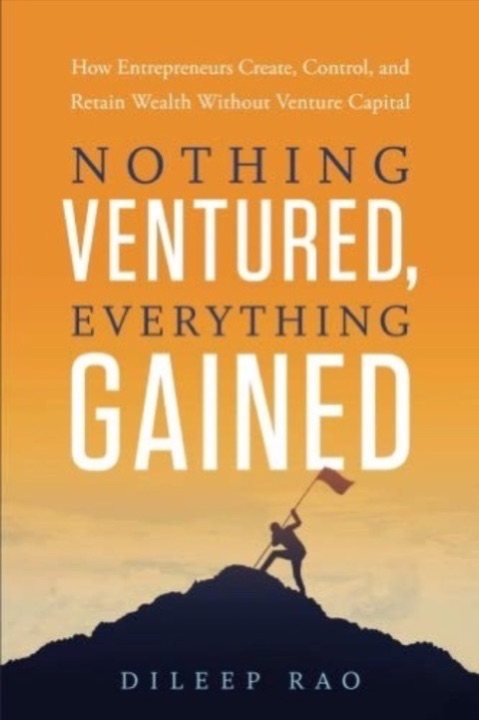
Nothing Ventured Everything Gained
Applying the lessons from "Nothing Ventured, Everything Gained" by Dileep Rao to your life can be a rewarding endeavor, especially given your rich experiences and values. Here are some ways you might integrate these insights:
-
Embrace Resourcefulness: Given your belief in resilience and persistence, you can further cultivate resourcefulness in your personal and professional life. Look for creative solutions and leverage your existing skills and networks to achieve your goals, much like the entrepreneurs in Rao's book.
-
Focus on Bootstrapping: While you may not be starting a business, the principles of bootstrapping—such as financial discipline and innovation—can be applied to personal projects or hobbies. For instance, if you decide to pursue skydiving, you might find ways to fund this experience through careful budgeting or by leveraging connections in the aviation community.
-
Explore Alternative Paths: Just as Rao highlights alternative financing strategies, you can explore unconventional paths in your personal growth or career. This might involve seeking mentorship, collaborating with others who share your values, or engaging in advocacy work that aligns with your passions.
-
Customer-Centric Approach: In your interactions with others, whether in your medical practice or personal life, continue to prioritize empathy and understanding. By focusing on the needs and perspectives of those around you, you can build stronger, more meaningful relationships.
-
Build a Sustainable Model: Consider how you can create a sustainable lifestyle that aligns with your values and aspirations. This might involve balancing your various interests, such as flying, reading, and spending time with family, to ensure long-term fulfillment.
-
Leadership and Team Building: As someone who values kindness and empathy, you can continue to foster these qualities in your leadership style. Whether mentoring others or working in teams, focus on building a supportive and inclusive environment.
-
Adaptability and Resilience: Your life experiences have already demonstrated your resilience. Continue to embrace adaptability, especially when facing challenges or pursuing new opportunities. This mindset will help you navigate life's uncertainties with confidence.
-
Reflect on Control and Ownership: Like the entrepreneurs who retain control over their ventures, consider how you can maintain control over your life's direction. This might involve setting clear boundaries, making intentional choices, and staying true to your core values.
By integrating these lessons into your life, you can continue to grow and thrive, leveraging your strengths and experiences to achieve your aspirations while staying true to your values.
What the book covers
"Nothing Ventured Everything Gained" by Dileep Rao is a provocative guide that dismantles the modern obsession with venture capital as the primary path to business success. Drawing on extensive research into the world’s most successful startups, Rao explains how high-impact entrepreneurs can build massive companies while maintaining full ownership and control. The book serves as a roadmap for founders who wish to create wealth through financial discipline rather than external equity financing.
Summary:
-
Challenging the Venture Capital Myth: - Dileep Rao begins by debunking the pervasive idea that early-stage venture capital is a necessity for building a "unicorn" or billion-dollar enterprise. He argues that while the media often highlights VC-backed successes, the actual probability of a startup securing such funding is less than one percent, making it an unreliable goal for the vast majority of founders. - By shifting focus away from the "VC or bust" mentality, Rao encourages entrepreneurs to prioritize sustainable business models that do not rely on the approval of external financiers. This perspective allows founders to concentrate on creating real value for customers rather than spending months pitching to institutional investors.
-
The Reality of Billion-Dollar Success: - Through a comprehensive analysis of eighty-five billion-dollar entrepreneurs, the author reveals that over ninety percent of these individuals actually took off without early-stage venture capital. This data serves as the foundation for Rao’s argument that "finance-smart" strategies are far more common among top-tier successes than the venture-funded model suggests.
-
Finance-Smart Entrepreneurial Skills: - The book details specific "finance-smart" skills that combine business acumen with capital management to optimize internal cash flow and minimize the need for outside investment. These techniques involve focusing on capital productivity and ensuring that every dollar spent generates a high return, effectively turning the business into its own best financier. - These skills are categorized into opportunity, strategy, and leadership segments, providing a holistic view of how to manage a high-growth venture without surrendering equity. The emphasis is on building a business that is "capital-smart," meaning it requires minimal external funding to achieve maximum scale and valuation.
-
Maintaining Control and Retaining Wealth: - One of the core tenets of the book is that avoiding or delaying venture capital allows entrepreneurs to keep a much larger share of the wealth they create. Rao emphasizes that when founders take on early investors, they often lose control over their company’s strategic direction and find their personal equity heavily diluted over subsequent rounds of funding. - By retaining control, entrepreneurs can make decisions that benefit the long-term health of the company rather than being forced to meet short-term exit targets set by financiers. This autonomy is presented as a key factor in the enduring success of many of the world's most stable and influential businesses.
-
Opportunity and Strategy Secrets: - Rao identifies specific "opportunity secrets" used by successful founders to identify market gaps that can be exploited without requiring millions of dollars in upfront capital. He argues that the strategy of a business must be designed from the start to be capital-efficient, allowing for rapid scaling through customer-generated revenue. - This involves selecting target markets that offer high margins and rapid payment cycles, which provides the necessary working capital for internal expansion. The book teaches readers how to engineer their business model to fund its own growth through operational profits rather than relying on debt or equity.
-
Operational Excellence and Data Management: - The author highlights the importance of monitoring internal numbers, comparing business management without data to driving a vehicle without a dashboard or direction. By tracking accounting, marketing, and operational metrics with precision, entrepreneurs can identify potential problems early and make informed adjustments that sustain growth without needing cash infusions.
-
Lessons from Iconic Industry Giants: - The text uses real-world examples from the careers of legendary founders like Michael Dell, Jeff Bezos, and Steve Jobs to illustrate how they leveraged unique financing and operational models. For instance, Dell’s strategy of having customers pay upfront for customized PCs provided the working capital needed to expand rapidly without surrendering ownership to venture capitalists. - These case studies prove that even the tech industry's most famous names utilized bootstrapping techniques to maintain their vision during critical growth phases. Rao provides these examples to inspire contemporary founders to follow in the footsteps of those who built enduring empires on their own terms.
"Nothing Ventured, Everything Gained" is a significant contribution to entrepreneurial literature because it empowers founders to look beyond the Silicon Valley echo chamber. By providing an evidence-based alternative to the venture capital path, Dileep Rao offers a practical framework for building sustainable, high-value companies that enrich the people who actually build them.