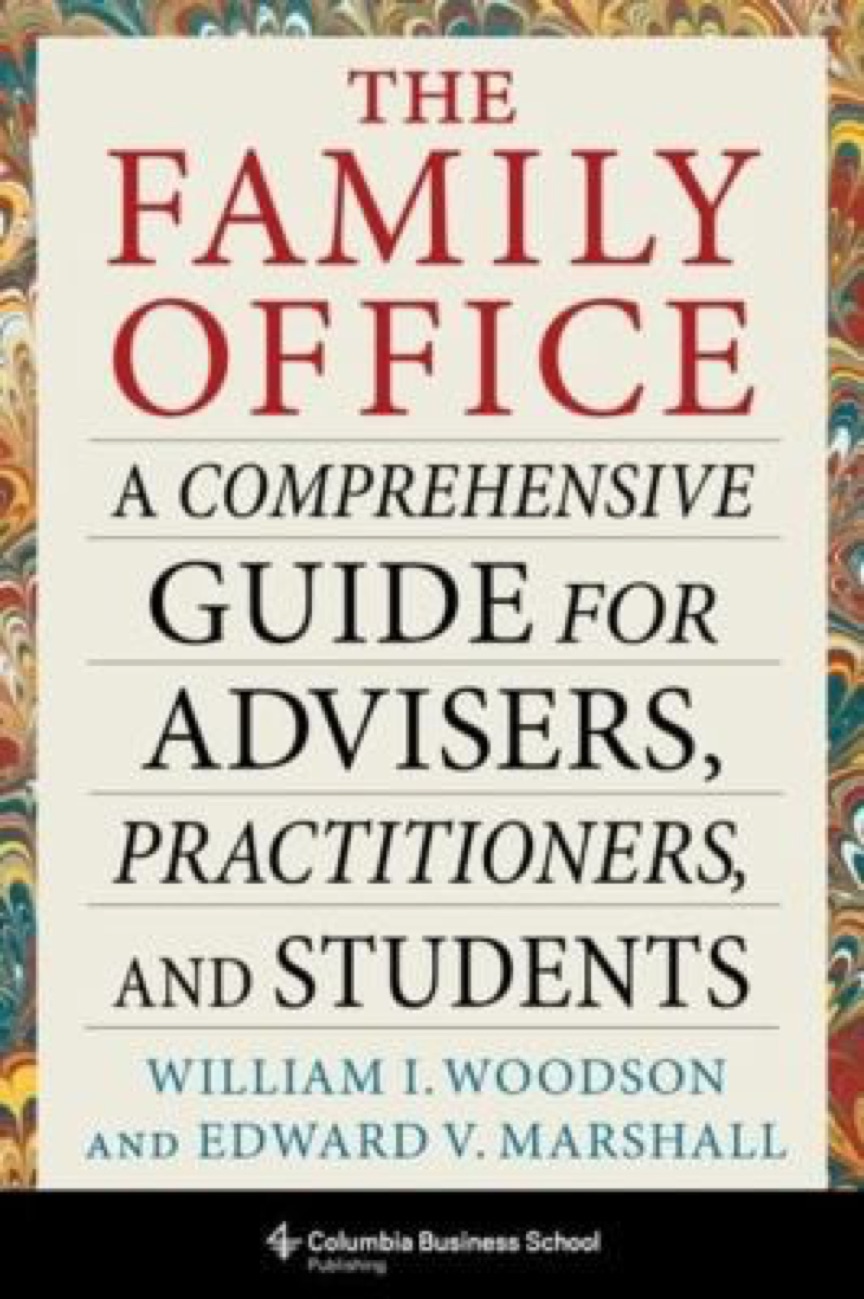
The Family Office: A Comprehensive Guide for Advisers, Practitioners, and Students
Applying the lessons from "The Family Office: A Comprehensive Guide for Advisers, Practitioners, and Students" by William Woodson and Kirby Rosplock to your life can be a transformative step toward securing a legacy that transcends mere financial success. Here are some ways you might integrate these lessons:
-
Adopt a Professionalized Governance Model: - Treat your personal and family wealth with the same rigor you apply to your healthcare ventures or law practice. By establishing clear roles, a mission statement, and a formal decision-making process, you can ensure that your financial legacy is managed with professional discipline rather than emotional impulse.
-
Prioritize Holistic Risk Management: - As a pilot and physician, you understand the importance of checklists and risk mitigation; apply this to your family office by looking beyond market volatility. Ensure you have robust systems for cybersecurity, physical safety for your family, and reputational protection to safeguard what you have built across your various careers.
-
Cultivate Next-Generation Stewardship: - In line with the mantra "Stay Humble," use the family office structure as a classroom for your heirs. Don't just provide for them; involve them in the management of family foundations or impact investing projects to teach them the responsibilities of wealth and the value of hard work and service.
-
Optimize Operational Efficiency Through Outsourcing: - Recognize when to build internal capabilities and when to leverage external experts, much like your approach in serial entrepreneurship. Utilizing a Multi-Family Office or an Outsourced CIO can provide you with institutional-grade resources without the administrative burden of managing a massive internal staff, allowing you to focus on high-level strategy.
-
Align Wealth with Personal Values: - Use the book’s framework for strategic philanthropy to ensure your charitable giving is as impactful as your business ventures. By creating a structured giving plan, you can turn your financial success into a tool for long-term social change that reflects your personal journey in medicine and law.
-
Prepare for Seamless Succession: - Leverage your legal and MBA background to create a transition plan that accounts for the complexity of multi-generational wealth. Ensure that legal documents are not just compliant but are living reflections of your family’s goals, preventing future litigation and preserving family harmony.
By integrating these lessons, you can transform your financial success from a collection of assets into a lasting, value-driven institution. This approach ensures that your hard-earned wealth serves as a catalyst for your family's continued growth, intellectual development, and societal contribution for generations to come.
What the book covers
"The Family Office: A Comprehensive Guide for Advisers, Practitioners, and Students" by William Woodson and Kirby Rosplock is a definitive resource that demystifies the complex landscape of private wealth management for ultra-high-net-worth (UHNW) families. The book serves as both a theoretical framework and a practical manual, exploring how family offices are established, structured, and maintained across generations. It addresses the diverse needs of wealthy families, from sophisticated investment strategies and tax planning to legacy building and family governance.
Summary:
-
The Evolution and Definition of the Family Office: - The authors trace the history of family offices from their origins in the 19th-century industrial era to the modern proliferation of Single Family Offices (SFOs) and Multi-Family Offices (MFOs). They explain that a family office is not just a financial entity but a comprehensive support structure designed to manage the total affairs of a wealthy family, including investment, tax, legal, and lifestyle management.
-
Strategic Governance and Family Leadership: - This section emphasizes the importance of creating a formal governance structure to manage family dynamics and decision-making processes. Woodson and Rosplock argue that a clear family constitution and mission statement are essential for aligning the interests of various family members and preventing the types of conflict that often lead to the dissipation of multi-generational wealth.
-
Investment Management and Asset Allocation: - The book details the unique investment challenges faced by UHNW families, including the management of concentrated wealth, illiquid assets, and the use of alternative investments like private equity and hedge funds. It explores the different models for investment oversight, such as the Outsourced Chief Investment Officer (OCIO) model versus building an internal, institutional-grade investment team.
-
Operational Infrastructure and Risk Management: - Beyond financial assets, the authors cover the critical operational components of a family office, including accounting, reporting, and physical and cybersecurity. They provide a blueprint for staffing a family office, highlighting the roles of the CEO, CFO, and legal counsel, and discuss the necessity of robust risk management protocols to protect the family’s privacy and reputation.
-
Philanthropy and Impact Investing: - Woodson and Rosplock explore how families can use their wealth to drive social change through strategic philanthropy and impact investing. They discuss the legal structures available for giving, such as private foundations and donor-advised funds, and explain how to involve younger family members in charitable endeavors to instill values of stewardship and social responsibility.
-
Preparing the Next Generation: - A central theme of the book is the "human capital" of the family, focusing on the education and preparation of heirs. The authors outline strategies for financial literacy training and mentorship, ensuring that the next generation is capable of managing the responsibilities and complexities that come with significant inherited wealth.
By synthesizing technical financial advice with sociological insights into family dynamics, this book provides a comprehensive roadmap for anyone involved in the UHNW ecosystem. Its significance lies in its ability to bridge the gap between academic theory and the practical, often messy realities of managing extreme wealth, making it an essential text for professionalizing the family office industry.