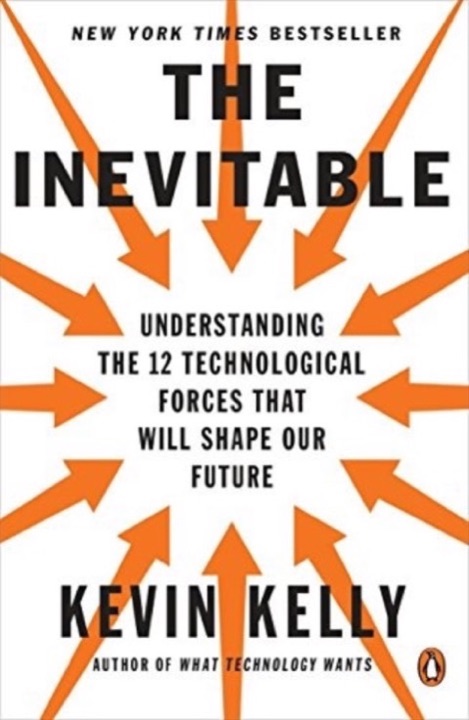
The Inevitable: Understanding the 12 Technological Forces That Will Shape Our Future
Applying the lessons from Kevin Kelly's "The Inevitable" to your life involves embracing the transformative technological forces he outlines while aligning them with your personal values, experiences, and aspirations. Here’s how you might integrate these lessons:
-
Embrace Constant Change: Given your experiences and resilience, continue to adapt to new technologies and changes in your environment. Your openness to growth and learning aligns well with the idea of technology being in a constant state of becoming.
-
Leverage AI and Automation: As a forward-thinking individual, explore how AI and automation can enhance your personal and professional life. This could involve using AI tools to streamline tasks or improve efficiency in your work as a physician.
-
Adapt to the Flow of Information: With your interest in reading and staying informed, focus on tools and strategies that help you manage the real-time flow of information. This will allow you to stay updated without feeling overwhelmed.
-
Utilize Screens and Digital Interactions: As someone who enjoys technology, explore new ways to interact with digital content, whether through virtual reality experiences or innovative ways to connect with family and friends.
-
Prioritize Access Over Ownership: Reflect on how the sharing economy can enhance your lifestyle. This might involve using services that offer experiences rather than accumulating possessions, aligning with your love for travel and new experiences.
-
Foster Collaboration and Sharing: Your passion for social issues and advocacy work can benefit from collaborative platforms that amplify your efforts. Engage with communities and networks that share your values to drive positive change.
-
Filter Information Effectively: Given your analytical approach, use filtering tools to prioritize the most relevant information, helping you make informed decisions quickly and efficiently.
-
Embrace Remix Culture: With your humor and creativity, explore how remixing ideas and content can lead to new insights and innovations in your personal and professional life.
-
Explore Immersive Technologies: Consider how virtual and augmented reality can enhance your hobbies, such as flying or attending concerts, providing new ways to experience and enjoy these activities.
-
Balance Tracking with Privacy: As someone who values privacy, be mindful of how you use technology that tracks personal data. Find a balance that allows you to benefit from data insights while protecting your privacy.
-
Cultivate Curiosity and Critical Thinking: Your lifelong learning mindset aligns with the importance of asking insightful questions. Continue to challenge assumptions and seek diverse perspectives to navigate the future effectively.
-
Embrace New Beginnings: With your optimistic outlook, view each technological advancement as an opportunity for growth and innovation. Stay open to new possibilities and be ready to adapt as the world evolves.
By integrating these lessons into your life, you can harness the power of technology to enhance your personal growth, professional success, and contributions to society, all while staying true to your core values of kindness and empathy.
What the book covers
"The Inevitable: Understanding the 12 Technological Forces That Will Shape Our Future" by Kevin Kelly explores the transformative technological trends that are set to shape the next few decades. Kelly, a co-founder of Wired magazine, provides a forward-looking analysis of how these forces will impact our lives, businesses, and societies. Here’s a thorough summary of the book, including key takeaways and lessons:
Summary:
-
Becoming: Kelly discusses the concept of constant change and evolution in technology. He argues that technology is always in a state of becoming, and this perpetual state of flux will continue to drive innovation and adaptation.
-
Cognifying: This chapter focuses on the rise of artificial intelligence and machine learning. Kelly predicts that AI will become ubiquitous, enhancing various aspects of life and work by making systems smarter and more efficient.
-
Flowing: Information is increasingly becoming a real-time stream rather than static content. Kelly emphasizes the importance of adapting to this flow of information, which will transform how we consume and interact with data.
-
Screening: The proliferation of screens and displays is changing how we access and share information. Kelly envisions a future where screens are everywhere, offering new ways to interact with digital content.
-
Accessing: Ownership is becoming less important than access. Kelly discusses the shift towards a sharing economy, where access to services and experiences is prioritized over owning physical goods.
-
Sharing: The internet has enabled unprecedented levels of sharing and collaboration. Kelly explores how this trend is reshaping industries, fostering innovation, and creating new economic models.
-
Filtering: As the volume of information grows, filtering becomes essential. Kelly highlights the importance of tools and algorithms that help us manage and prioritize information effectively.
-
Remixing: The ability to remix and reconfigure existing content is a powerful creative force. Kelly argues that remix culture will continue to drive innovation and cultural evolution.
-
Interacting: Advances in virtual and augmented reality are changing how we interact with digital environments. Kelly predicts that these technologies will become more immersive and integrated into daily life.
-
Tracking: The rise of sensors and data collection is leading to increased tracking of personal and environmental data. Kelly discusses the implications for privacy and the potential benefits of a more quantified world.
-
Questioning: In a world where information is abundant, the ability to ask the right questions becomes crucial. Kelly emphasizes the importance of curiosity and critical thinking in navigating the future.
-
Beginning: The final chapter looks at the continuous cycle of technological beginnings. Kelly suggests that we are at the start of a new era, with endless possibilities for innovation and growth.
Key Takeaways and Lessons:
-
Embrace Change: The only constant is change. Individuals and organizations must be adaptable and open to new technologies and ideas.
-
Leverage AI and Automation: As AI becomes more prevalent, leveraging these technologies can lead to increased efficiency and new opportunities.
-
Focus on Access and Experience: The shift from ownership to access means that businesses should focus on providing valuable experiences and services.
-
Cultivate Curiosity: In an age of information overload, the ability to ask insightful questions and think critically is more important than ever.
-
Balance Privacy and Innovation: While tracking and data collection offer benefits, it’s crucial to balance these with privacy concerns and ethical considerations.
-
Foster Collaboration and Sharing: The power of collaboration and sharing can drive innovation and create new economic models.
Kelly’s book encourages readers to not only anticipate these technological forces but to actively engage with them, shaping a future that is both innovative and human-centered.