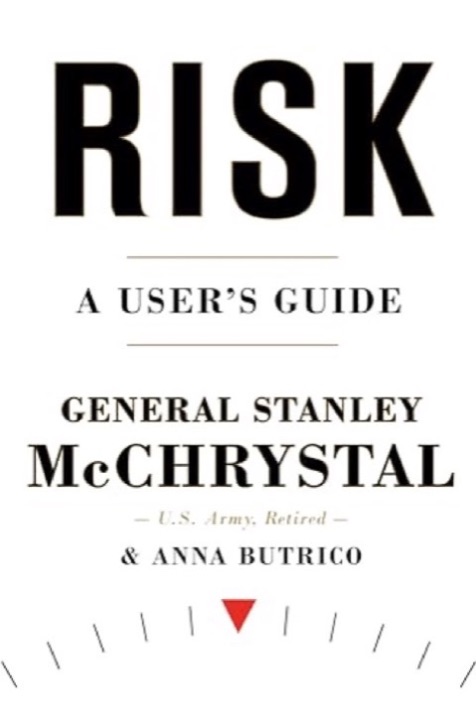
Risk: A User's Guide
Applying the lessons from "Risk: A User's Guide" by General Stanley McChrystal and Anna Butrico to your life can enhance your ability to manage uncertainties and challenges effectively. Here are some ways you might integrate these insights:
-
Proactive Risk Management: - Given your adventurous spirit and experiences, such as surviving plane crashes, you can further develop a proactive approach to risk. This means anticipating potential risks in activities like flying or considering new ventures like skydiving. Preparing for these risks can enhance your safety and enjoyment.
-
Building a Personal Risk Immune System: - Reflect on the ten factors of the Risk Immune System—narrative, structure, technology, diversity, bias, action, timing, adaptability, leadership, and communication. For instance, your narrative of living life fully and valuing kindness can guide your decisions and actions. Embrace adaptability and timing in your personal and professional life to navigate changes and seize opportunities.
-
Embracing Diversity and Technology: - Leverage diverse perspectives in your social circles and professional networks to gain new insights and reduce blind spots. Stay informed about technological advancements, especially in fields like medicine and aviation, to mitigate risks and enhance your capabilities.
-
Mitigating Bias and Taking Informed Action: - Be mindful of cognitive biases that might affect your decision-making, especially in high-stakes situations like emergency medicine or flying. Balance your humor and impulsivity with informed, measured actions to avoid potential pitfalls.
-
Enhancing Leadership and Communication: - As someone who values direct and humorous communication, ensure that your interactions foster trust and clarity. In leadership roles, inspire confidence and maintain open channels for feedback and information flow.
-
Cultivating Resilience and Adaptability: - Your resilience is already a strength, but continue to cultivate it by learning from failures and adapting to new challenges. This will help you navigate life's uncertainties and achieve your aspirations, such as living in the moment or pursuing skydiving.
-
Continuous Learning and Growth: - Embrace the mindset of being in a constant state of beta. Seek opportunities for personal growth, whether through reading, engaging in new experiences, or reflecting on past lessons. This aligns with your goal of being a lifelong learner.
-
Holistic Approach to Risk: - Consider the interconnectedness of various aspects of your life—personal, professional, and social—when assessing risks. Integrate these perspectives into a cohesive strategy to achieve your goals and maintain balance.
By applying these principles, you can enhance your ability to manage risks effectively, pursue your passions with confidence, and continue to live a fulfilling and impactful life.
What the book covers
"Risk: A User's Guide" by General Stanley McChrystal and Anna Butrico is a comprehensive exploration of risk management, drawing on McChrystal's extensive military experience and insights from various fields. The book aims to redefine how individuals and organizations perceive and handle risk, emphasizing the importance of adaptability and resilience in an increasingly complex world.
Summary:
-
Understanding Risk: - The authors begin by redefining risk, not as a mere threat but as a combination of threats and vulnerabilities. They argue that risk is an inherent part of life and cannot be eliminated, only managed. - McChrystal emphasizes the importance of understanding the environment and context in which risks occur, advocating for a proactive rather than reactive approach.
-
The Risk Immune System: - The book introduces the concept of a "Risk Immune System," analogous to the human immune system, which organizations can develop to identify, assess, and respond to risks effectively. - This system is built on ten factors: narrative, structure, technology, diversity, bias, action, timing, adaptability, leadership, and communication.
-
Narrative and Structure: - A strong narrative helps organizations understand their purpose and align their actions with their goals. It serves as a guiding principle during uncertain times. - Structure refers to the organizational framework that supports decision-making and risk management. A flexible structure allows for quick adaptation to changing circumstances.
-
Technology and Diversity: - Technology is a double-edged sword; it can both mitigate and introduce new risks. Organizations must leverage technology wisely and remain vigilant about its potential downsides. - Diversity in teams enhances problem-solving and innovation, providing a broader range of perspectives and reducing blind spots in risk assessment.
-
Bias and Action: - Cognitive biases can cloud judgment and lead to poor risk management. Awareness and mitigation of these biases are crucial for effective decision-making. - Taking decisive action is essential, but it must be informed and measured. The authors stress the importance of balancing analysis with action to avoid paralysis by analysis.
-
Timing and Adaptability: - Timing is critical in risk management. Recognizing the right moment to act can make the difference between success and failure. - Adaptability is the ability to adjust strategies and tactics in response to evolving risks. Organizations that cultivate adaptability are better equipped to handle unexpected challenges.
-
Leadership and Communication: - Effective leadership is central to risk management. Leaders must inspire confidence, provide clear direction, and foster a culture of trust and accountability. - Communication is the glue that holds the Risk Immune System together. Transparent and open communication channels ensure that information flows freely and accurately.
Key Takeaways and Lessons:
- Proactive Risk Management: Organizations should anticipate risks and prepare for them rather than merely reacting when they occur.
- Building Resilience: Developing a robust Risk Immune System enhances an organization's resilience, enabling it to withstand and recover from adverse events.
- Embracing Uncertainty: Accepting that uncertainty is a constant allows organizations to focus on building capabilities to navigate it effectively.
- Continuous Learning: Risk management is an ongoing process that requires continuous learning and adaptation to new information and changing environments.
- Holistic Approach: Effective risk management involves a holistic approach that considers multiple factors and perspectives, integrating them into a cohesive strategy.
In conclusion, "Risk: A User's Guide" provides a framework for understanding and managing risk in a complex world. By adopting the principles outlined in the book, individuals and organizations can enhance their ability to navigate uncertainty and achieve their objectives.