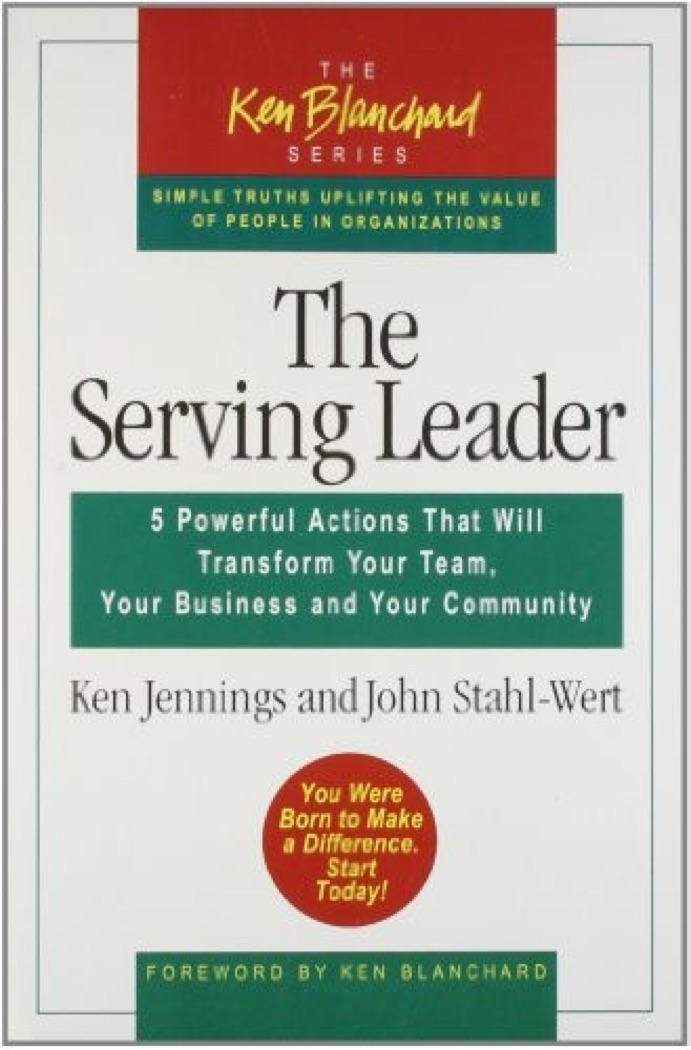
The Serving Leader: Five Powerful Actions to Transform Your Team, Business, and Community
Applying the lessons from "The Serving Leader" by Ken Jennings and John Stahl-Wert to your life can be the catalyst for a paradigm shift in how you manage your various ventures and professional roles. Here are some ways you might integrate these lessons:
-
Define Your 'Grand Purpose' in Every Venture: - Whether you are overseeing a medical practice, a venture capital firm, or a new startup, you should identify a mission that is larger than the bottom line. By articulating a purpose that focuses on healing patients or empowering entrepreneurs, you create a narrative that inspires loyalty and high performance in a way that financial incentives alone cannot.
-
Practice Servant Leadership in High-Stakes Environments: - In the emergency department or the cockpit, you must view your role as a supporter of the team. By ensuring your nurses, technicians, or co-pilots have the tools and mental space to excel, you mitigate risk and improve outcomes, proving that the most effective leader is the one who serves the front line.
-
Set Uncompromising Standards for Excellence: - You should integrate the "Raise the Bar" philosophy by refusing to settle for mediocrity in any of your professional pursuits. By expecting world-class performance from your associates and partners, you demonstrate that you value their potential, which encourages them to grow into the leaders they are capable of becoming.
-
Aggressively Remove Barriers for Your Team: - As a serial entrepreneur and investor, your most valuable contribution is often clearing the path for others. Use your influence and experience to eliminate the bureaucratic or financial obstacles that hinder your team's progress, allowing them to focus entirely on innovation and execution.
-
Capitalize on Individual Talents: - You should shift your focus from remediation to optimization by identifying the specific "superpowers" of your colleagues and employees. By placing individuals in roles that align with their inherent strengths, you maximize the collective intelligence of your organization and foster a more satisfied, productive workforce.
-
Model the 'Stay Humble' Mantra: - You can integrate the book's core message by embodying humility in every interaction. By demonstrating that no task is beneath you and that your success is secondary to the team’s success, you build the trust and respect necessary to lead effectively through periods of rapid growth or crisis.
By integrating these lessons, you will transition from a leader who simply manages people to one who transforms lives and organizations. This approach not only ensures the success of your business interests but also creates a lasting legacy of service and excellence that will influence the healthcare and entrepreneurial landscapes for years to come.
What the book covers
"The Serving Leader: Five Powerful Actions to Transform Your Team, Business, and Community" by Ken Jennings and John Stahl-Wert is a compelling leadership parable that challenges the traditional top-down management model in favor of a service-oriented approach. The story follows Mike, a struggling executive who returns to his childhood home to care for his dying father, Mike Senior, and in the process, discovers the profound impact his father had on their community through his leadership style. Through interactions with a diverse group of "Serving Leaders," Mike learns that true authority comes not from status, but from the ability to empower and elevate others. This book provides a roadmap for leaders who want to achieve extraordinary results by focusing on the growth and well-being of their teams and their larger mission.
Summary:
-
Run to Purpose: - The authors argue that the first action of a serving leader is to align the organization around a purpose that is greater than personal success or financial gain. This grand purpose acts as a magnetic force, drawing in talent and commitment by offering employees a sense of meaning that transcends their daily tasks. - By focusing on a noble cause, a leader creates a culture of urgency and passion. When people understand that their work serves a higher good—whether it is saving lives in medicine or improving safety in aviation—they are more likely to innovate and persevere through difficult challenges.
-
Up-end the Pyramid: - This concept involves flipping the traditional organizational chart so that the leader sits at the bottom, supporting those who are on the front lines. The primary role of the leader shifts from being the "boss" to being a facilitator who ensures that the team has everything they need to succeed. - By putting the needs of the frontline workers first, the leader fosters a sense of ownership and accountability throughout the organization. This shift minimizes the ego of the executive and maximizes the potential of the individuals who are actually delivering value to the customers or patients.
-
Raise the Bar: - Serving leadership is not about being soft or lowering expectations; rather, it is about setting incredibly high standards because you care about the potential of your people. Leaders must challenge their teams to reach for excellence and hold them accountable for high performance. - This action requires a deep belief in the capacity of others. When a leader raises the bar, they signal that they trust their team to achieve greatness, which in turn builds the team's confidence and pushes the entire organization toward world-class results.
-
Blaze the Trail: - A serving leader identifies the obstacles that prevent their team from doing their best work and works tirelessly to remove them. This might involve changing outdated policies, securing better resources, or clearing administrative hurdles that slow down progress. - Blazing the trail also means the leader must be willing to model the behavior they expect from others. By being the first to take risks or engage in difficult tasks, the leader sets the pace and demonstrates that they are not above the hard work required to reach the common goal.
-
Build on Strength: - Instead of focusing on fixing weaknesses, serving leaders identify the unique strengths of each individual and position them where those strengths can be most effective. This asset-based approach leads to higher engagement and more efficient problem-solving. - The authors suggest that when people are allowed to work within their areas of natural talent, the entire organization becomes more agile and resilient. This strategy turns a group of individuals into a cohesive unit where members complement each other’s abilities.
-
The Multiplier Effect: - The book illustrates how these five actions create a ripple effect that extends beyond the immediate business environment and into the community. When leaders serve their teams, those team members are more likely to serve their customers and families with the same level of care. - This systemic impact is the ultimate legacy of a serving leader. By building an organization based on service, a leader contributes to a healthier, more productive society, proving that ethical leadership is also the most effective way to drive long-term institutional success.
By weaving these principles into a narrative, the authors provide a practical framework for anyone in a position of influence. The book remains a foundational text for those seeking to balance the demands of high-performance business environments with a deep, human-centric commitment to others.