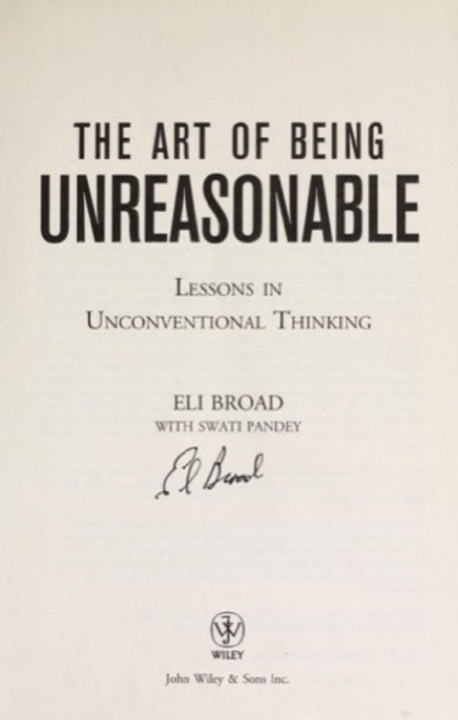
The Art of Being Unreasonable: Lessons in Unconventional Thinking
Applying the lessons from "The Art of Being Unreasonable: Lessons in Unconventional Thinking" by Eli Broad to your life can be a transformative experience, especially given your rich personal history and values. Here’s how you might integrate some of the key takeaways from the book into your life:
-
Challenge the Status Quo: You already have a strong sense of resilience and humor, which can be powerful tools in questioning conventional wisdom. Consider how you might further push boundaries in your personal and professional life. For example, you could explore innovative approaches in your medical practice or advocacy work that others might overlook.
-
Calculated Risk-Taking: Your experiences with near-death situations have reinforced your belief in having more to accomplish. Use this perspective to take calculated risks in areas you’re passionate about, such as trying skydiving or pursuing new advocacy projects. Your analytical approach to decision-making can help you assess these risks effectively.
-
Persistence and Resilience: Your life motto, "Never, ever quit," aligns perfectly with Broad's emphasis on perseverance. Continue to apply this mindset to overcome obstacles, whether in personal growth, professional challenges, or social activism.
-
Vision and Ambition: You have clear aspirations, such as leveraging technology for societal betterment and eradicating inequality. Set ambitious goals in these areas and develop a strategic plan to achieve them, drawing inspiration from Broad’s visionary approach.
-
Accountability and Results: In your advocacy and professional work, continue to hold yourself and others accountable for achieving meaningful outcomes. This might involve setting measurable goals and regularly evaluating progress, much like Broad’s approach to philanthropy.
-
Adaptability: Your ability to remain calm and composed in high-stress situations is a testament to your adaptability. Use this strength to navigate changes in your personal and professional life, remaining open to new opportunities and perspectives.
-
Value of Education and Arts: Given your appreciation for learning and personal growth, consider how you might further support education and the arts, whether through volunteering, mentoring, or philanthropy.
-
Building Strong Teams: Your belief in surrounding yourself with talented individuals can be applied by fostering diverse and inclusive environments in your professional and personal circles. Encourage collaboration and creativity to solve complex problems.
By embracing these lessons, you can continue to live a life that is both fulfilling and impactful, staying true to your core values of kindness and empathy while pushing the boundaries of conventional thinking.
What the book covers
"The Art of Being Unreasonable: Lessons in Unconventional Thinking" by Eli Broad is a compelling exploration of how unconventional thinking and a willingness to defy norms can lead to extraordinary success. Eli Broad, a billionaire entrepreneur and philanthropist, shares insights from his own experiences in building two Fortune 500 companies in different industries and his extensive philanthropic work.
Summary:
Early Life and Career:
Eli Broad begins by recounting his early life and career, emphasizing the importance of his upbringing and education in shaping his approach to business and life. He highlights how his parents instilled in him the values of hard work and perseverance.
Building Businesses:
Broad details his journey in founding and growing two major companies: Kaufman and Broad (now KB Home), a homebuilding company, and SunAmerica, a financial services company. He attributes his success to being "unreasonable" in the sense of challenging conventional wisdom and taking calculated risks.
Unconventional Thinking:
A central theme of the book is the power of unconventional thinking. Broad argues that being unreasonable is not about being irrational but about questioning the status quo and being willing to pursue ideas that others might dismiss. He provides numerous examples from his career where thinking outside the box led to breakthroughs and success.
Philanthropy:
Broad also discusses his philanthropic efforts, particularly in education, science, and the arts. He emphasizes the importance of applying business principles to philanthropy to achieve meaningful and sustainable impact. His approach often involves setting ambitious goals and holding organizations accountable for results.
Leadership and Decision-Making:
The book offers insights into Broad's leadership style and decision-making process. He stresses the importance of being decisive, surrounding oneself with talented people, and maintaining a relentless focus on goals. Broad also highlights the value of learning from failures and adapting strategies accordingly.
Key Takeaways and Lessons:
-
Challenge the Status Quo: Success often requires questioning conventional wisdom and being willing to pursue ideas that others might consider unreasonable.
-
Calculated Risk-Taking: Taking risks is essential, but they should be calculated and informed by thorough research and analysis.
-
Persistence and Resilience: Perseverance in the face of obstacles is crucial. Broad emphasizes the importance of learning from failures and continuing to push forward.
-
Vision and Ambition: Setting ambitious goals and having a clear vision are vital for achieving extraordinary outcomes.
-
Accountability and Results: Whether in business or philanthropy, holding oneself and others accountable for results is key to success.
-
Adaptability: The ability to adapt to changing circumstances and pivot when necessary is a valuable trait for any leader.
-
Value of Education and Arts: Broad underscores the importance of investing in education and the arts as a means to drive innovation and societal progress.
-
Building Strong Teams: Surrounding oneself with talented and diverse individuals can enhance creativity and problem-solving.
Overall, "The Art of Being Unreasonable" serves as both a memoir and a guide for aspiring entrepreneurs and leaders, encouraging them to embrace unconventional thinking and pursue their goals with determination and creativity.