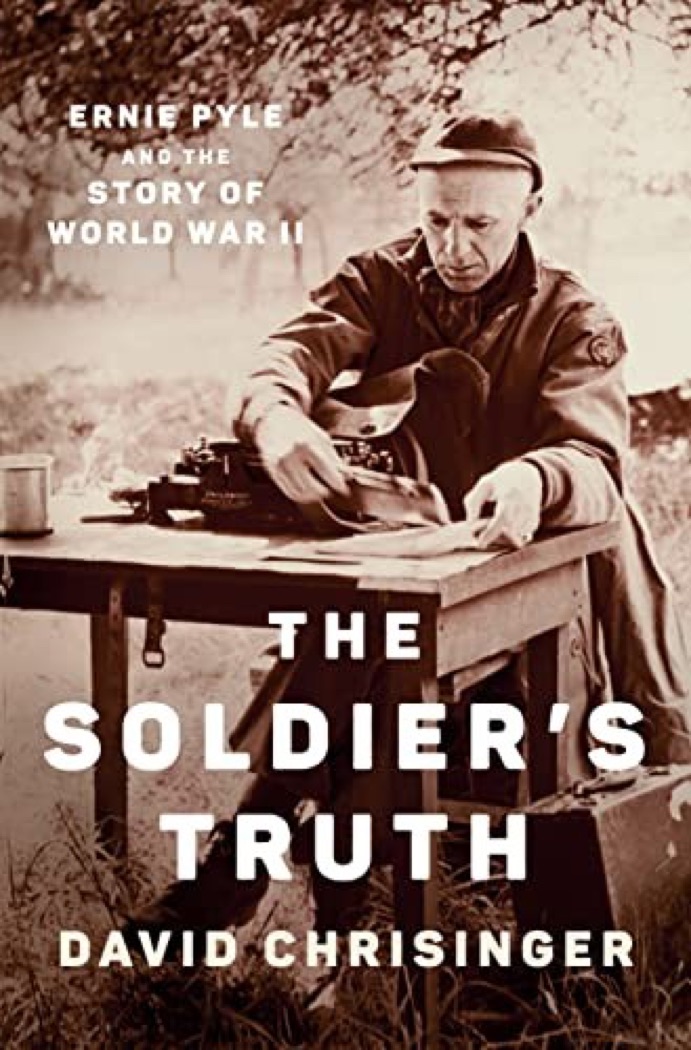
The Soldier's Truth: Ernie Pyle and the Story of World War II
Applying the lessons from "The Soldier's Truth: Ernie Pyle and the Story of World War II" by David Chrisinger to your life can be a transformative exercise in developing radical empathy and authentic leadership. Here are some ways you might integrate these lessons:
-
Prioritize the "Ground-Level" Perspective: - Whether you are leading a medical practice, a tech startup, or a legal firm, the most critical data often comes from the "trenches." You must intentionally seek out the perspectives of those on the front lines—your junior associates, nurses, or customer service reps—to understand the true operational reality of your organization, rather than relying solely on high-level executive summaries.
-
Practice Radical Empathy as a Leadership Tool: - Pyle’s success came from his ability to make people feel seen and heard in their darkest moments. In your professional life, you can build immense loyalty and trust by acknowledging the specific, individual burdens your team members carry, proving that you value their humanity as much as their productivity.
-
Communicate with Unvarnished Authenticity: - In an era of polished corporate jargon and PR-speak, there is a massive strategic advantage in being the person who tells the "unvarnished truth." By communicating with the same clarity and honesty Pyle used, you can cut through the noise, resolve conflicts faster, and build a brand—personal or corporate—that is rooted in integrity.
-
Recognize the Shadow Side of Success: - Pyle’s life illustrates that professional acclaim often comes with a significant personal cost. You should proactively monitor the health of your personal relationships and your own mental well-being, ensuring that your pursuit of a "mission" doesn't lead to the neglect of your internal life or your family.
-
Master the Art of Micro-Storytelling: - Large-scale goals can often feel abstract and uninspiring. To motivate others, you should learn to frame your vision through the stories of individuals; by highlighting one specific patient’s recovery or one client’s success, you make the mission tangible and emotionally resonant for your entire team.
-
Commit to Lifelong "Roving": - Never stop being a student of the world outside your immediate bubble. Pyle’s ability to report on the war came from years of curiosity about different walks of life; similarly, your ability to innovate in business or medicine depends on your willingness to step outside your comfort zone and learn from diverse disciplines.
By integrating these lessons, you will find that your effectiveness as a leader and a communicator is directly proportional to your ability to remain humble and connected to the people you serve. The story of Ernie Pyle reminds us that while technical expertise and strategic brilliance are necessary, it is our shared humanity—and our willingness to acknowledge it—that truly defines a legacy of impact.
What the book covers
"The Soldier's Truth: Ernie Pyle and the Story of World War II" by David Chrisinger is an immersive blend of biography, military history, and travelogue that retraces the footsteps of America’s most beloved war correspondent. Chrisinger explores how Pyle’s unique, empathetic reporting style bridged the gap between the front lines and the home front, humanizing a global conflict through the eyes of the "average Joe." By visiting the actual battlefields where Pyle lived and wrote, the author provides a modern lens through which to view the physical and psychological toll of Pyle’s commitment to telling the unvarnished truth.
Summary:
-
The Evolution of the Personal Column: - Before the war, Pyle established a reputation as a wandering travel columnist who found extraordinary stories in ordinary people, a skill that became his greatest asset as a war correspondent. This section details how his pre-war "roving reporter" years prepared him to reject the grand strategy of generals in favor of the mud-and-blood reality of the infantryman.
-
The North African and Italian Crucibles: - Chrisinger follows Pyle’s journey through the disastrous Kasserine Pass and the grueling Italian campaign, where Pyle first began to suffer from "war weariness." The narrative highlights Pyle’s ability to capture the visceral fatigue of the soldiers, culminating in his most famous column, "The Death of Captain Waskow," which fundamentally changed how Americans viewed the sacrifice of their officers.
-
The Shadow of the Home Front: - The book delves into the tragic personal life of Ernie Pyle and his wife, Jerry, whose struggles with alcoholism and mental illness created a private war as harrowing as the one Ernie covered abroad. Chrisinger illustrates the paradox of Pyle’s life: he was a hero to millions but felt like a failure in his most intimate relationship, illustrating the deep cost of his professional devotion.
-
The Reporting of D-Day and the Liberation of Paris: - During the invasion of Normandy, Pyle reached the peak of his influence, providing a somber, descriptive inventory of the wreckage on Omaha Beach that remains a touchstone of war journalism. Chrisinger emphasizes Pyle’s insistence on naming every soldier he featured, a practice that transformed anonymous casualties into sons, husbands, and neighbors for his readers.
-
Retracing the Geography of War: - A unique element of the book is Chrisinger’s own journey to the foxholes and hillsides where Pyle wrote his dispatches, offering a comparison between the historical record and the physical landscape today. These segments serve to ground Pyle’s prose in physical reality, helping the reader understand the sensory environment of the European Theater.
-
The Final Pacific Mission and Death: - Despite his exhaustion and premonitions of death, Pyle felt a sense of duty to cover the war in the Pacific, where he was ultimately killed by a Japanese machine gunner on the island of Ie Shima. Chrisinger recounts the global outpouring of grief that followed, cementing Pyle’s legacy as the "soldier's truth-teller" whose voice was essential to the American wartime identity.
Ultimately, this book is a profound meditation on the power of storytelling and the heavy burden of witnessing. It serves as a reminder that the history of war is not just about maps and maneuvers, but about the individual humans who endure the unimaginable, and the rare writers who have the courage to tell their stories without artifice.