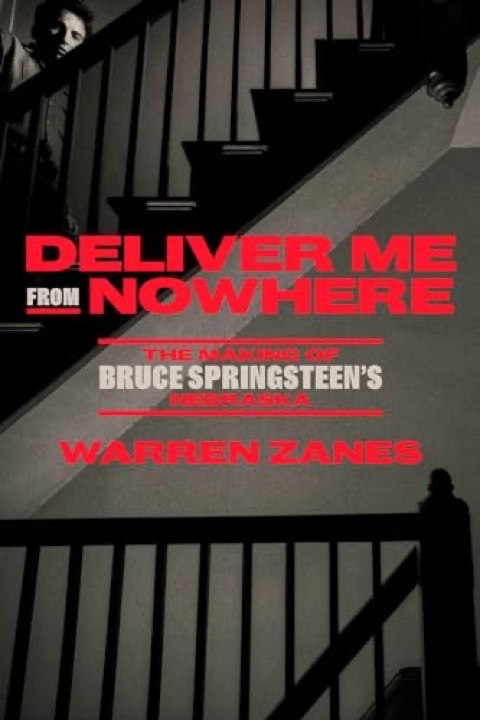
Deliver Me from Nowhere: The Making of Bruce Springsteen's Nebraska
Applying the lessons from "Deliver Me from Nowhere: The Making of Bruce Springsteen's Nebraska" by Warren Zanes to your life can be a catalyst for radical authenticity and strategic simplification. Here are some ways you might integrate these lessons:
-
Embrace the Power of Radical Simplicity: - You should recognize that sometimes the most effective way to communicate a complex truth is by stripping away the "production" and returning to the basics. In your leadership or professional practice, identify areas where over-complication is masking the core problem, and have the courage to address the "four-track" version of the issue rather than the polished, high-budget distraction.
-
Trust Your Creative Instincts Over Consensus: - Much like Springsteen rejected the full-band versions of his songs because they lost their soul, you must trust your gut when a project or venture feels off-course. Even if advisors or the market demand a certain "sound," your unique value lies in your ability to recognize when the raw, unpolished version is the most honest and effective path forward.
-
Acknowledge and Channel Your Vulnerabilities: - Whether in medicine, aviation, or business, there is a tendency to project constant strength, yet Zanes shows that Springsteen’s greatest work came from a place of deep personal struggle. You can find strength in acknowledging your own "dark nights"; integrating your vulnerabilities into your leadership style builds trust and creates a more resilient foundation for long-term success.
-
Know When to Pivot from Success: - Success can often be a trap that mandates more of the same. You should look at Springsteen’s decision to follow a hit album with a stark, acoustic record as a reminder that personal growth and professional longevity often require a sharp departure from the status quo, even when that departure seems counterintuitive to external observers.
-
The Value of the "Internal Demo": - Spend time in the quiet, isolated spaces of your own mind or craft to understand your true motives. Zanes highlights how the solitary recording process allowed Springsteen to face himself; similarly, you should protect your time for deep, solo reflection to ensure your external actions are aligned with your internal values.
By integrating these lessons, you can cultivate a life and career that prioritize substance over surface-level success. By valuing the raw and the real over the manufactured and the expected, you will find that your most authentic work—whether in the cockpit, the boardroom, or the exam room—is often the work that resonates most deeply with others and sustains you through the most challenging seasons.
What the book covers
"Deliver Me from Nowhere: The Making of Bruce Springsteen's Nebraska" by Warren Zanes is a definitive exploration of one of the most unexpected and influential pivots in rock history. The book chronicles Bruce Springsteen’s 1982 journey from the global superstardom of "The River" to the stark, haunting isolation of "Nebraska," an album recorded alone in a rented house on a simple four-track cassette deck. Zanes provides an intimate look at the collision of creative brilliance, mental health struggles, and the uncompromising pursuit of artistic truth that defined this era for Springsteen.
Summary:
-
The Paradox of Success: - In the early 1980s, Bruce Springsteen was at a commercial and cultural zenith, yet he found himself increasingly disconnected from the life he had built. Zanes describes a man grappling with the heavy expectations of his persona and the realization that his massive rock anthems were not sufficient to capture the darker, more complex realities he felt compelled to express.
-
The Four-Track Masterpiece: - Seeking a way to document his new, bleaker songs without the polish of a professional studio, Springsteen purchased a Teac Tascam Series 144 four-track recorder. Zanes details the technical and psychological process of Springsteen recording alone in a bedroom, capturing raw, unvarnished performances that were originally intended only as demos for the E Street Band.
-
The Narrative of the Dispossessed: - The book dives deep into the lyrical content of "Nebraska," which focused on characters living on the margins of society—criminals, laborers, and the alienated. Zanes explains how these stories of moral ambiguity and the "dead and gone" American dream reflected Springsteen’s own internal landscape and his desire to give voice to the quiet desperation of the working class.
-
The Failed Studio Sessions: - One of the book's most compelling arcs is the attempt to record these songs with the full E Street Band in a high-end studio. Zanes recounts how, despite their best efforts, the band could not replicate the haunting intimacy and "ghostly" quality of the original cassette tapes, leading Springsteen to make the radical decision to release the demos themselves.
-
Mental Health and the Dark Night of the Soul: - Zanes provides a sensitive and revealing look at Springsteen’s battle with depression during this period. The author argues that "Nebraska" was not just an artistic choice but a survival mechanism, a way for Springsteen to process his own childhood trauma and the isolation that often accompanies sudden, overwhelming fame.
-
The Legacy of the Lo-Fi Sound: - The concluding chapters examine the lasting impact of the album on the music industry and subsequent generations of artists. Zanes explores how the release of a low-fidelity cassette recording by a major star challenged the industry's standards of production and paved the way for the indie and lo-fi movements that would follow decades later.
This book is a masterclass in understanding the creative process and the courage it takes to listen to one's inner voice when the world expects something entirely different. It serves as a profound meditation on the necessity of vulnerability and the transformative power of stripping away the excess to find the core of a story.