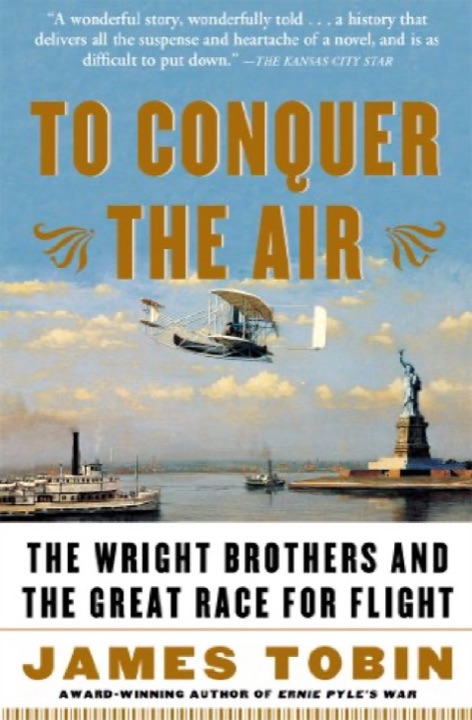
To Conquer the Air: The Wright Brothers and the Great Race for Flight
Applying the lessons from "To Conquer the Air" by James Tobin to your life can be a meaningful way to enhance your personal and professional journey. Here are some ways you might integrate these lessons:
-
Persistence and Resilience: - Reflect on your experiences, such as surviving plane crashes and overcoming personal challenges, as testaments to your resilience. Continue to embrace setbacks as opportunities for growth, knowing that persistence can lead to breakthroughs.
-
Scientific Method and Innovation: - In your career and personal pursuits, adopt a systematic approach to problem-solving. Like the Wright brothers, prioritize research, experimentation, and informed decision-making. This could be particularly relevant in your interest in CRISPR and scientific advancements.
-
Collaboration and Complementary Skills: - Recognize the value of collaboration in your relationships and professional endeavors. Leverage the complementary skills of those around you, whether in your family, workplace, or advocacy efforts, to achieve common goals.
-
Vision and Passion: - Your passion for flying, medicine, and social issues can drive you to make a broader impact. Keep your vision focused on the positive changes you wish to see in the world, such as overcoming inequality and leveraging technology for societal betterment.
-
Impact of Environment and Support: - Acknowledge the supportive environment you've created for your family and strive to extend this nurturing atmosphere to others. Your involvement in activism and advocacy can be a way to provide support and encouragement to those in need.
-
Living in the Moment: - As you aspire to live in the moment, draw inspiration from the Wright brothers' dedication to their craft. Practice mindfulness and presence in your daily activities, whether spending time with your grandchild, flying, or enjoying your hobbies.
-
Embracing Challenges: - Like the Wright brothers, who faced skepticism and competition, embrace challenges as opportunities to prove your capabilities. Your personal philosophy of "Never, ever quit" aligns with this mindset, encouraging you to persevere through difficulties.
-
Legacy and Impact: - Consider the legacy you wish to leave behind, much like the Wright brothers' impact on aviation. Focus on how your actions today can contribute to a better future for your family, community, and society as a whole.
By integrating these lessons into your life, you can continue to grow, innovate, and make meaningful contributions to the world around you.
What the book covers
"To Conquer the Air: The Wright Brothers and the Great Race for Flight" by James Tobin is a detailed historical account of the Wright brothers' journey to invent the first successful airplane. The book delves into the lives of Wilbur and Orville Wright, exploring their backgrounds, motivations, and the challenges they faced in their quest to achieve powered flight.
Summary:
-
Background and Early Life: - The book begins by providing context about the Wright brothers' upbringing in Dayton, Ohio. Raised in a family that valued education and curiosity, the brothers were encouraged to explore their interests. - Their initial fascination with mechanics and flight was sparked by a toy helicopter given to them by their father.
-
The Path to Aviation: - Tobin details the brothers' methodical approach to solving the problem of flight. Unlike many of their contemporaries, they focused on understanding the principles of aerodynamics and control. - The Wrights' bicycle business provided them with the financial means and mechanical skills necessary to pursue their aviation experiments.
-
Challenges and Setbacks: - The book highlights the numerous challenges the Wright brothers faced, including skepticism from the public and the scientific community, technical failures, and competition from other inventors. - Tobin emphasizes their perseverance and resilience in the face of these obstacles.
-
Breakthroughs and Success: - The narrative builds up to the Wright brothers' historic first powered flight on December 17, 1903, at Kitty Hawk, North Carolina. - Tobin describes the meticulous testing and incremental improvements that led to this achievement, underscoring the importance of their scientific approach.
-
Aftermath and Legacy: - Following their success, the Wright brothers faced new challenges, including patent battles and efforts to commercialize their invention. - The book concludes with an exploration of their legacy and the impact of their work on the future of aviation.
Key Takeaways and Lessons:
-
Persistence and Resilience: The Wright brothers' story is a testament to the power of persistence. Despite numerous setbacks and failures, their determination to achieve their goal never wavered.
-
Scientific Method and Innovation: Their success was largely due to their systematic approach to problem-solving. By prioritizing research and experimentation, they were able to make informed decisions and innovate effectively.
-
Collaboration and Complementary Skills: The partnership between Wilbur and Orville was crucial. Their complementary skills and ability to work together harmoniously were key factors in their success.
-
Vision and Passion: The Wright brothers' passion for flight drove them to overcome significant obstacles. Their vision extended beyond personal achievement to a broader impact on society.
-
Impact of Environment and Support: The supportive environment created by their family and community played a significant role in their success, highlighting the importance of a nurturing and encouraging background.
Overall, "To Conquer the Air" provides a comprehensive look at the Wright brothers' journey, offering valuable insights into the qualities and strategies that contribute to groundbreaking innovation.