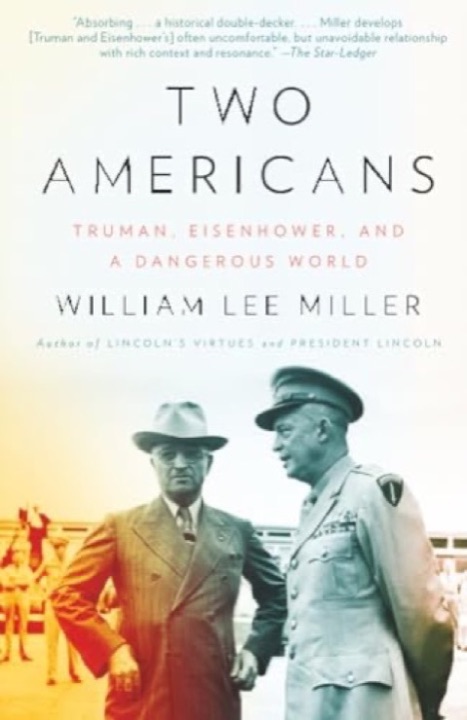
Two Americans: Truman, Eisenhower, and a Dangerous World
Applying the lessons from "Two Americans: Truman, Eisenhower, and a Dangerous World" by William Lee Miller to your life can be insightful, given your experiences and values. Here are some ways you might integrate these lessons:
-
Leadership Under Pressure: Both Truman and Eisenhower demonstrated the importance of making decisive decisions under pressure. Given your experiences in emergency situations and plane crashes, you already embody this trait. Continue to apply this calm decisiveness in your professional and personal life, especially when faced with challenging situations.
-
The Importance of Diplomacy: Eisenhower's emphasis on diplomacy and coalition-building can be mirrored in your interactions with others. Whether in your advocacy work or personal relationships, strive to build bridges and foster understanding, even when opinions differ. Your approach to handling criticism with quiet listening and questioning aligns well with this diplomatic mindset.
-
Balancing Domestic and Foreign Policy: Just as Truman and Eisenhower balanced domestic and international responsibilities, you can apply this lesson by balancing your personal and professional commitments. Your daily routine and dedication to family and career reflect this balance, but continue to ensure that neither sphere is neglected.
-
Moral and Ethical Considerations: The ethical dilemmas faced by Truman and Eisenhower, particularly regarding war and nuclear weapons, highlight the importance of moral integrity. Your strong ethical beliefs and commitment to kindness can guide you in making decisions that align with your values, even in difficult situations.
-
Legacy of the Cold War: Understanding the long-term impact of decisions made during Truman and Eisenhower's presidencies can inspire you to consider the lasting effects of your actions. Whether in your advocacy work or personal life, think about how your contributions can create a positive legacy for future generations.
-
Resilience and Adaptability: Both presidents navigated a rapidly changing world, requiring resilience and adaptability. Your personal philosophy of being in a constant state of beta and lifelong learning aligns with this lesson. Continue to embrace change and growth, using your resilience to overcome obstacles.
-
Strategic Vision: Eisenhower's strategic approach to leadership can inspire you to maintain a clear vision for your future goals. Whether it's your aspiration to live in the moment or your dream of skydiving, set strategic plans to achieve these goals while remaining open to new opportunities.
By integrating these lessons into your life, you can continue to navigate challenges with the same resilience, kindness, and strategic vision that have guided you thus far.
What the book covers
"Two Americans: Truman, Eisenhower, and a Dangerous World" by William Lee Miller is a detailed exploration of the lives, presidencies, and legacies of two pivotal figures in American history: Harry S. Truman and Dwight D. Eisenhower. The book delves into their backgrounds, leadership styles, and the critical decisions they made during a tumultuous period in global history.
Summary:
Backgrounds and Early Lives: - Harry S. Truman came from humble beginnings in Missouri, with a background in farming and small business before entering politics. His rise to the presidency was unexpected, following Franklin D. Roosevelt's death in 1945. - Dwight D. Eisenhower, on the other hand, was a career military man, known for his leadership during World War II as Supreme Commander of the Allied Expeditionary Forces in Europe. His presidency followed Truman's, beginning in 1953.
Presidencies and Leadership Styles: - Truman's Presidency (1945-1953): Truman faced the immediate aftermath of World War II, including the decision to use atomic weapons against Japan, the beginning of the Cold War, and the Korean War. His leadership style was characterized by decisiveness and a straightforward, no-nonsense approach. - Eisenhower's Presidency (1953-1961): Eisenhower's tenure was marked by a focus on maintaining peace and stability during the Cold War, managing the threat of nuclear weapons, and navigating complex international relations. His leadership was strategic and often behind-the-scenes, emphasizing diplomacy and coalition-building.
Key Decisions and Policies: - Truman's decision to drop atomic bombs on Hiroshima and Nagasaki remains one of the most controversial in history, intended to hasten the end of World War II. - The Truman Doctrine and the Marshall Plan were significant in shaping post-war Europe and containing the spread of communism. - Eisenhower's foreign policy was defined by the doctrine of "massive retaliation" and the policy of containment, as well as his handling of crises such as the Suez Canal and the U-2 incident. - Domestically, both presidents dealt with significant issues, including civil rights, with Eisenhower notably sending federal troops to enforce school desegregation in Little Rock, Arkansas.
Legacies: - Truman is often remembered for his plainspoken honesty and the doctrine that bears his name, which set the stage for American Cold War policy. - Eisenhower is credited with maintaining peace during a potentially volatile period and for his warnings about the "military-industrial complex" in his farewell address.
Key Takeaways and Lessons:
-
Leadership Under Pressure: Both Truman and Eisenhower demonstrated that effective leadership requires decisiveness and the ability to make tough decisions under pressure. Their presidencies were marked by significant global challenges that required clear vision and resolve.
-
The Importance of Diplomacy: Eisenhower's emphasis on diplomacy and coalition-building highlights the importance of international cooperation and strategic alliances in maintaining global peace and stability.
-
Balancing Domestic and Foreign Policy: Both presidents had to balance pressing domestic issues with international responsibilities, illustrating the complex role of the U.S. president in addressing both spheres effectively.
-
Legacy of the Cold War: The policies and decisions made by Truman and Eisenhower laid the groundwork for the Cold War era, influencing American foreign policy for decades.
-
Moral and Ethical Considerations: The book underscores the moral and ethical dilemmas faced by leaders, particularly in the context of war and nuclear weapons, and the lasting impact of their decisions on global history.
Overall, "Two Americans" provides a nuanced look at two leaders who navigated a dangerous world with distinct styles and philosophies, leaving enduring legacies that continue to shape American policy and global relations.