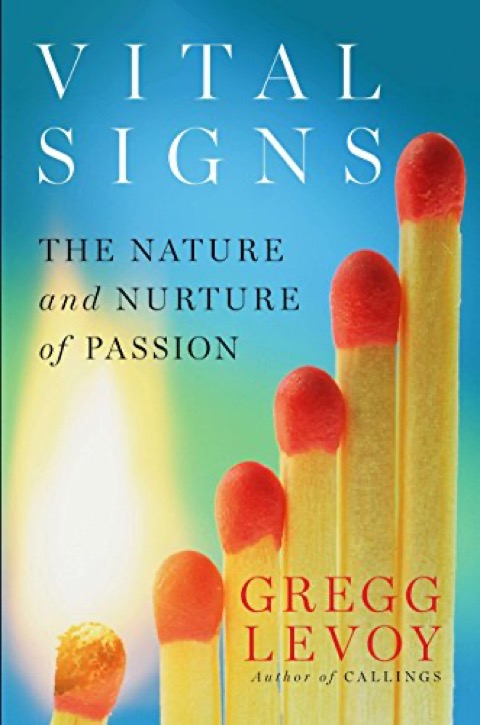
Vital Signs: The Nature and Nurture of Passion
Applying the lessons from "Vital Signs: The Nature and Nurture of Passion" by Gregg Levoy to your life can be a transformative exercise in reclaiming your authentic drive and professional purpose. Here are some ways you might integrate these lessons:
-
Cultivate Clinical and Professional Vitality: - In fields like medicine or law, it is easy to succumb to the "numbness" of bureaucracy and repetitive trauma. You can counteract this by reconnecting with the initial curiosity that led you to the profession. By viewing each patient or case as a unique mystery to be solved rather than a task to be processed, you maintain the high-level engagement necessary for both personal satisfaction and professional excellence.
-
Embrace Entrepreneurial Risk as a Vital Sign: - For the entrepreneur and venture capitalist, stagnation is the primary enemy. You should view the discomfort of a new investment or the uncertainty of a startup launch as a signal of growth rather than a deterrent. Recognize that being "at the edge" of your capabilities is the only place where true innovation and vitality occur, and use that feeling to guide your decision-making.
-
Adopt a Pilot’s Mindset Toward Awareness: - Just as a pilot must remain hyper-aware of their instruments and environment, you should apply that same level of presence to your daily life. Practice "active scanning" of your internal state to identify when you are operating on autopilot. If you find your passion dipping, it is an indication that you need to adjust your course and find a new challenge that demands your full attention.
-
Commit to the Rigor of Lifelong Learning: - To "Stay Hungry," you must treat learning as a disciplined practice rather than a hobby. Challenge yourself to acquire skills outside your primary expertise—whether in aviation, business, or the arts—to keep your brain plastic and your perspective fresh. This cross-pollination of ideas ensures that your passion remains dynamic and prevents the mental decay of specialization.
-
Lead Through Authenticity and High Stakes: - Leadership requires more than administrative skill; it requires the ability to model vitality for your team. By being transparent about your own passions and the risks you are willing to take, you create a culture that values engagement over mere compliance. Show your team that the "humble" part of your mantra includes the humility to be a student of your own interests and failures.
By integrating these lessons, you ensure that your diverse pursuits are not just items on a resume, but interconnected expressions of a vibrant, purpose-driven life. Passion, when nurtured as a discipline, becomes the fuel that sustains long-term success and prevents the burnout inherent in high-pressure environments.
What the book covers
"Vital Signs: The Nature and Nurture of Passion" by Gregg Levoy is a profound exploration of the psychological, biological, and spiritual mechanics of passion and how it functions as a critical indicator of a life well-lived. Levoy investigates why some individuals remain vibrantly engaged with their work and world while others succumb to a sense of numbness or routine. The book serves as both a philosophical inquiry into the human spirit and a practical field guide for reclaiming one's internal fire and sense of wonder.
Summary:
-
Defining the Vital Sign: - Levoy posits that passion is not merely a fleeting emotion or a romanticized ideal, but a fundamental "vital sign" of psychological health. He argues that just as a physician checks a pulse or blood pressure, we must regularly audit our level of engagement with life to ensure we are not merely existing but truly living. This involves recognizing the difference between "surface excitement" and the deep-seated drive that aligns with one's core values and authentic self.
-
The Biology and Psychology of Interest: - The book explores the physiological components of passion, noting how curiosity and engagement trigger specific neurochemical responses, such as the release of dopamine and the activation of the prefrontal cortex. Levoy examines the "search for the search," suggesting that humans are evolutionarily hardwired to seek out new information and challenges. When we suppress this instinct in favor of safety or predictability, our physical and mental health often suffers from the resulting stagnation.
-
Identifying the Barriers to Vitality: - A significant portion of the work is dedicated to understanding what stifles passion, ranging from childhood conditioning and societal expectations to the fear of failure and the comfort of the status quo. Levoy introduces the concept of "the sleep of the soul," where individuals become desensitized to their own desires as a defense mechanism against the risks associated with change. Overcoming these barriers requires a conscious effort to dismantle the internal narratives that value conformity over individual expression.
-
The Role of Curiosity and Inquiry: - Levoy emphasizes that passion is fueled by the quality of the questions we ask rather than the answers we find. He encourages readers to cultivate a state of perpetual inquiry, looking at familiar environments with fresh eyes to rediscover latent interests. By treating life as a series of experiments, individuals can shift from a reactive mode of existence to a proactive one, where every interaction becomes an opportunity for discovery.
-
Risk-Taking and the Edge of Growth: - The author argues that passion cannot exist without a degree of vulnerability and risk. He describes the "edge"—the boundary between the known and the unknown—as the place where vitality is most intensely felt. To nurture passion, one must be willing to step into uncertainty and tolerate the discomfort of growth, whether that involves starting a new venture, changing a career path, or speaking an uncomfortable truth.
-
Sustaining the Flame Through Discipline: - Contrary to the myth that passion is a spontaneous spark, Levoy asserts that it requires rigorous maintenance and discipline. He outlines strategies for "the nurture of passion," including the creation of rituals, the protection of one's time, and the pursuit of mastery in a chosen craft. Vitality is maintained through a feedback loop of effort and reward, where the act of engaging deeply with a task reinforces the desire to continue.
Through a blend of scientific research, cross-cultural anecdotes, and personal narrative, Levoy demonstrates that passion is a renewable resource available to anyone willing to pay attention. The book ultimately suggests that living with vitality is a moral obligation to oneself, transforming the mundane into the meaningful.