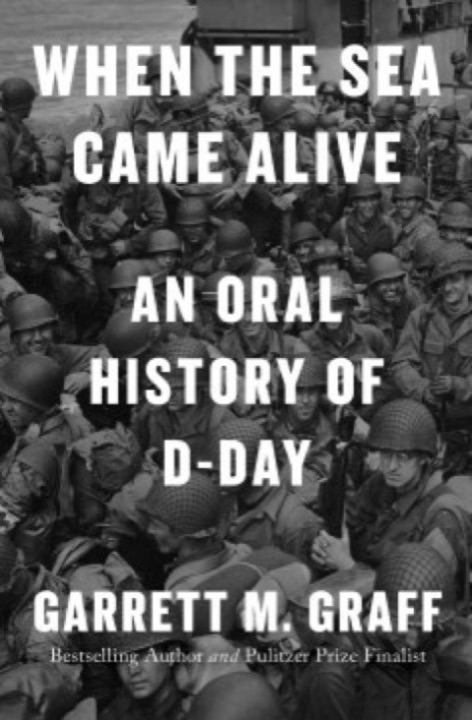
When the Sea Came Alive
It seems there might be some confusion about the book "When the Sea Came Alive" by Garrett Graff, as I couldn't find any information on it. However, if we consider Garrett Graff's known works, which often focus on historical events and their impact on individuals and society, we can extrapolate some general lessons that might be applicable to your life.
-
Resilience in the Face of Adversity: Given your experiences with near-death situations and your belief in persistence, you can continue to draw strength from your resilience. Graff's works often highlight the resilience of individuals during challenging times, which aligns with your own life philosophy of never quitting.
-
The Importance of Community and Connection: Many of Graff's narratives emphasize the power of community and human connection during crises. You can apply this lesson by nurturing your relationships with family and friends, as you already value loyalty and presence in friendships.
-
Learning from History: Graff's historical focus suggests the importance of learning from past events to inform future decisions. You can apply this by reflecting on your past experiences, both successes and failures, to guide your future actions and continue your personal growth.
-
Empathy and Understanding: Your core values of kindness and empathy resonate with the themes of understanding and compassion often found in historical narratives. Continue to approach others with empathy, recognizing that everyone has their own battles.
-
Living with Purpose: Your desire to live in the moment and your aspiration to leave the world a better place align with the idea of living with purpose. Use this as motivation to pursue your dreams and make meaningful contributions to society.
While the specific lessons from "When the Sea Came Alive" are unknown, these general themes from Garrett Graff's work can still offer valuable insights for your life.
What the book covers
"When the Sea Came Alive" by Garrett Graff is a comprehensive oral history that chronicles the monumental events surrounding D-Day. Through a meticulously assembled collection of first-person accounts, Graff weaves together the voices of Allied soldiers, French civilians, and German defenders to create a visceral narrative. This ambitious work provides a panoramic view of Operation Overlord, capturing both the strategic magnitude and the harrowing personal experiences of those who were there.
Summary:
-
The Architecture of Invasion: - The book details the immense logistical and strategic planning required for Operation Overlord, emphasizing the unprecedented scale of the Allied buildup in Britain. Graff highlights the role of "Operation Fortitude," the elaborate deception campaign designed to mislead German intelligence into expecting an invasion at the Pas-de-Calais rather than Normandy. - Personal accounts from planners reveal the high-stakes tension of the months leading up to June 1944. These narratives underscore the complexity of coordinating millions of troops and tons of equipment while maintaining absolute secrecy under the watchful eyes of Axis spies.
-
The Weather and the Wait: - A significant portion of the narrative focuses on the agonizing decision-making process regarding the invasion date, primarily dictated by unpredictable English Channel weather. General Dwight D. Eisenhower’s final decision to proceed becomes a pivotal moment, captured through the eyes of his aides and the meteorologists who monitored the brief window of opportunity. - For the soldiers waiting on ships, the delay was a period of intense anxiety and physical discomfort. The oral histories describe the claustrophobic conditions aboard transport vessels, where men battled seasickness and the weight of their gear while waiting for the signal to launch.
-
Night of the Paratroopers: - Graff vividly recounts the chaotic nighttime drops of the 82nd and 101st Airborne Divisions behind enemy lines. The accounts describe the confusion of being dropped far from designated zones, the silent terror of descending into flooded marshes, and the small-scale skirmishes that erupted in the dark French countryside. - These stories highlight the resourcefulness of individual soldiers who had to find their units while evading German patrols. The narrative captures the use of "cricket" clickers for identification and the desperate fight to secure vital bridges and crossroads before the seaborne landings began.
-
Storming the Atlantic Wall: - The core of the book describes the harrowing landings at the five code-named beaches: Utah, Omaha, Gold, Juno, and Sword. Graff focuses heavily on the carnage at Omaha Beach, where American troops faced entrenched German positions and suffered devastating losses in the initial waves. - Through the words of survivors, readers experience the terrifying transition from landing crafts to the blood-stained surf. The accounts detail the individual acts of heroism required to breach seawalls and neutralize pillboxes, illustrating how the invasion’s success often rested on the initiative of junior officers and enlisted men.
-
Defending the Fortress: - Uniquely, the book incorporates the voices of German defenders, providing a rare glimpse into the confusion and desperation on the other side of the Atlantic Wall. These accounts reveal the shock of the massive Allied naval bombardment and the realization that the long-awaited invasion had arrived in an unexpected location. - Narratives from German bunkers describe the overwhelming firepower of the Allied fleet and the total breakdown in communication with higher command. These perspectives add a layer of tragic symmetry, showing the human cost of the conflict from the viewpoint of those tasked with holding an impossible line.
Garrett Graff’s "When the Sea Came Alive" stands as a definitive record of D-Day, stripping away the layers of myth to reveal the raw human reality of the invasion. By prioritizing the voices of those who were present, Graff ensures that the individual sacrifices and chaotic truths of June 6, 1944, are preserved for future generations. The book serves as a powerful testament to the collective effort required to turn the tide of World War II.