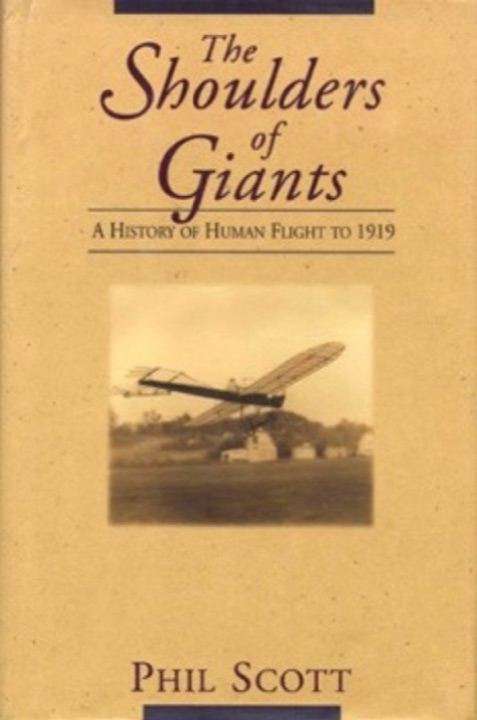
The Shoulders of Giants
To apply the lessons from "The Shoulders of Giants" by Scott to your life, consider the following steps, even though I don't have specific details about the book:
-
Embrace Learning from Others: The title suggests standing on the shoulders of giants, which implies learning from those who came before you. Reflect on the influential figures in your life, like Marcus Aurelius and Theodore Roosevelt, and continue to draw inspiration from their philosophies and achievements.
-
Value Resilience and Persistence: Your life story already highlights resilience and persistence. Continue to apply these strengths in overcoming challenges and pursuing your goals, whether it's skydiving or living in the moment.
-
Foster Empathy and Kindness: Your core values of kindness and empathy align with the idea of building on the wisdom and experiences of others. Keep striving to understand and support those around you, recognizing that everyone faces their own battles.
-
Seek Personal Growth: As you aim to be a lifelong learner, use the lessons from the book to fuel your personal development. Embrace new experiences and challenges, and continue to evaluate your actions and their impact on others.
-
Leverage Technology and Innovation: Your forward-thinking attitude towards technology can be enhanced by learning from past innovators. Use this knowledge to contribute positively to society and address issues like inequality and disease eradication.
-
Reflect on Your Legacy: Consider how you want to be remembered and how the lessons from the book can help shape your legacy. Focus on living each day fully and making a positive impact on those around you.
By integrating these lessons into your life, you can continue to grow, contribute to society, and achieve your aspirations while honoring the wisdom of those who have paved the way before you.
What the book covers
"The Shoulders of Giants" by Scott is a detailed historical survey that chronicles the evolution of human flight from its mythological roots to the end of the First World War. Published in 1995, the book emphasizes that the miracle of aviation was a cumulative achievement built upon centuries of experimentation and failure. The author meticulously traces the lineage of aeronautics, illustrating how each pioneer stood on the collective wisdom of those who preceded them.
Summary:
-
The Foundations of Aerodynamics: - Scott begins by examining the early fascination with flight, moving from the legends of Icarus and Daedalus to the serious mechanical studies of Leonardo da Vinci. He explores how da Vinci’s designs for ornithopters established the conceptual groundwork for viewing air as a navigable fluid, though a lack of mechanical power prevented any practical application during the Renaissance. - The narrative covers the attempts of "tower jumpers," whose often-fatal efforts led to the crucial realization that human muscle alone was insufficient for sustained lift. This shift in perspective steered subsequent inventors toward finding external power sources and fixed-wing surfaces rather than simply attempting to mimic the flapping wings of birds.
-
The Era of Lighter-than-Air Craft: - The book discusses the Montgolfier brothers and the birth of ballooning in eighteenth-century France. Scott describes how these early voyages proved humans could survive and navigate the upper atmosphere, though they remained largely dependent on prevailing wind currents for their direction and landing sites. - This period sparked a global interest in aerostatics, leading to the rapid development of hydrogen-filled balloons and steerable dirigibles. These inventions represented the first successful move from aeronautical theory into physical reality, establishing a vital baseline for atmospheric safety and future engineering.
-
Cayley and the Pioneers of Gliding: - Scott focuses heavily on Sir George Cayley, who identified the four fundamental forces of flight: lift, weight, thrust, and drag. Cayley’s revolutionary shift to fixed-wing surfaces provided the mathematical framework that allowed nineteenth-century engineers to focus on aerodynamic stability and control rather than just buoyancy. - The author highlights the contributions of Otto Lilienthal and Octave Chanute, whose systematic gliding experiments provided the empirical data essential for modern aviation. These pioneers transitioned the field from dangerous guesswork into a rigorous science by documenting the specific performance of various curved wing surfaces.
-
The Breakthrough of the Wright Brothers: - The narrative focuses on Wilbur and Orville Wright, portraying them as methodical scientists who solved the problem of three-axis control. Scott details their development of wing-warping and their innovative wind tunnel experiments that led to the first powered, controlled flight at Kitty Hawk in 1903. - He emphasizes that their success was a synthesis of existing knowledge, combining their own innovations in steering with the structural designs and internal combustion engines developed by their contemporaries. This synergy turned a centuries-old dream into a repeatable and commercially viable technology.
-
Competition and the Great War: - Scott describes the rapid iteration of design following the Wrights' success, particularly the intense rivalry with Glenn Curtiss. This period saw a transition from pusher-propeller biplanes to more stable tractor-propeller models as the focus moved from merely staying aloft to achieving speed and maneuverability. - The final sections cover the First World War, explaining how the demands of combat transformed the airplane into a robust and standardized instrument of war. This era of forced innovation refined aircraft materials and engine power, setting the global stage for the dawn of modern commercial aviation by 1919.
The significance of "The Shoulders of Giants" lies in its presentation of flight as a scientific continuum rather than isolated events. Scott’s work highlights how twentieth-century advancements relied on centuries of observation and experimentation. By 1919, the foundations of aviation were secure enough to change the nature of global travel and conflict forever, proving that progress is built upon the support of giants.