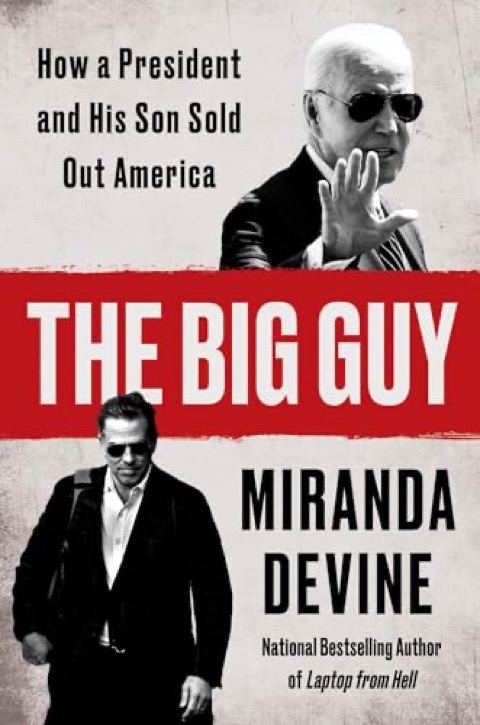
The Big Guy: How a President and His Son Sold Out America
Applying the lessons from "The Big Guy: A Novel" by P. J. O'Rourke to your life can be an exercise in developing a more nuanced understanding of institutional power and the importance of personal character. Here are some ways you might integrate these lessons:
- Recognize the Difference Between Influence and Leadership: - As an entrepreneur and physician, you must distinguish between the transactional influence Paxson wields and the genuine leadership required to inspire a team. While "fixing" problems is a necessary skill in high-stakes environments, true authority comes from trust and shared purpose rather than the mere manipulation of incentives.
- Audit Your Institutional Environment: - Use O'Rourke’s satirical lens to evaluate the organizations you lead, looking for areas where "Paxson-esque" behavior might be stifling innovation. In the world of venture capital and law, it is easy for bureaucratic rituals to mask a lack of progress; staying vigilant against this absurdity allows you to remain focused on actual value creation.
- Protect Your Character Against the Seduction of "Bigness": - The "Stay Humble" portion of your mantra is the direct antidote to Paxson’s hubris. As your ventures grow, you must actively cultivate mentors and peers who will speak truth to power, ensuring that you do not become isolated within a bubble of your own success or surrounded by sycophants who refuse to challenge your assumptions.
- Understand the Transactional Nature of Human Incentives: - In both medicine and business, people often act according to hidden incentives that O'Rourke masterfully exposes. By studying how characters in the book navigate their world, you can better predict the behaviors of competitors and partners, allowing you to design systems that align individual motivations with the collective good.
- Navigate High-Stakes Complexity with a Pilot’s Perspective: - Just as a pilot must maintain situational awareness to avoid disaster, you should use these lessons to survey the political and social landscape of your industries. Recognizing the "Big Guys" and the systems that support them allows you to maneuver effectively, avoiding institutional turbulence while staying on course toward your personal goals.
- Embrace Satire as a Tool for Intellectual Growth: - Cultivate the ability to see the humor and absurdity in the professional world, which serves as a vital stress-relief mechanism in high-pressure environments. A "Stay Hungry" mindset includes a hunger for truth, and O’Rourke demonstrates that sometimes the clearest truths are revealed through the sharpest wit and a refusal to take the self-important too seriously.
By integrating these lessons, you can develop a more robust framework for navigating the complexities of modern American life without sacrificing your integrity. "The Big Guy: A Novel" serves as a reminder that while the pursuit of greatness is a noble endeavor, it must be tempered by a commitment to humility and a clear-eyed understanding of the world as it actually is, rather than how the power brokers would have us believe it to be.
What the book covers
"The Big Guy: A Novel" by P. J. O'Rourke is a sharp, posthumously published satirical work that captures the essence of American political and corporate culture through the lens of a singular, larger-than-life protagonist. The story centers on Terrence "The Big Guy" Paxson, a man whose influence permeates every corner of his mid-sized American city, acting as the ultimate "fixer" and power broker. O'Rourke utilizes his signature wit and deep understanding of societal machinery to deconstruct the myths of the self-made man and the corridors of power. It serves as a final, hilarious, and insightful testament to O'Rourke’s career as a premier observer of the human comedy and the American political experiment.
Summary:
- The Introduction of Terrence Paxson: - Terrence “The Big Guy” Paxson is established as a quintessential American archetype: a man of immense ambition and substantial physical presence. He operates in a fictionalized Midwestern landscape where he has successfully positioned himself as the indispensable link between business interests, political power, and social prestige. - The narrative follows Paxson as he navigates his daily life, which consists of a non-stop barrage of favors, threats, and strategic maneuvers. O'Rourke paints him as a complex creature of his environment, thriving in a system that rewards those who know how to pull the right levers at the right time.
- The Mechanics of the "Fixer": - Much of the book’s action revolves around the various crises Paxson is called upon to resolve, demonstrating his mastery of the "backroom deal." These scenarios range from zoning disputes to managing the personal scandals of the local elite, showcasing the transactional nature of his world. - Through these episodes, the reader sees how Paxson maintains his grip on the city: a blend of charisma, a deep memory for secrets, and a ruthless willingness to exploit the weaknesses of others. He is presented as a master of the informal economy of influence.
- Satire of Modern Institutions: - O'Rourke pulls no punches in his depiction of the institutions Paxson interacts with, including the local press and corporate boards. Each is portrayed as being susceptible to the same vanity and greed that Paxson embodies, though they often hide behind a veneer of professional respectability. - The satire highlights the absurdity of bureaucratic processes and the often-ridiculous posturing of those in authority. The book suggests that "Big Guys" are only as powerful as the systems—and the people within them—allow them to be.
- The Personal Life of a Power Broker: - The novel provides a window into Paxson's domestic life, which is characterized by the same transactional logic as his professional career. His relationships with family and acquaintances are strained by his inability to turn off the strategist within himself, leading to moments of profound, though often humorous, isolation. - These subplots serve to humanize Paxson while simultaneously critiquing the hollow nature of a life dedicated entirely to the acquisition and maintenance of influence. Even in his private moments, he is performing the role of a man whose identity is entirely consumed by his public stature.
- The Escalation of Stakes and Peak Power: - As the story progresses, Paxson finds himself embroiled in a conflict that threatens to upend his empire. This challenge forces him to double down on his methods, leading to an escalation of tactics that pushes the boundaries of legal and ethical norms. - This section explores the concept of "peak power"—the moment when a leader's influence becomes so vast that they believe they are immune to consequences. It sets the stage for an exploration of hubris and the friction between personal ambition and shifting public morality.
- The Philosophy of the American Big Guy: - In the final movements of the novel, O’Rourke offers a broader reflection on the nature of American ambition. Through Paxson’s triumphs and tribulations, the author questions what it truly means to be a "success" in a society that often prioritizes optics and influence over substance and integrity. - The resolution of Paxson’s story is less about a moral comeuppance and more about the endurance of the type of man he represents. O’Rourke suggests that for every "Big Guy" that falls, another is always waiting in the wings, ready to navigate the same cycle of power.
"The Big Guy: A Novel" stands as a brilliant finale to P. J. O'Rourke's literary legacy, offering a fictionalized but startlingly accurate map of the American psyche. It serves as both an entertaining narrative and a profound sociological study, reminding us that while the players may change, the game of power remains remarkably consistent. For any student of history, politics, or human nature, it provides a masterclass in the art of observation and the necessity of maintaining a healthy skepticism toward the power brokers of any era.