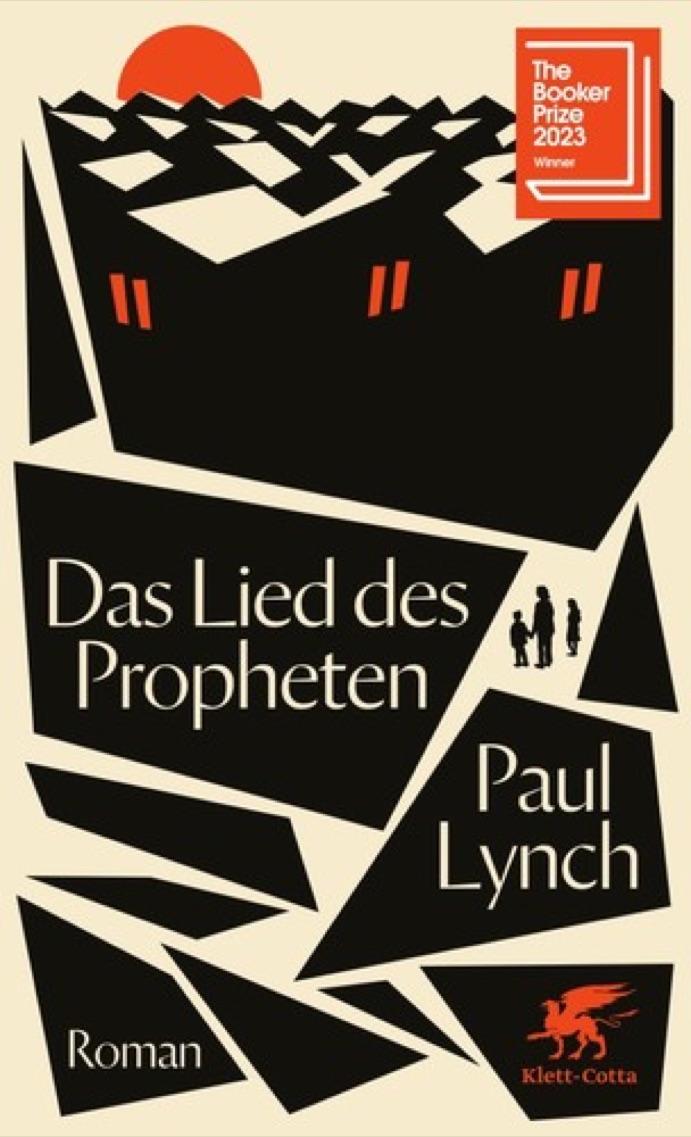
Prophet Song
Applying the lessons from "Prophet Song" by Paul Lynch to your life can be a sobering exercise in understanding resilience, the fragility of societal structures, and the weight of moral agency during a crisis. Here are some ways you might integrate these lessons:
- Recognize the Danger of Incrementalism: - In your work as a lawyer and leader, you must remain hyper-aware of how small, seemingly insignificant changes in policy or protocol can lead to systemic failure. Just as Eilish watched her country vanish one "emergency act" at a time, you should recognize that organizational or societal decay rarely happens overnight; it is the accumulation of ignored warnings and minor concessions.
- Decisive Action in High-Stakes Triage: - As an emergency physician, you understand that timing is everything. This book serves as a reminder that in moments of total upheaval, the "wait and see" approach can be fatal. You must cultivate the ability to recognize when a situation has moved beyond repair—whether in a business venture or a crisis—and have the courage to pivot or exit before the window of opportunity closes.
- Maintaining Humanity Within Rigid Systems: - Whether navigating the complexities of healthcare administration or legal frameworks, there is a risk of becoming a cog in a bureaucratic machine. You should use the cautionary tale of the GNSB to ensure that your leadership remains centered on individual dignity and ethical clarity, even when the surrounding system is under pressure to prioritize efficiency or control over people.
- Building Resilient "Internal Infrastructure": - The novel illustrates that when external systems—power, law, and medicine—fail, all that remains is one’s internal fortitude and family bonds. You can integrate this by prioritizing personal growth and the strength of your primary relationships, ensuring that your "internal pilot" is prepared for turbulence that no external flight plan can predict.
- The Responsibility of the Informed Witness: - As an author and a lifelong learner, you have a platform to challenge comfortable narratives. "Prophet Song" reminds you that the "end of the world" is always happening somewhere, and it is the duty of those with influence to bridge the gap between "us" and "them" by highlighting the shared vulnerability of the human condition.
By integrating these lessons, you can sharpen your instincts for both leadership and survival, ensuring that you stay hungry for truth and humble in the face of history’s unpredictability. The book reinforces the idea that true security lies not in the permanence of institutions, but in the agility of the mind and the unwavering commitment to one's core values when the world begins to tilt.
What the book covers
"Prophet Song" by Paul Lynch is a harrowing, claustrophobic exploration of a modern democracy’s rapid descent into totalitarianism. Set in a near-future Ireland, the novel follows Eilish Stack, a scientist and mother of four, as she navigates a society where the rule of law is replaced by the arbitrary whims of a nationalist regime. Lynch employs a dense, breathless prose style to capture the feeling of a world closing in, forcing the reader to witness the incremental erosion of freedom and the impossible choices faced by those caught in the gears of history.
Summary:
- The Disappearance of Larry Stack: - The narrative begins with a knock at the door as the newly formed Garda National Security Bureau (GNSB) seeks Larry Stack, a senior official in the Teachers' Union of Ireland. Following his participation in a peaceful protest against the government's Emergency Powers Act, Larry is detained and "disappeared," leaving Eilish to manage their four children alone. - This event serves as the catalyst for the novel, illustrating how the state begins to target intellectuals and labor leaders to consolidate power. Eilish initially believes that logic and legal recourse will bring her husband back, but she soon realizes that the institutions she trusted have been completely subverted by the National Alliance Party.
- The Bureaucracy of Fear: - As the regime strengthens its grip, Eilish experiences the systematic stripping of her professional and personal identity. She is pressured at her job as a microbiologist, her neighbors become suspicious or hostile, and the state begins to monitor every movement through a growing web of informants and checkpoints. - The book details the "banality of evil" through the administrative cruelty of the GNSB. Citizens are forced to sign loyalty oaths, and the threat of being labeled a "subversive" creates a culture of silence that isolates Eilish from her community and even her extended family.
- A Family in Siege: - Eilish’s internal world is dominated by the needs of her children—Mark, Molly, Bailey, and baby Ben—and her aging father, Simon, who is suffering from early-onset dementia. The domestic sphere, once a sanctuary, becomes a site of constant tension as food becomes scarce and the children’s psychological health begins to fracture. - Mark, the eldest son, eventually receives a summons for national service, forcing the family into a terrifying dilemma: obey the state and risk his life in a burgeoning conflict, or go into hiding. The tension between protecting her children and the reality of the collapsing state defines Eilish's every waking moment.
- The Descent into Civil War: - The political situation escalates from a police state to an all-out civil war between the government forces and a disorganized resistance. Dublin is transformed into a battlefield, with air raids, sniper fire, and street-to-street combat becoming the new normal for Eilish and her family. - Lynch depicts the physical destruction of the city with brutal clarity. The infrastructure of modern life—electricity, clean water, and medical care—vanishes, leaving Eilish to perform "triage" on her family’s survival in an increasingly decimated urban landscape.
- Loss and Displacement: - The tragedy deepens as Mark joins the rebels and is lost to the conflict, and Bailey is severely injured in an explosion. Eilish’s struggle to secure medical help for her son in a collapsed healthcare system highlights the utter vulnerability of the individual when the state ceases to function as a provider of safety. - Following the death of her father and the disappearance of her eldest son, Eilish is finally forced to accept that there is no "normal" to return to. The realization that the Ireland she knew is gone forever drives her toward the desperate decision to flee the country.
- The Final Exodus: - The novel concludes with a harrowing journey toward the coast, where Eilish and her remaining children must navigate the treacherous path of refugees. They face the same indignities and dangers that she once watched on the news happening in distant lands, bringing the cycle of displacement home to the Western world. - The final scenes are an impressionistic descent into the unknown. As they board a boat to cross the sea, the "Prophet Song" of the title resonates as a warning about the fragility of civilization and the endurance of maternal love in the face of total societal collapse.
The significance of "Prophet Song" lies in its ability to strip away the "it can't happen here" complacency of Western readers. By placing a familiar, modern setting under the boot of tyranny, Paul Lynch forces an empathetic engagement with the plight of refugees and the terrifying speed at which the veneer of civilization can be stripped away. It is a profound meditation on the human spirit’s capacity for endurance and the tragic cost of remaining in a burning house for too long.