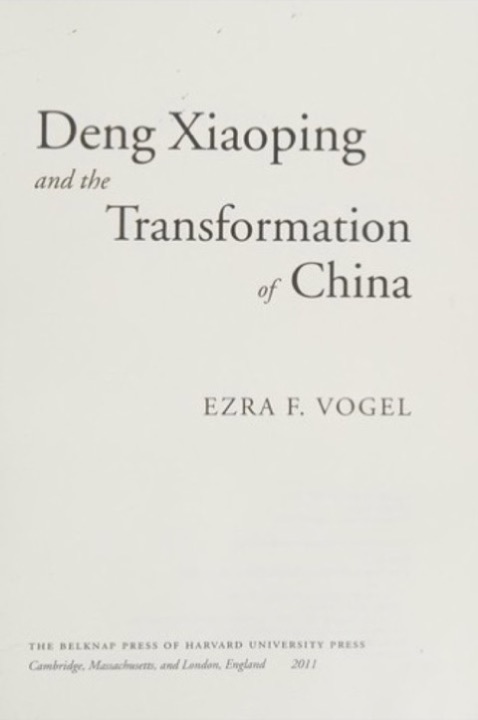
Deng Xiaoping and the Transformation of China
Applying the lessons from "Deng Xiaoping and the Transformation of China" by Ezra Vogel to your life can be insightful, especially considering your personal experiences and values. Here are some ways you might integrate these lessons:
-
Pragmatism Over Ideology: Deng's pragmatic approach to governance, prioritizing practical solutions over strict adherence to ideology, can be mirrored in your life by focusing on what works best in various situations rather than sticking rigidly to preconceived notions. This aligns with your belief in kindness and empathy, as you can adapt your approach to different people and circumstances to achieve the best outcomes.
-
Adaptability: Just as Deng adapted to changing circumstances, you can continue to embrace change and learn from your experiences. Your history of resilience and growth through challenges suggests that you already embody this lesson. Keep evaluating your wins and losses to refine your approach to life's challenges.
-
Balancing Reform and Control: Deng's ability to balance economic reforms with political stability can be applied to your life by finding a balance between pursuing new opportunities and maintaining stability in your personal and professional life. This might involve managing your impulsivity while leveraging your strengths in resilience and humor.
-
Long-term Vision: Deng's long-term vision for China's development can inspire you to set strategic goals for your future. Whether it's achieving personal aspirations like living in the moment or professional goals like leveraging technology for societal betterment, having a clear vision can guide your actions and decisions.
-
Complex Legacy: Recognizing the complexity of Deng's legacy can remind you that life is multifaceted, and your actions may have both positive and negative impacts. This awareness can help you navigate ethical dilemmas and social issues with a nuanced perspective, staying true to your values of kindness and empathy.
By integrating these lessons into your life, you can continue to grow and make meaningful contributions to your family, community, and society while staying true to your core values and beliefs.
What the book covers
"Deng Xiaoping and the Transformation of China" by Ezra Vogel is a comprehensive biography that explores the life and legacy of Deng Xiaoping, one of the most influential leaders in modern Chinese history. The book delves into Deng's role in transforming China from a rigid communist state into a more open and economically dynamic society. Here is a detailed summary of the book, along with key takeaways and lessons:
Summary:
Early Life and Political Rise:
- Background and Early Years: Deng Xiaoping was born in 1904 in Sichuan Province. He studied in France and the Soviet Union, where he was exposed to Marxist ideas.
- Revolutionary Activities: Deng became involved in the Chinese Communist Party (CCP) and participated in the Long March, eventually rising through the ranks to become a key military and political leader.
Political Career and Challenges:
- Rise to Power: Deng held various significant positions within the CCP and the government, including Vice Premier and Secretary-General.
- Cultural Revolution: During the Cultural Revolution, Deng was purged twice but managed to survive politically, largely due to his pragmatism and ability to navigate the complex political landscape.
Leadership and Reforms:
- Return to Power: After Mao Zedong's death in 1976, Deng returned to power and became the paramount leader of China by 1978.
- Economic Reforms: Deng initiated a series of economic reforms that shifted China from a planned economy to a more market-oriented one. These included the introduction of the "household responsibility system" in agriculture, the establishment of Special Economic Zones (SEZs), and the encouragement of foreign investment.
- Opening Up: Deng's policies of "Reform and Opening Up" led to significant economic growth and modernization, lifting millions out of poverty.
Political Strategies and Challenges:
- Balancing Act: Deng maintained a delicate balance between economic liberalization and political control, ensuring the CCP's continued dominance.
- Tiananmen Square: The 1989 Tiananmen Square protests posed a significant challenge to Deng's leadership. His decision to use military force to suppress the protests remains controversial.
Legacy and Impact:
- Economic Transformation: Deng's reforms laid the foundation for China's rapid economic growth and emergence as a global economic power.
- Political Stability: Despite economic liberalization, Deng maintained a firm grip on political power, ensuring stability and continuity within the CCP.
Key Takeaways and Lessons:
-
Pragmatism Over Ideology: Deng's pragmatic approach to governance, prioritizing economic development over strict ideological adherence, was crucial in transforming China.
-
Adaptability: Deng's ability to adapt to changing circumstances and learn from past mistakes allowed him to implement effective reforms.
-
Balancing Reform and Control: Deng's leadership highlights the importance of balancing economic reforms with political stability, a strategy that has continued to influence Chinese governance.
-
Long-term Vision: Deng's long-term vision for China's development set the stage for its rise as a global power, emphasizing the importance of strategic planning in leadership.
-
Complex Legacy: While Deng's economic reforms are widely praised, his political decisions, particularly regarding human rights and political freedoms, remain contentious.
Ezra Vogel's book provides a nuanced and detailed account of Deng Xiaoping's life and leadership, offering valuable insights into the complexities of China's transformation and the challenges of balancing reform with control.