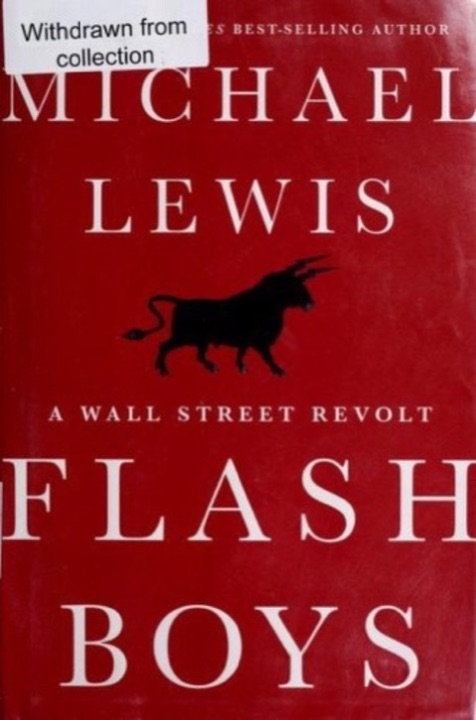
Flash Boys
Applying the lessons from "Flash Boys" by Michael Lewis to your life involves embracing fairness, transparency, and ethical considerations in your personal and professional endeavors. Here are some ways you might integrate these lessons:
-
Advocate for Fairness and Transparency: - Just as Brad Katsuyama worked to create a fairer stock exchange, you can strive to ensure fairness and transparency in your interactions and decisions. This could mean advocating for equitable treatment in your workplace or ensuring that your actions align with your values of kindness and empathy.
-
Embrace Innovation and Disruption: - The creation of IEX demonstrates the power of innovation to challenge the status quo. You can apply this lesson by being open to new ideas and technologies that can improve your personal and professional life. For example, you might explore new ways to leverage technology for social good, aligning with your passion for using technology to better mankind.
-
Stay Informed and Adapt: - The book highlights the importance of staying informed about technological advancements and their implications. You can apply this by continuously educating yourself about changes in your field and adapting your strategies accordingly. This aligns with your commitment to being a lifelong learner and staying in a constant state of beta.
-
Prioritize Ethical Considerations: - "Flash Boys" raises ethical questions about the practices of HFT firms. You can apply this lesson by ensuring that your actions and decisions are guided by strong ethical principles, such as kindness and empathy. This is particularly relevant in your role as a physician, where ethical considerations are paramount.
-
Challenge Inequities: - The book's exploration of market manipulation can inspire you to challenge inequities in other areas of life. This might involve continuing your advocacy work related to domestic abuse and anti-human trafficking or addressing social issues like equality and civil rights.
-
Foster a Culture of Openness: - Just as Katsuyama sought to create a more open and transparent market, you can foster a culture of openness in your personal and professional relationships. Encourage open communication and collaboration, and be willing to listen to diverse perspectives.
By applying these lessons, you can continue to live a life aligned with your core values of kindness, empathy, and fairness, while also embracing innovation and ethical considerations in all that you do.
What the book covers
"Flash Boys: A Wall Street Revolt" by Michael Lewis is a non-fiction book that delves into the world of high-frequency trading (HFT) on Wall Street. The book explores how the stock market has been manipulated by traders using advanced technology and high-speed networks to gain an unfair advantage over traditional investors. Here is a thorough summary of the book, along with key takeaways and lessons:
Summary:
-
Introduction to High-Frequency Trading (HFT): - The book begins by introducing the concept of HFT, where traders use powerful computers and algorithms to execute trades at incredibly high speeds, often in milliseconds. This allows them to exploit tiny price discrepancies in the market.
-
The Story of Brad Katsuyama: - Central to the narrative is Brad Katsuyama, a trader at the Royal Bank of Canada (RBC). Katsuyama discovers that the stock market is rigged in favor of HFT firms. He notices that his trades are being front-run, meaning that by the time his orders reach the market, the prices have changed.
-
The Creation of IEX: - In response to the unfair practices, Katsuyama and his team set out to create a new stock exchange, IEX (Investors Exchange), designed to level the playing field. IEX introduces a "speed bump" to slow down trading slightly, preventing HFT firms from exploiting speed advantages.
-
The Role of Fiber Optic Cables: - The book highlights the importance of physical infrastructure in HFT. Lewis describes the construction of a fiber optic cable line between Chicago and New York, which reduces the time it takes for data to travel between the two cities, giving traders who use it a competitive edge.
-
The Dark Pools: - Lewis also explores the concept of "dark pools," private exchanges where trades are made anonymously. These pools are often used by HFT firms to hide their activities and gain further advantages over traditional investors.
-
Regulatory Challenges: - The book discusses the challenges faced by regulators in keeping up with the rapid advancements in trading technology. It questions whether existing regulations are sufficient to ensure a fair and transparent market.
Key Takeaways and Lessons:
-
Market Complexity and Opacity: - The book reveals how complex and opaque the modern financial markets have become, making it difficult for ordinary investors to understand and navigate them.
-
The Impact of Technology: - Technology has transformed trading, but it has also introduced new risks and ethical concerns. The speed and complexity of HFT can lead to market instability and unfair advantages.
-
The Importance of Fairness: - Katsuyama's story underscores the importance of fairness and transparency in financial markets. His efforts to create IEX highlight the need for systems that protect all investors, not just those with the fastest technology.
-
Regulatory Oversight: - The book suggests that regulatory bodies need to adapt to technological changes and ensure that markets operate fairly. This includes addressing the challenges posed by HFT and dark pools.
-
Ethical Considerations: - "Flash Boys" raises ethical questions about the lengths to which firms will go to gain an edge, and whether such practices align with the broader interests of society and the economy.
-
Innovation and Disruption: - The creation of IEX serves as an example of how innovation and disruption can challenge entrenched systems and lead to positive change in industries resistant to reform.
In summary, "Flash Boys" provides a compelling look at the hidden mechanics of Wall Street and the impact of high-frequency trading. It calls for greater transparency, fairness, and regulatory oversight to ensure that financial markets serve the interests of all participants, not just a select few.