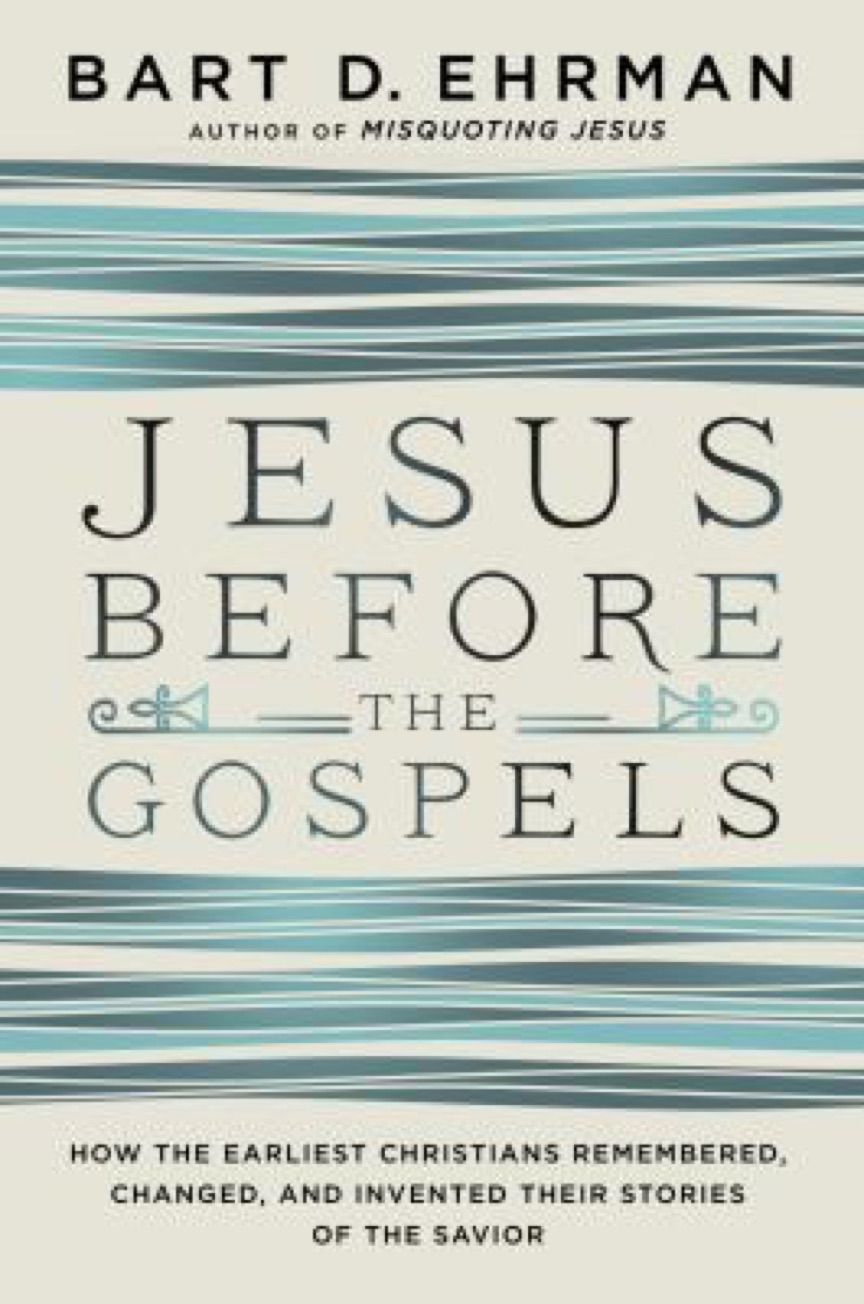
Jesus Before the Gospels: How the Earliest Christians Remembered, Changed, and Invented Their Stories of the Savior
Applying the lessons from "Jesus Before the Gospels: How the Earliest Christians Remembered, Changed, and Invented Their Stories of the Savior" by Bart D. Ehrman to your life can be an enlightening exercise in understanding the fallibility of human communication and the power of narrative. Here are some ways you might integrate these lessons:
-
Acknowledge the Fragility of Memory in Medicine and Law: - In both the ER and the courtroom, you must recognize that eyewitness accounts and patient histories are subjective reconstructions rather than objective truths. You should treat verbal reports as starting points that require corroboration through data, documentation, and objective evidence to ensure accuracy in diagnosis or legal strategy.
-
Manage Organizational Lore with Intentionality: - As a founder and leader, you should be aware that the "oral history" of your company—the stories employees tell about you and the firm's beginnings—will change over time. You must actively curate and document the core values and pivotal moments of your ventures to prevent a "drift" that could dilute your mission or company culture.
-
Execute Due Diligence on Narratives in Venture Capital: - When evaluating startups at Xcellerant Ventures, you should look beyond the persuasive "founder's story" to find the underlying facts. Understand that entrepreneurs, like early Christians, often retroactively shape their narrative to appear more destined for success; your role is to distinguish between the compelling story and the actual historical traction.
-
Bridge the Communication Gap in Leadership: - Recognizing that messages change as they move through layers of an organization, you should implement "closed-loop" communication. Just as oral traditions were modified by distance, your strategic directives can be distorted as they move from the C-suite to the front lines, necessitating written clarity and frequent re-alignment.
-
Harness the Power of Purposeful Storytelling: - While Ehrman highlights the historical problems of changed stories, he also shows their effectiveness in building a community. You can use storytelling as a tool to inspire and unify your teams, provided you remain "humble" about the distinction between the motivational narrative and the technical reality of the work.
-
Prioritize Documentation to Preserve Truth: - Whether in aviation checklists or medical records, you must favor the written word over memory. The transition from the fluid oral period to the fixed written Gospels highlights a fundamental human need for a "source of truth" that guards against the natural entropy of human recollection.
By integrating these lessons, you cultivate a sophisticated awareness of how information evolves within human systems, allowing you to lead with greater precision and critical thought. Whether you are in the cockpit, the boardroom, or the clinic, you will better understand that what is remembered is often less about the past and more about the needs of the present.
What the book covers
"Jesus Before the Gospels: How the Earliest Christians Remembered, Changed, and Invented Their Stories of the Savior" by Bart D. Ehrman is a scholarly investigation into the decades-long interval between the death of Jesus and the composition of the New Testament Gospels. Ehrman utilizes the tools of historical criticism and cognitive psychology to explore how stories about Jesus were transmitted through oral tradition before they were ever committed to parchment. The book argues that during this "oral period," the memories of the earliest Christians were shaped, reshaped, and sometimes entirely reimagined to meet the shifting needs of their evolving communities.
Summary:
-
The Gap Between Event and Text: - Ehrman begins by highlighting the chronological distance between the life of Jesus (ending c. 30 CE) and the writing of the earliest Gospel, Mark (c. 70 CE). This forty-to-sixty-year gap was filled by oral tradition, where stories were passed from person to person across different languages and geographic locations, creating a significant opportunity for the evolution of the narrative.
-
The Science of Social Memory: - The author introduces the concept of social memory, drawing on psychological studies to show how groups remember their past collectively. He argues that memory is not a video recording but a reconstructive process, where the present needs of a community often dictate how they recall and interpret historical events and figures.
-
The Fallacy of the Telephone Game: - While often compared to the children's game of "telephone," Ehrman argues that oral tradition in the ancient world was more complex and communal. Stories were not just accidentally distorted through whispering; they were intentionally adapted by storytellers to address specific theological questions or social conflicts within the early church.
-
Distortion and Embellishment in the Oral Tradition: - Ehrman examines specific instances where stories likely changed to emphasize Jesus's divinity or to fulfill Old Testament prophecies. He provides evidence that as the mission to the Gentiles expanded, stories were modified to make Jesus appear more compatible with Greco-Roman expectations of a divine figure or philosopher.
-
The Invention of Narrative Episodes: - The book posits that some Gospel stories may not be based on historical events at all but were "invented" to serve a didactic purpose. These narratives provided early Christians with answers to pressing questions about the Law, the end of the world, and the identity of Jesus that the original historical traditions did not explicitly cover.
-
The Role and Limits of Eyewitnesses: - Ehrman critiques the common assumption that eyewitnesses acted as a "check" on the accuracy of oral tradition. He demonstrates that eyewitness testimony is notoriously fallible and that the early Christian leaders were more concerned with the spiritual truth of their message than with the strict biographical precision of their Savior’s life.
-
From Orality to the Written Canon: - Finally, the text explores how the fluid oral traditions were eventually "frozen" into written form. Ehrman explains that the selection of which stories to include in the canonical Gospels was a process of curation that further marginalized alternative memories of Jesus that did not align with the emerging orthodox view.
This work is significant because it shifts the focus from what Jesus actually said and did to how he was remembered by those who followed him. By bridging the gap between history and psychology, Ehrman provides a compelling look at the human elements behind the foundation of the world's largest religion, reminding us that every historical record is a product of its time, its medium, and its authors' motivations.