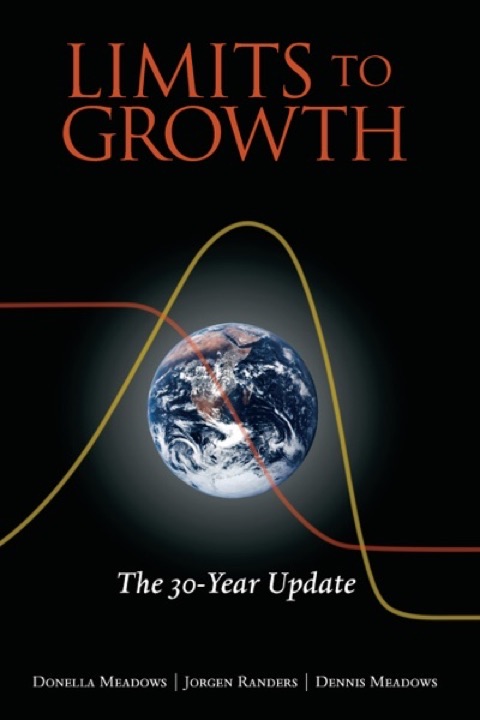
Limits to Growth: The 30-Year Update
Applying the lessons from "Limits to Growth: The 30-Year Update" to your life involves integrating the book's insights on sustainability, interconnectedness, and long-term thinking into your personal and professional practices. Here are some ways you might do this:
-
Embrace Sustainability: - Reflect on your consumption patterns and seek ways to reduce waste and resource use in your daily life. This could involve adopting more sustainable practices in your hobbies, such as flying, by considering carbon offsets or supporting sustainable aviation initiatives.
-
Promote Holistic Thinking: - Recognize the interconnectedness of systems in your personal and professional life. As a physician, consider the broader impacts of healthcare practices on environmental and social systems, and advocate for sustainable healthcare solutions.
-
Advocate for Policy Change: - Use your influence and experiences to advocate for policies that promote sustainability and equity. Engage in discussions and initiatives that aim to address social issues like inequality and environmental degradation.
-
Foster Global Cooperation: - Encourage collaboration and cooperation in your professional networks and personal relationships. Share insights from the book with others to raise awareness about the importance of global solutions to global challenges.
-
Practice Long-term Thinking: - Apply long-term thinking to your personal goals and decisions. Consider how your actions today might impact future generations, and strive to leave a positive legacy for your children and grandchildren.
-
Balance Technology and Behavior: - While you are forward-thinking about technology, remember that behavioral and systemic changes are also necessary. Encourage the responsible use of technology to address societal challenges and improve quality of life.
-
Live Within Limits: - Embrace the idea of living within the planet's limits by finding joy and fulfillment in experiences rather than material possessions. This aligns with your aspiration to live in the moment and appreciate the present.
-
Educate and Inspire Others: - Share your knowledge and experiences with others to inspire them to adopt sustainable practices. Your direct and humorous communication style can be effective in engaging others in meaningful conversations about sustainability.
By integrating these lessons into your life, you can contribute to a more sustainable and equitable world while staying true to your core values of kindness and empathy.
What the book covers
"Limits to Growth: The 30-Year Update" is a continuation of the original "Limits to Growth" study published in 1972 by Donella Meadows, Dennis Meadows, Jorgen Randers, and William W. Behrens III. The original study used a computer model called World3 to simulate the consequences of exponential economic and population growth with finite resources. The 30-year update revisits these themes with updated data and insights.
Summary:
-
Background and Context: - The original "Limits to Growth" report was commissioned by the Club of Rome and aimed to explore the sustainability of human civilization given the finite nature of Earth's resources. - The 30-year update revisits the initial findings with new data and improved modeling techniques, reflecting on the changes and developments that have occurred since the original publication.
-
World3 Model: - The World3 model is a system dynamics model that simulates interactions between population, industrial growth, food production, and the limits of Earth's ecosystems. - The model explores various scenarios based on different assumptions about technological progress, resource availability, and policy interventions.
-
Key Scenarios: - Business as Usual (BAU): This scenario assumes no major changes in human behavior or policy. It predicts overshoot and collapse due to resource depletion and environmental degradation. - Stabilized World: This scenario involves significant changes in policies and behaviors, leading to a sustainable balance between human activities and Earth's resources.
-
Findings: - The update confirms many of the original report's predictions, showing that humanity is on a path toward overshoot and potential collapse if current trends continue. - Technological advancements alone are insufficient to prevent these outcomes without accompanying changes in consumption patterns and population growth.
-
Environmental and Social Challenges: - The book highlights the interconnectedness of environmental, economic, and social systems, emphasizing that solutions must address these systems holistically. - Issues such as climate change, biodiversity loss, and resource depletion are central to the discussion.
-
Policy Recommendations: - The authors advocate for policies that promote sustainability, including reducing consumption, improving resource efficiency, and stabilizing population growth. - They emphasize the importance of long-term thinking and planning to avoid short-term fixes that exacerbate long-term problems.
Key Takeaways and Lessons:
-
Interconnected Systems: - Understanding the interconnected nature of global systems is crucial. Actions in one area can have significant impacts on others, necessitating a holistic approach to problem-solving.
-
Limits and Sustainability: - There are physical limits to growth on a finite planet. Sustainable development requires respecting these limits and finding ways to live within them.
-
Role of Technology: - While technology can help mitigate some challenges, it is not a panacea. Behavioral and systemic changes are also necessary to achieve sustainability.
-
Importance of Policy and Governance: - Effective policies and governance structures are essential to guide societies toward sustainable practices and to manage resources equitably.
-
Urgency of Action: - The longer humanity delays in addressing these issues, the more difficult and costly it will become to implement effective solutions.
-
Need for Global Cooperation: - Global challenges require global solutions. International cooperation and collaboration are vital to address issues that transcend national borders.
Overall, "Limits to Growth: The 30-Year Update" serves as a cautionary tale about the potential consequences of unchecked growth and a call to action for sustainable development practices. It emphasizes the need for a paradigm shift in how we view and interact with the world to ensure a viable future for coming generations.