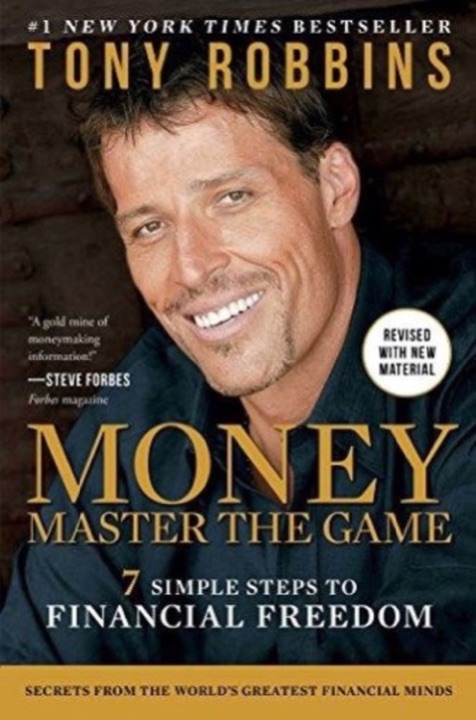
Money: Master the Game: 7 Simple Steps to Financial Freedom
Applying the lessons from "Money: Master the Game: 7 Simple Steps to Financial Freedom" by Tony Robbins to your life can be a transformative experience that aligns your professional success with long-term financial security. Here are some ways you might integrate these lessons:
- Automate the "Freedom Fund": - Just as you might use a pre-flight checklist in the cockpit or a standardized protocol in the ER to ensure safety, you should automate your savings to remove the element of human error and emotional hesitation. Set up a system where a percentage of your income from your medical practice, ventures, or law firm is automatically invested before you ever see it, ensuring that your wealth grows through the discipline of compounding.
- Prioritize Fiduciary Standards: - In medicine and law, you are bound by ethical duties to your patients and clients; you must demand the same from your financial advisors. Ensure that anyone managing your capital is a registered fiduciary who is legally obligated to put your interests first, protecting your assets from high-fee products that serve the broker more than the investor.
- Implement an "All-Weather" Approach: - Whether navigating market volatility or the complexities of a new healthcare startup, resilience is key. Structure your personal portfolio and your business ventures to withstand various economic seasons—inflation, recession, or growth—by diversifying across asset classes that respond differently to the same stimulus, much like a pilot prepares for diverse weather conditions.
- Seek Asymmetric Risk/Reward in Ventures: - As an entrepreneur and venture capitalist, look for opportunities where the downside is limited and the upside is exponential. Apply the "risk one to make five" mindset to your investment decisions, ensuring that even if several investments fail, the success of one "home run" secures the overall health of the fund.
- Master the Psychology of the Game: - High-stakes environments like the ER require emotional regulation and clarity under pressure. Transfer this skill to your investing by maintaining a long-term perspective during market crashes, avoiding the "herd mentality" that leads to panic-selling, and staying humble enough to realize that even the most sophisticated systems require constant monitoring and adjustment.
By integrating these lessons, you can ensure that your hard-earned professional income is converted into a self-sustaining engine of wealth. This strategic approach allows you to maintain your "Stay Hungry" drive for new challenges while providing the "Stay Humble" security of a fortified financial foundation for your family and future endeavors.
What the book covers
"Money: Master the Game: 7 Simple Steps to Financial Freedom" by Tony Robbins is a comprehensive roadmap designed to demystify the world of high-finance and provide everyday investors with the tools used by the world’s wealthiest individuals. Drawing from interviews with over fifty of the most influential financial minds, including Ray Dalio, Warren Buffett, and Jack Bogle, Robbins distills complex economic theories into a practical, seven-step action plan. The book focuses on transitioning the reader from a passive consumer to an active owner of their financial future, emphasizing the psychological and strategic shifts required to achieve lasting independence.
Summary:
- The Power of the First Step: - Robbins begins by emphasizing the necessity of becoming an "insider" in the financial world, which starts with the decision to become an owner rather than a consumer. He introduces the concept of the "Freedom Fund," a portion of every dollar earned that is automatically diverted into an investment account, leveraging the power of compound interest over time.
- Debunking Common Investment Myths: - A significant portion of the book is dedicated to exposing the "lies" of the financial industry, such as the idea that high returns require high risk or that mutual funds are the best way to grow wealth. Robbins critiques the high fees and hidden costs of actively managed funds, advocating instead for low-cost index funds and a deeper understanding of fiduciary responsibility.
- Defining Financial Goals: - To make financial freedom attainable, Robbins insists on calculating the exact amount needed to reach specific milestones, such as "Financial Vitality," "Financial Independence," and "Financial Freedom." By putting actual numbers to these goals, the reader can create a tangible plan rather than chasing a vague, unreachable figure.
- Asset Allocation and Diversification: - Robbins highlights asset allocation as the single most important decision an investor makes. He outlines the "Three Buckets" strategy—Security, Risk/Growth, and Dream—to ensure that capital is protected while still allowing for significant appreciation and the enjoyment of life's fruits.
- The All-Weather Strategy: - Inspired by Ray Dalio’s "All-Weather" portfolio, this section explains how to construct a portfolio designed to perform well in any economic climate, whether inflationary, deflationary, or stagnant. This involves a precise balance of stocks, long-term bonds, intermediate bonds, gold, and commodities.
- The Psychology of Wealth: - Robbins argues that success in finance is 80% psychology and 20% mechanics. He discusses the behavioral traps that lead investors to sell low and buy high, teaching techniques to manage fear and greed during market volatility and the importance of "staying the course" during downturns.
- The Power of Asymmetric Risk and Reward: - The book explores the concept of finding investments where the potential upside significantly outweighs the downside. This involves looking for opportunities where one can "risk a little to make a lot," a principle used by the world’s top hedge fund managers to protect principal while capturing growth.
The significance of this work lies in its ability to translate the opaque strategies of the billionaire class into actionable steps for the general public. By focusing on low fees, tax efficiency, and the power of compounding, Robbins provides a universal blueprint for building a resilient financial legacy that lasts for generations.