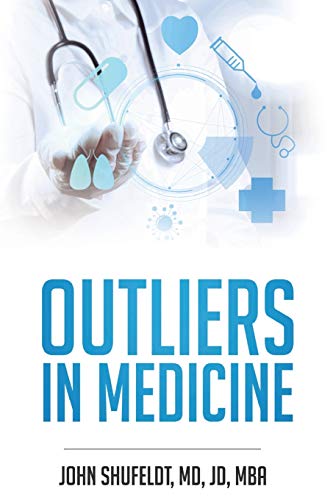
Outliers in Medicine
Applying the lessons from "Outliers in Medicine: Family Medicine Featuring Dr. Robert Warren Cromer" by John Shufeldt to your life can be a transformative exercise in reclaiming the purpose and passion behind your professional endeavors. Here are some ways you might integrate these lessons:
-
Prioritize Presence Over Efficiency: - You should recognize that in any relationship—whether with a patient, a client, or a family member—the quality of your presence is often more valuable than the speed of your service. Practice the "house call" mentality by meeting people where they are, physically and emotionally, to gain a deeper understanding of their needs that a screen or a brief meeting could never provide.
-
Cultivate Multi-Generational Thinking: - Whether in medicine or business, you can benefit from looking at the long-term arc of your impact. Instead of focusing on transactional interactions, aim to build relationships that span years or even decades, understanding that the trust you build today is an investment in the stability and success of the entire community you serve.
-
Develop a Servant-Leader Mindset: - You should embrace the idea that true leadership is rooted in service rather than status. By mirroring Cromer’s humility, you can remain open to feedback and stay connected to the ground-level realities of your organization, ensuring that your decisions are informed by empathy rather than ego.
-
Foster Resilience Through Purpose: - When you face the inevitable burnout of a high-pressure career, you can find renewed energy by reconnecting with your original "why." By viewing your daily tasks as a calling rather than a checklist, you can transform the "weight" of your responsibilities into a source of personal and professional fulfillment.
-
Balance Tradition with Adaptation: - You must learn to navigate the tension between time-tested values and necessary technological shifts. Use Cromer’s example to guard the "human" core of your work, ensuring that even as you adopt new tools and systems, they serve to enhance, rather than replace, your personal touch and professional intuition.
By integrating these lessons, you can move beyond being a mere practitioner of your craft to becoming a true outlier who leaves a lasting legacy. Dr. Cromer’s life proves that the most profound success is measured not by the complexity of the tools you use, but by the depth of the lives you change and the integrity with which you treat every individual who crosses your path.
What the book covers
"Outliers in Medicine: Family Medicine Featuring Dr. Robert Warren Cromer" by John Shufeldt is a compelling biographical profile that explores the life and career of a physician who embodies the quintessential "country doctor" archetype. As part of Shufeldt's broader project to identify the specific traits of high-achievers in the healthcare field, this installment focuses on Dr. Cromer’s decades of service in rural Georgia. The book serves as an examination of how traditional values like empathy, community involvement, and clinical intuition can create an "outlier" impact in a modern, often impersonal medical landscape.
Summary:
-
The Roots of a Rural Practitioner: - Shufeldt details the early life and education of Robert Warren Cromer, emphasizing that his entry into medicine was driven by a genuine sense of calling rather than financial ambition. Practicing in the rural South, Cromer developed a style of medicine that was as much about social connection as it was about biology, setting the stage for his reputation as a pillar of his community.
-
The Lost Art of the House Call: - A central theme of the narrative is Cromer’s refusal to abandon the house call, a practice largely discarded by contemporary medicine. Shufeldt argues that these visits allowed Cromer to see the environmental and social determinants of health firsthand, providing him with a diagnostic advantage and a depth of patient trust that cannot be replicated in a ten-minute office clinic visit.
-
Navigating the Evolution of Healthcare: - The book explores the friction between Cromer’s traditional methods and the increasing corporatization and digitization of medicine. While many of his peers struggled or retired early during the transition to Electronic Health Records and insurance-driven protocols, Cromer maintained his patient-centric focus, adapting just enough to survive while refusing to let technology compromise the sacredness of the doctor-patient relationship.
-
The Anatomy of Grit and Resilience: - Shufeldt analyzes the physical and mental stamina required to be a solo practitioner in a small town for over fifty years. The text highlights how Cromer managed the "always-on" nature of rural life—where a trip to the grocery store often turned into an impromptu consultation—and how he avoided burnout by viewing his professional burdens as opportunities for service.
-
Multi-Generational Stewardship: - The author describes the unique impact of treating four or even five generations of the same family. By knowing the genetic history and the personal temperaments of an entire lineage, Cromer moved beyond simple symptom management into a form of holistic stewardship that Shufeldt identifies as a key characteristic of the "outlier" physician.
-
Humility as a Clinical Tool: - A major portion of the book focuses on Cromer’s character, specifically his lack of ego. Shufeldt observes that Cromer’s humility allowed him to listen more effectively to his patients, often discovering the true cause of an ailment that more arrogant or hurried practitioners might have missed by relying solely on lab results.
This profile is significant because it highlights the enduring value of the human connection in an era of high-tech healthcare. By documenting Dr. Cromer’s career, Shufeldt provides a powerful reminder that the most effective medical "outliers" are often those who master the ancient art of caring as much as the modern science of curing.