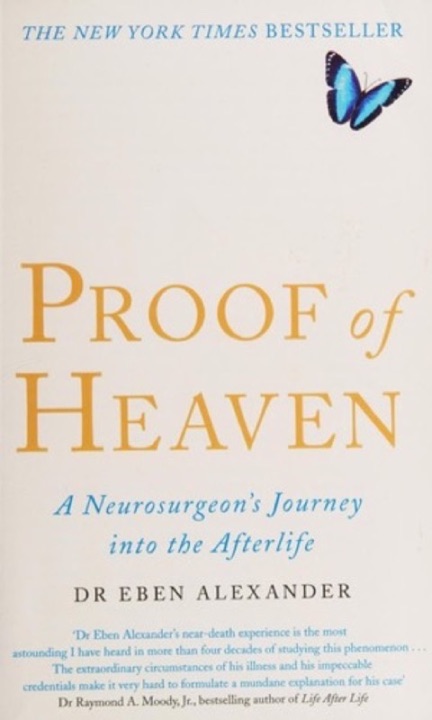
Proof of Heaven: A Neurosurgeon's Journey into the Afterlife
Applying the lessons from "Proof of Heaven: A Neurosurgeon's Journey into the Afterlife" by Dr. Eben Alexander to your life can offer a fresh perspective on consciousness, spirituality, and personal growth. Here are some ways you might integrate these lessons:
-
Explore Consciousness Beyond the Physical: - Given your interest in spirituality and reincarnation, you might delve deeper into understanding consciousness beyond the physical brain. This could involve exploring meditation, mindfulness, or other practices that help you connect with a deeper sense of self and the universe.
-
Embrace the Power of Love: - Dr. Alexander emphasizes love as a fundamental force. You can continue to prioritize kindness and empathy in your interactions, reinforcing your belief that everyone is fighting their own battles. This aligns with your core values and can enhance your relationships and personal fulfillment.
-
Recognize Interconnectedness: - Reflect on the interconnectedness of all life forms, as highlighted in the book. This perspective can deepen your compassion and drive for social issues like equality and anti-human trafficking, reinforcing your advocacy work and lifestyle choices.
-
Stay Open to Spirituality: - While you are skeptical of organized religion, maintaining an open-minded approach to spirituality can enrich your understanding of life's mysteries. Consider exploring different spiritual philosophies or practices that resonate with your beliefs in reincarnation and personal growth.
-
Find Hope and Reassurance: - The book offers a hopeful view of the afterlife. While you have a unique perspective on death, considering it as a transition rather than an end might provide comfort and reassurance, especially in your reflections on mortality and the legacy you wish to leave.
-
Live in the Moment: - One of your aspirations is to live in the moment. Embracing the book's message about the eternal nature of the soul can encourage you to focus on the present, appreciating each experience and interaction as part of a larger journey.
-
Integrate Science and Spirituality: - As someone who values analytical rigor and scientific inquiry, you might explore the intersection of science and spirituality. This could involve engaging with research on consciousness, near-death experiences, or the potential for life beyond death, aligning with your forward-thinking approach to technology and societal advancement.
By reflecting on these lessons and considering how they align with your existing beliefs and values, you can continue to grow and evolve, both personally and spiritually.
What the book covers
"Proof of Heaven: A Neurosurgeon's Journey into the Afterlife" is a memoir by Dr. Eben Alexander, a neurosurgeon who recounts his near-death experience (NDE) and the profound impact it had on his understanding of consciousness and the afterlife. The book is divided into several parts, detailing his life before the experience, the experience itself, and the aftermath.
Summary:
Background:
Dr. Eben Alexander was a highly trained neurosurgeon with a conventional scientific outlook. He had always been skeptical of near-death experiences and the concept of an afterlife, attributing such phenomena to the workings of the brain.
The Illness:
In 2008, Alexander contracted a rare form of bacterial meningitis that attacked his brain, leaving him in a coma for seven days. During this time, his neocortex—the part of the brain responsible for higher functions—was completely shut down, which, according to medical science, should have made any conscious experience impossible.
The Experience:
While in the coma, Alexander describes experiencing an extraordinary journey into what he perceived as the afterlife. He recounts traveling through a series of realms, starting with a murky, dark environment he calls the "Realm of the Earthworm's-Eye View." He then ascended to a more vibrant and colorful world filled with music and beauty, guided by a spiritual being he later identified as a deceased sister he had never met.
In this higher realm, Alexander felt a profound sense of love and acceptance. He encountered an all-encompassing presence he interpreted as God, which he describes as an entity of pure love and light. Throughout his journey, he received messages of reassurance and understanding, emphasizing the interconnectedness of all life and the eternal nature of the soul.
The Return:
Miraculously, Alexander awoke from his coma with a full recovery, which he attributes to the divine intervention he experienced. His medical team was astonished by his recovery, given the severity of his condition and the damage to his brain.
Aftermath:
The experience profoundly changed Alexander's perspective on life, consciousness, and spirituality. He became convinced that consciousness exists beyond the physical brain and that the afterlife is real. He began to explore the intersection of science and spirituality, advocating for a more open-minded approach to understanding consciousness.
Key Takeaways and Lessons:
-
Consciousness Beyond the Brain: - Alexander's experience challenges the conventional scientific view that consciousness is solely a product of brain activity. He argues that consciousness can exist independently of the brain, suggesting a spiritual dimension to human existence.
-
The Power of Love: - A central theme of Alexander's journey is the overwhelming presence of love in the afterlife. He emphasizes that love is the fundamental force that connects all beings and transcends physical existence.
-
Interconnectedness of Life: - The experience highlighted the interconnectedness of all life forms. Alexander suggests that understanding this interconnectedness can lead to a more compassionate and harmonious existence.
-
Openness to Spirituality: - Alexander encourages a more open-minded approach to spirituality and the mysteries of consciousness. He believes that integrating scientific inquiry with spiritual understanding can lead to a more comprehensive view of reality.
-
Hope and Reassurance: - The book offers hope and reassurance about the nature of death and the afterlife. Alexander's account suggests that death is not an end but a transition to a different state of being.
"Proof of Heaven" has sparked widespread interest and debate, with some embracing its message and others questioning its scientific validity. Regardless, it has contributed to ongoing discussions about the nature of consciousness and the possibility of life beyond death.