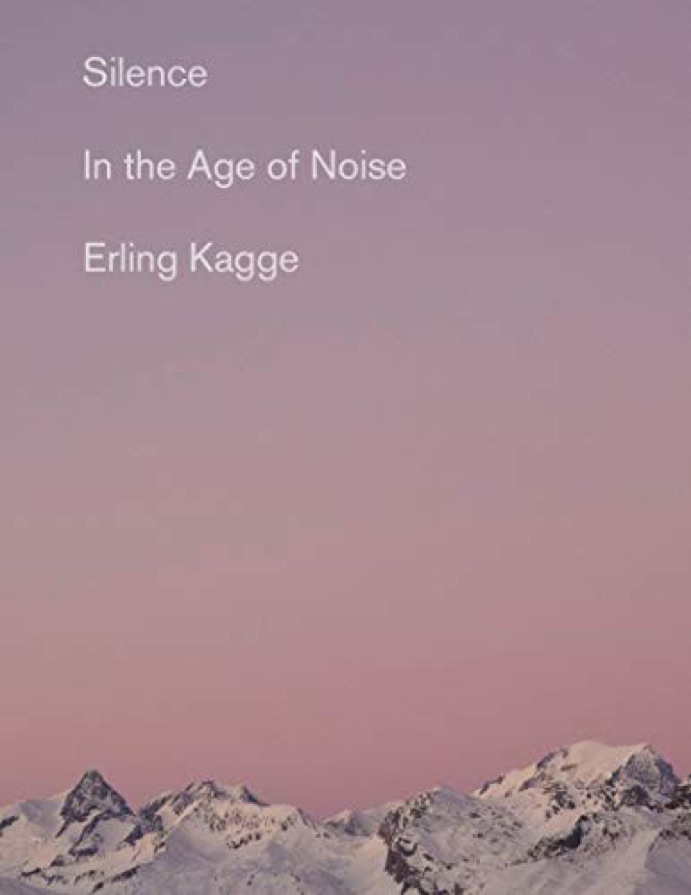
Silence: In the Age of Noise
Applying the lessons from "Silence: In the Age of Noise" by Erling Kagge to your life can be a transformative step toward reclaiming your cognitive and emotional autonomy. Here are some ways you might integrate these lessons:
-
Cultivating Executive Presence Through Stillness: - In the fast-paced worlds of venture capital and emergency medicine, the ability to remain calm amidst chaos is a superpower. You can practice "internal silence" during high-pressure situations by consciously grounding yourself, ensuring that your decisions are driven by clarity rather than reactive noise. - By creating small pockets of silence before major board meetings or surgical procedures, you allow your brain to reset. This practice enhances your executive presence, signaling to others that you are fully present and in control of the environment regardless of external volatility.
-
Harnessing Solitude for Strategic Vision: - As a serial entrepreneur, it is easy to get caught in the noise of operational details and constant networking. You should schedule regular periods of total solitude—similar to a mini-Antarctic trek—to focus on long-term strategy and the high-level vision of your firm. - Silence allows for the pattern recognition necessary to identify the next big healthcare innovation. Use these quiet periods to ask yourself the hard questions about your ventures that the noise of daily business often obscures, ensuring you stay hungry for the right goals.
-
Utilizing Silence to Enhance Empathy in Medicine: - In clinical practice, the most important information often comes during the pauses in a patient's story. You can apply Kagge’s lessons by practicing "active silence" during patient consultations, giving individuals the space to speak their truths without being interrupted by clinical haste. - This quietude fosters a deeper physician-patient bond, allowing you to hear what is unsaid. In the age of noise, being a listener who can tolerate silence is perhaps the most healing gift an emergency physician can offer to a patient in distress.
-
Operational Silence and Mental Clarity in Aviation: - In the cockpit, noise is both a physical reality and a mental distraction. You can integrate Kagge’s philosophy by practicing a "sterile cockpit" of the mind, purging irrelevant thoughts during critical phases of flight to maintain absolute situational awareness. - Recognizing that silence is an ally in high-stakes environments helps in prioritizing tasks. When the noise of multiple variables increases, your trained ability to find an inner point of stillness ensures that your focus remains on the most critical flight path and safety protocols.
-
Redefining Wealth as the Control of Your Own Attention: - Kagge suggests that silence is the new luxury. For a lifelong learner, this means realizing that your most valuable asset is not your degree or your capital, but your attention. You can protect this asset by aggressively filtering out digital noise and unnecessary information clutter. - By choosing when and where to engage with the world, you "Stay Hungry" for meaningful knowledge while "Staying Humble" enough to realize that you do not need to have an opinion on every noisy trend. True wealth is the ability to choose your own thoughts.
-
Finding the "South Pole" in Everyday Moments: - You do not need to walk across a continent to find peace; you can find it in the quiet moments with family or during a morning workout. Make a conscious effort to perform mundane tasks—like brewing coffee or walking to the hospital—in total silence, without the distraction of a podcast or phone call. - These micro-meditations build your "silence muscle," making it easier to access that deep well of focus whenever you need it. It reinforces the idea that the greatest adventures are often found in the stillness of our own minds during the routine parts of our day.
By integrating these lessons, you move beyond a simple mantra into a state of deliberate significance. Reclaiming your silence does not mean withdrawing from your diverse roles as a physician, pilot, or venture capitalist; rather, it provides the solid foundation upon which those roles can be performed with maximum impact and minimal exhaustion.
What the book covers
"Silence: In the Age of Noise" by Erling Kagge is a profound meditation on the necessity of quietude in a world defined by constant distraction and technological clamor. As the first person to reach the "three poles"—the North Pole, the South Pole, and the summit of Mount Everest—Kagge utilizes his extreme physical journeys, specifically a fifty-day solo trek across Antarctica, to explore the internal landscape of the human mind. The book functions as both a philosophical treatise and a practical guide, urging readers to rediscover the richness of silence as a tool for fostering creativity and self-awareness. Kagge’s core message is that silence is not an external condition to be found in remote locations, but an internal state that must be cultivated to lead a more meaningful and present life.
Summary:
-
The Three Fundamental Inquiries: - Kagge structures his exploration around three deceptively simple questions: What is silence? Where is it? Why is it more important now than ever? These questions serve as the framework for investigating how silence influences our perception of time, space, and our own identity in a fractured world. - He argues that modern society is suffering from a pervasive "noise" that is not just auditory but also digital and psychological. By addressing these questions, Kagge attempts to demystify silence, moving it from a concept of "nothingness" to a tangible, life-enhancing asset for the human spirit.
-
Silence as an Internal Resource: - One of the book’s most compelling arguments is that silence is something you carry within you. While Kagge found absolute environmental silence in the frozen wastes of Antarctica, he emphasizes that the most profound silence is a subjective experience that can be accessed anywhere, even in a crowded city or a high-pressure office. - He describes silence as a "luxury" and a "necessity" that allows individuals to shut out the world and listen to their own internal monologue. This internal quiet is presented as the foundation for original thought and the only true antidote to the "restless boredom" that plagues the modern digital era.
-
The Antarctic Experience as a Laboratory: - Kagge recounts his fifty days of total solitude walking to the South Pole, during which he had no radio and no contact with the outside world. This extreme environment served as a laboratory for the mind, where the lack of external stimuli forced him to notice the subtle nuances of his surroundings and his own consciousness. - He explains how, in the absence of noise, his senses became heightened. The sound of his own movement and the slight variations in the texture of the snow became significant, demonstrating that silence allows for a deeper, more intimate connection with the physical world that we often overlook.
-
The Modern Fear of Quietude: - The author explores why many people find silence uncomfortable or even frightening. He posits that we use noise—be it social media, music, or constant activity—as a defense mechanism to avoid facing ourselves and the existential questions that arise when the external world goes quiet. - Kagge references Blaise Pascal’s observation that all of humanity’s problems stem from man’s inability to sit quietly in a room alone. He suggests that our addiction to "the age of noise" is essentially a flight from the self, and that embracing silence requires a specific form of modern courage.
-
The Connection Between Silence and Wonder: - A significant portion of the book is dedicated to the idea that silence is the key to experiencing wonder. When we stop talking and stop consuming information, we create the space necessary to be surprised by the world around us, allowing for a state of awe. - This sense of wonder is not reserved for explorers; Kagge argues it is available to anyone who chooses to pause. By looking at the same things every day but with a silent, attentive mind, individuals can rediscover the extraordinary within the ordinary and find a sense of renewed purpose.
-
Silence in Creative and Intellectual Pursuit: - Kagge discusses how many of history’s greatest thinkers, artists, and innovators relied on silence to produce their most significant work. He views silence as a tool for "deep work," allowing for the synthesis of complex ideas and the birth of innovation that is impossible in a state of perpetual distraction. - He suggests that constant connectivity actually hinders our ability to solve problems effectively. By retreating into silence, we allow the subconscious to work, leading to breakthroughs that require the brain to operate without the friction of external interruption.
"Silence: In the Age of Noise" serves as a vital reminder that the ability to exclude the world is perhaps the most important skill for the 21st century. Kagge’s insights suggest that by reclaiming our right to silence, we do not just find peace; we reclaim our own lives from the forces of distraction. Its significance lies in its accessibility, proving that the most profound journeys are often the ones we take inward while standing perfectly still.