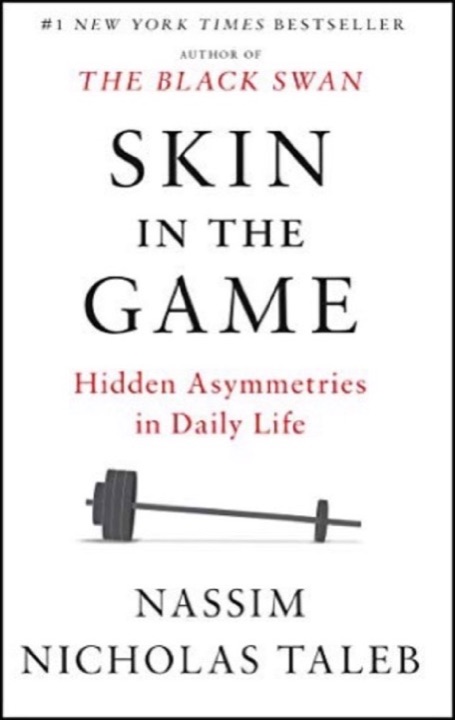
Skin in the Game
Applying the lessons from "Skin in the Game" by Nassim Nicholas Taleb to your life can enhance your decision-making, accountability, and ethical behavior. Here are some ways you might integrate these principles:
-
Emphasize Personal Accountability: - Given your experiences and values, continue to ensure that your actions have personal stakes. Whether in your professional life as a physician or in personal endeavors, strive to align your decisions with outcomes that affect you directly. This will reinforce your commitment to ethical behavior and fairness.
-
Evaluate Asymmetries in Your Decisions: - Reflect on situations where there might be an imbalance in risk and reward. Ensure that those who benefit from decisions also share in the potential downsides. This could apply to your advocacy work or any leadership roles you take on.
-
Be Skeptical of Advice Without Accountability: - When seeking advice or expertise, consider whether the person providing it has skin in the game. This can help you filter out advice that may lack real-world applicability or accountability.
-
Incorporate Time-Tested Practices: - Value and incorporate practices that have stood the test of time, as they often have built-in mechanisms for accountability and resilience. This could apply to your professional practices or personal routines.
-
Leverage Your Influence as a Committed Minority: - In your advocacy work, recognize the power of being part of a committed minority. Use your passion and commitment to drive change and influence larger groups, especially in areas like equality and social justice.
-
Promote Ethical Behavior Through Consequences: - Encourage environments where ethical behavior is reinforced by personal consequences. This could be in your professional setting or in mentoring others, ensuring that actions are aligned with ethical standards.
-
Address Inequality and Risk in Your Advocacy: - Continue to address issues of inequality and risk in your advocacy work. Ensure that systems you are involved with do not separate decision-making from consequences, which can lead to greater inequality and systemic fragility.
-
Apply the Silver Rule: - Embrace the Silver Rule by avoiding actions that could harm others. This aligns with your core values of kindness and empathy and can guide your interactions and decisions.
By integrating these principles into your life, you can enhance your personal and professional effectiveness while staying true to your values of kindness, empathy, and accountability.
What the book covers
"Skin in the Game: Hidden Asymmetries in Daily Life" by Nassim Nicholas Taleb is a thought-provoking exploration of risk, responsibility, and the importance of having a personal stake in the outcomes of one's actions. Taleb, known for his work on probability and uncertainty, delves into the concept of "skin in the game" as a fundamental principle for fairness, justice, and effective decision-making.
Summary:
-
Introduction to Skin in the Game: Taleb introduces the concept of "skin in the game" as having a personal stake in the outcomes of one's actions. He argues that individuals and institutions should bear the consequences of their decisions to ensure accountability and ethical behavior.
-
The Importance of Asymmetry: The book discusses the idea of asymmetry in risk and reward. Taleb emphasizes that those who benefit from a decision should also bear the potential downsides. This principle is crucial for maintaining fairness and preventing exploitation.
-
Ethics and Responsibility: Taleb explores the ethical implications of having skin in the game. He argues that true ethical behavior arises when individuals are exposed to the consequences of their actions, which discourages reckless or harmful behavior.
-
The Role of Experts: The book critiques the role of so-called experts who often lack skin in the game. Taleb argues that many experts make decisions or give advice without facing the repercussions, leading to poor outcomes and a lack of accountability.
-
The Lindy Effect: Taleb introduces the Lindy Effect, which suggests that the longevity of an idea or technology is a predictor of its future lifespan. He connects this to skin in the game by arguing that time-tested practices often have built-in mechanisms for accountability.
-
Minorities and Decision-Making: The book examines how small, committed minorities can disproportionately influence larger groups. Taleb explains that these minorities often have more skin in the game, which gives them leverage in decision-making processes.
-
Religion and Skin in the Game: Taleb discusses the role of religion as a system that historically ensured skin in the game. Religious practices often required personal sacrifice, which reinforced commitment and accountability within communities.
-
Inequality and Risk: The book addresses economic inequality and the distribution of risk. Taleb argues that systems where decision-makers do not bear the consequences of their actions lead to greater inequality and systemic fragility.
-
The Silver Rule: Taleb introduces the Silver Rule, a variation of the Golden Rule, which emphasizes avoiding doing harm to others. This principle is linked to skin in the game, as it encourages individuals to consider the impact of their actions on others.
Key Takeaways and Lessons:
-
Accountability is Crucial: For systems to function effectively and ethically, individuals must have skin in the game. This ensures accountability and discourages reckless behavior.
-
Beware of Asymmetries: Asymmetries in risk and reward can lead to exploitation and unfairness. Decision-makers should share in both the benefits and the risks of their actions.
-
Question Expert Advice: Be skeptical of experts who do not have skin in the game. Their advice may lack accountability and real-world applicability.
-
Value Time-Tested Practices: Practices and ideas that have stood the test of time often have built-in mechanisms for accountability and resilience.
-
Minorities Can Drive Change: Committed minorities with skin in the game can have a significant impact on larger groups, often driving societal change.
-
Ethics Require Consequences: True ethical behavior arises when individuals face the consequences of their actions, which aligns incentives and promotes fairness.
-
Inequality and Fragility: Systems that separate decision-making from consequences tend to increase inequality and systemic fragility.
"Skin in the Game" challenges readers to reconsider how decisions are made and who bears the consequences, advocating for a world where accountability and personal stakes are central to ethical and effective decision-making.