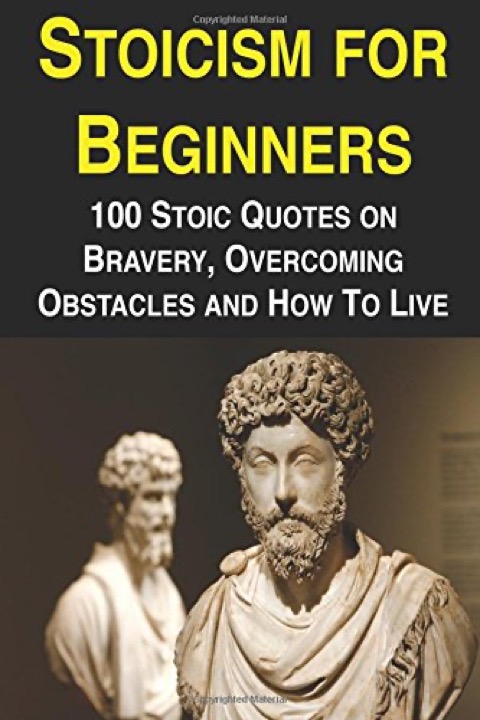
Stoicism for Beginners: 100 Stoic Quotes on Bravery, Overcoming Obstacles and How to Live
Applying the lessons from "Stoicism for Beginners: 100 Stoic Quotes on Bravery, Overcoming Obstacles and How to Live" by Matthew Thomas, Seneca, and Marcus Aurelius to your life can be a transformative exercise in developing a bulletproof mindset across all your professional and personal endeavors. Here are some ways you might integrate these lessons:
-
Mastering the Dichotomy of Control in High-Stakes Environments: - You should apply the Dichotomy of Control to your work in the emergency room or the cockpit, where external variables are chaotic and unpredictable. By focusing your mental energy solely on your training, your current procedure, and your communication with your team, you can eliminate the 'noise' of external pressures, leading to faster, more accurate decision-making and reduced burnout.
-
Reframing Entrepreneurial Setbacks as Essential Data: - In your ventures and VC work, view every market shift or failed project as the 'obstacle that becomes the way.' Instead of viewing these as personal failures, treat them as vital feedback that refines your strategy and builds your professional resilience, allowing you to stay hungry for the next opportunity while staying humble enough to learn from the current one.
-
Cultivating Poise and Equanimity in Legal and Boardroom Negotiations: - Use the Stoic practice of 'premeditatio malorum' (the premeditation of evils) to prepare for difficult legal cases or business negotiations. By mentally rehearsing potential challenges and maintaining your emotional distance, you ensure that you remain the most level-headed person in the room, capable of responding with logic rather than reacting with ego.
-
Leading with Virtuous Intent: - Integrate the Stoic focus on 'arete' into your leadership style by prioritizing character and integrity over short-term financial gains. As a serial entrepreneur, you can create a legacy of 'humble leadership' by modeling that true success is found in the excellence of your actions and the service you provide to your patients, employees, and community.
-
Committing to Perpetual Self-Examination: - Adopt the Stoic habit of the nightly review, where you objectively analyze your actions throughout the day—not for self-flagellation, but for growth. This practice aligns with your commitment to being a lifelong learner, helping you identify where your actions drifted from your values and how to realign them for the following day.
By integrating these lessons, you will forge an unshakeable inner foundation that supports your diverse roles as a physician, pilot, and leader. Stoicism provides the philosophical framework to navigate the complexities of multi-disciplinary success with a calm mind, ensuring that your pursuit of excellence is always grounded in a deep sense of internal stability and moral clarity.
What the book covers
"Stoicism for Beginners: 100 Stoic Quotes on Bravery, Overcoming Obstacles and How to Live" by Matthew Thomas, Seneca, and Marcus Aurelius is an accessible entry point into one of history’s most practical and enduring philosophies. The book curates essential wisdom from the leading figures of the Stoic tradition, presenting their insights in a format designed for modern application and mental fortification. By distilling complex ethical frameworks into actionable maxims, Thomas provides readers with a toolkit for developing emotional resilience, clarity of thought, and a steadfast moral compass in an unpredictable world.
Summary:
-
The Foundations of Stoic Logic: - The book introduces the fundamental Stoic premise that while we cannot control external events, we have absolute agency over our internal reactions and judgments. This section explores how the ancient philosophers differentiated between the 'internal' and 'external' worlds to prevent unnecessary suffering and emotional turbulence. - By grounding the reader in the logic of Seneca and Aurelius, the text establishes that a life of tranquility is not the absence of struggle, but the mastery of one's own mind in the face of it.
-
The Dichotomy of Control: - A central theme of the collection focuses on the 'Dichotomy of Control,' urging the reader to invest energy exclusively in their own thoughts, intentions, and actions. The quotes selected illustrate how anxiety often stems from a futile desire to influence outcomes that are ultimately governed by fate or others. - This section provides a framework for prioritization, teaching that by releasing the need to control the uncontrollable, one gains a profound sense of freedom and effectiveness in their actual sphere of influence.
-
Cultivating Bravery and Courage: - Through the lens of Roman Stoicism, bravery is defined not as the absence of fear, but as the commitment to virtuous action despite it. The text highlights quotes that encourage the reader to face their fears directly, viewing them as opportunities for character development. - Courage is presented as a daily practice rather than a grand gesture, emphasizing that small, consistent acts of integrity build the 'inner citadel' necessary to withstand major life crises.
-
Overcoming Obstacles as Fuel for Growth: - Following the Aurelian concept that 'the impediment to action advances action,' the book details how obstacles are essentially raw material for the practice of virtue. It argues that every setback contains a hidden benefit or a lesson that can be leveraged for future success. - The commentary explains how a Stoic shifts their perception of a problem from a 'burden' to a 'training ground,' effectively neutralizing the negative emotional impact of failure or delay.
-
The Management of Emotions and Desires: - This section addresses the Stoic approach to destructive emotions like anger, jealousy, and excessive grief, categorizing them as 'passions' that cloud reason. The quotes provide practical reminders to pause and analyze the 'impression' of an event before reacting impulsively. - The text advocates for a state of 'apatheia'—not a lack of feeling, but a freedom from being overwhelmed by irrational emotions—ensuring that the individual remains a pilot of their own life.
-
Living in Accordance with Nature and Reason: - The concluding sections focus on the Stoic ideal of living 'according to nature,' which means utilizing the unique human capacity for reason to fulfill one's social and personal duties. It stresses the importance of community, justice, and recognizing our interconnectedness with the rest of humanity. - The book emphasizes that a well-lived life is one characterized by 'arete' (excellence or virtue), where the individual seeks to be useful and honorable regardless of their social standing or material wealth.
This collection serves as a significant bridge between ancient Mediterranean thought and the modern self-improvement movement. By presenting these 100 quotes, the book underscores the timeless relevance of Stoicism as a 'philosophy of the street'—a rugged, practical guide that empowers individuals to lead lives of purpose, dignity, and unshakeable inner peace.