The Enchiridion
Applying the lessons from "The Enchiridion" by Epictetus to your life can be the ultimate catalyst for developing the "invincible mind" required to excel in high-stakes fields like emergency medicine, venture capital, and aviation. Here are some ways you might integrate these lessons:
- Master the Internal Locus of Control: - In both the ER and the boardroom, you are constantly bombarded by variables you cannot change—patient outcomes, market crashes, or mechanical failures. You must ruthlessly filter your focus toward your own decisions and reactions; by refusing to waste energy on external frustrations, you preserve your cognitive bandwidth for the actions that actually move the needle.
- Develop Professional Equanimity: - As a physician or a pilot, you encounter high-stress situations where panic is a liability. You can practice the Stoic discipline of "managing impressions" by pausing before you react to a crisis, ensuring that your subsequent actions are governed by logic and protocol rather than the initial surge of adrenaline or fear.
- Adopt the Entrepreneurial Pivot: - When a business venture fails or a deal falls through, the Stoic view is that the event itself is neutral; only your judgment of it is "bad." You can leverage this by viewing every setback as data rather than a personal defeat, allowing you to iterate and move forward with the "Stay Hungry" mindset without being weighed down by ego-driven regret.
- Lead Through Character, Not Title: - True leadership in law or medicine comes from consistent integrity, not the honorifics behind your name. You should focus on performing your current role—whatever it may be—with total excellence, recognizing that while you cannot control if others respect you, you have total control over whether you are respectable.
- Maintain Radical Humility in Success: - Epictetus warns against being prideful of things that are not truly yours, like your wealth or your reputation. By staying humble and remembering that these externals can be taken away at any moment, you protect yourself from the complacency that often follows significant professional achievements.
- Prepare for the "In-Flight Emergency": - Use the Stoic practice of premortems to visualize potential failures in your ventures or flights. By mentally rehearsing your response to the worst-case scenario, you strip the event of its power to paralyze you, ensuring that you remain a calm, effective leader when others are losing their heads.
By integrating these lessons, you transform philosophy from an academic pursuit into a practical toolkit for life, ensuring that your inner peace and professional effectiveness are never at the mercy of a world you cannot control.
What the book covers
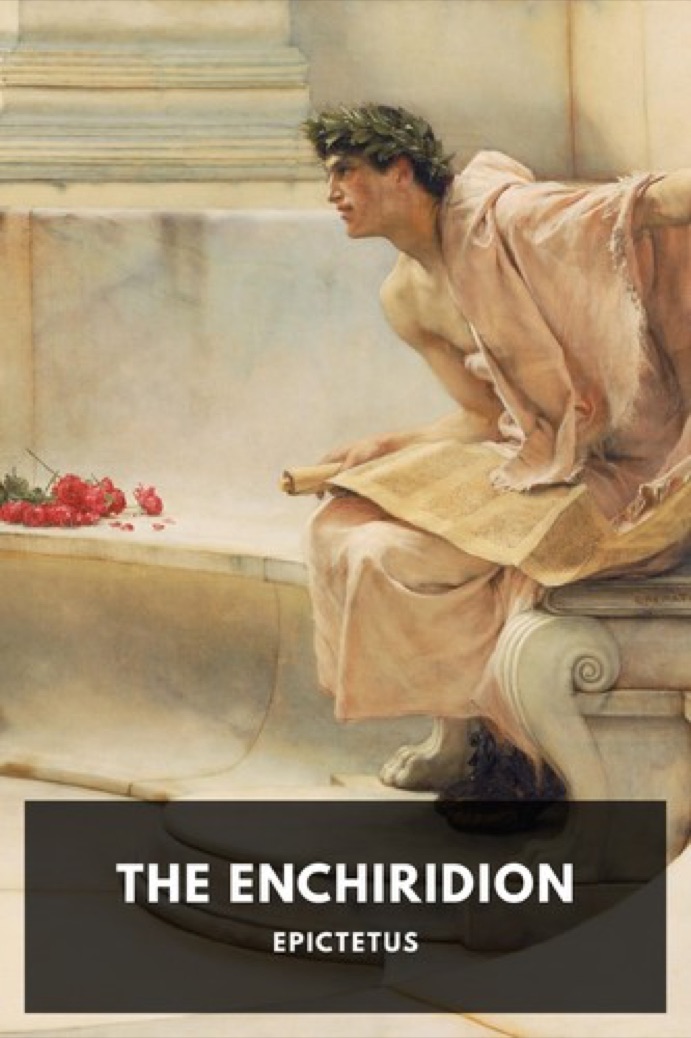
"The Enchiridion" by Epictetus is a foundational manual of Stoic philosophy that offers practical advice for achieving mental clarity and moral integrity in a chaotic world. Transcribed by his student Arrian, this "handbook" distills the core teachings of Epictetus into 53 brief chapters designed for daily application. It provides a rigorous framework for distinguishing between what we can control and what we cannot, aiming to lead the reader toward a life of tranquility and virtue.
Summary:
- The Fundamental Dichotomy of Control: - The text opens with the most critical distinction in Stoic thought: some things are within our power, while others are not. Our opinions, intentions, desires, and aversions are inherently free and unhindered because they belong to our internal faculty of choice. Conversely, our bodies, property, reputations, and social status are external and subject to the whims of fate or others. - Epictetus argues that all human suffering stems from trying to control the uncontrollable or neglecting what we actually command. By restricting our concerns solely to our internal character and judgments, we become invincible to external harm and emotional distress.
- The Management of Impressions: - A central theme is the disciplined response to "impressions," or the initial thoughts and feelings triggered by external events. Epictetus instructs the reader to challenge every harsh impression by asking whether it concerns things within their control, and if it does not, to dismiss it as nothing to them. - This practice prevents the mind from being hijacked by fear, anger, or envy. By maintaining a cognitive distance from events, the practitioner learns to view reality objectively rather than through a lens of emotional bias.
- Resignation to the Natural Order: - Epictetus teaches that we should not wish for reality to conform to our desires, but rather align our desires with reality. This involves accepting events as they happen, whether they are personal losses or societal shifts, as part of a larger, rational cosmic order. - He uses the metaphor of a banquet or a play to illustrate that we are guests or actors who must behave with decorum. We should take what is offered with gratitude and perform our assigned roles to the best of our ability without complaining about the script.
- The Preservation of the Will: - The book emphasizes that no one can hurt us unless we allow it; the harm lies not in the action of another, but in our judgment that we have been harmed. Even in the face of illness, poverty, or death, the "prohairesis" (the moral will) remains free if the individual chooses to keep it so. - By valuing virtue and the health of the soul over physical comfort or social standing, a person ensures that their inner peace is never hostage to external fortune.
- Social Duty and Integrity: - While the philosophy is internal, its application is social. Epictetus outlines how to maintain one's character while fulfilling roles as a citizen, parent, or friend. He advises against vanity, excessive speech, and the pursuit of popular approval, which only serve to tether the self to the opinions of others. - He encourages a life of simplicity and self-restraint, noting that a philosopher is recognized not by their words or theories, but by their consistent actions and their refusal to blame others for their own frustrations.
- Preparation for Adversity: - The manual serves as a training guide for the inevitable challenges of life. Epictetus urges the reader to keep the reality of death and misfortune before their eyes daily so that they are never surprised or overwhelmed when they occur. - This "pre-meditation" of evils is not meant to be morbid, but rather to strip away the power of fear, allowing the individual to act with courage and presence of mind in any crisis.
"The Enchiridion" remains a timeless masterpiece because it provides a practical, no-nonsense roadmap for psychological resilience. Its influence spans centuries, offering a profound sense of agency to anyone seeking to lead a life of purpose and composure despite the inherent unpredictability of the human condition.