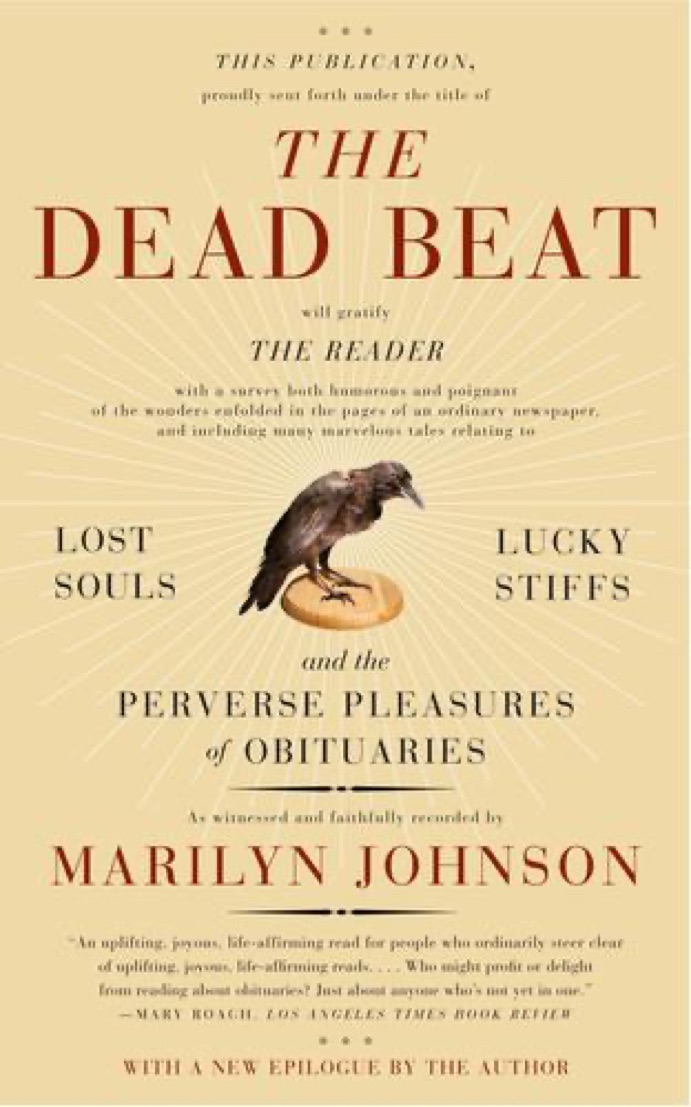
The Dead Beat: Lost Souls, Lucky Stiffs, and the Perverse Pleasures of Obituaries
Applying the lessons from "The Dead Beat: Lost Souls, Lucky Stiffs, and the Perverse Pleasures of Obituaries" by Marilyn Johnson to your life can be a transformative way to evaluate your personal and professional legacy while you still have the time to shape it. Here are some ways you might integrate these lessons:
-
Defining Your Core Narrative: - As a leader or entrepreneur, you should consider what the "lead" of your own story would be today. In the same way an obituary writer identifies a person's most significant contribution, you should focus your energy on the actions and values you want to be remembered for, ensuring your daily work aligns with your long-term legacy. - Clarity of purpose now prevents a muddled legacy later; ask yourself if your current pursuits are building a narrative of service and innovation or if you are simply filling time with noise.
-
Cultivating Radical Empathy: - In the fields of medicine and law, it is easy to view individuals as cases or files, but Johnson reminds us that every person has a complex, vibrant history. You can improve your professional relationships by seeking out the "extraordinary" in your patients and clients, recognizing that their life story informs their current needs and motivations. - This perspective fosters a deeper level of care and advocacy, as you are treating a whole person with a lifetime of experiences rather than just a symptom or a legal problem.
-
Mastering the Art of Brevity: - The obituary is a lesson in the power of concise communication. You can apply this to your business ventures and personal branding by learning to distill complex ideas into their most potent form, ensuring that your message is both memorable and impactful to your stakeholders. - Efficiency in communication is a hallmark of great leadership; if you cannot explain your vision or your "why" with the clarity of a well-written obituary, you risk losing your audience and your impact.
-
Finding Inspiration in the Ordinary: - You should look for mentorship and inspiration outside of the usual high-profile circles. As Johnson illustrates, the most resilient and innovative spirits are often found in individuals who pursued their passions with quiet intensity, a lesson particularly relevant for those in aviation or specialized fields where precision and passion are paramount. - Embracing this humility allows you to learn from a broader spectrum of human experience, enriching your own approach to problem-solving and leadership.
-
Living with Intentionality: - Use the stories of those who have finished their journey as a stark reminder to "Stay Hungry." You are encouraged to inhabit your life and your various roles fully, ensuring that you don't just exist, but truly leave the world more enriched by your presence and your work. - Integrating the "Stay Humble" mantra means acknowledging that you are part of a long chain of human history, and your goal should be to make every chapter count for something greater than yourself.
By integrating these lessons, you move beyond the mundane requirements of a high-achieving career and begin to view your life as a work of art in progress. Marilyn Johnson’s exploration of the "dead beat" serves as a vital guide for the living, urging us to create a legacy worth writing about every single day.
What the book covers
"The Dead Beat: Lost Souls, Lucky Stiffs, and the Perverse Pleasures of Obituaries" by Marilyn Johnson is a witty, insightful, and surprisingly lively exploration of the art form that chronicles the end of life. Johnson takes the reader behind the scenes of the obituary pages of major newspapers, revealing a subculture of passionate writers and dedicated readers who find inspiration and history in the "final word" on a human existence. Through her sharp observations and humorous prose, she demonstrates how the obituary serves as both a vital historical record and a vibrant celebration of the human spirit’s diversity.
Summary:
-
The Evolution of the Obituary: - Johnson traces the history of the obituary from its origins as dry, formulaic death notices to the narrative-driven, often witty "stories of life" they have become in modern journalism. She highlights how this transition allowed writers to capture the essence of a person rather than just their dates of birth and death. - This evolution transformed the "dead beat"—traditionally the least desirable assignment in a newsroom—into a prestigious post where writers are given the creative freedom to paint vivid, literary portraits of individuals who might otherwise be forgotten.
-
The Masters of the Craft: - The book profiles the legendary obituary writers of the New York Times and the London Daily Telegraph, illustrating the distinct cultural differences in how we remember. The British "obit" is often noted for its dry wit, eccentricity, and willingness to mention the subject's flaws, whereas the American style tends toward more earnest, factual, and deeply researched storytelling. - Johnson examines how these writers become historians of the "non-famous," finding the extraordinary in the lives of librarians, inventors of minor household items, and local characters who lived with unparalleled zest and commitment to their niche interests.
-
The Culture of Obit-Fans: - A significant portion of the book is dedicated to "obit-fans"—people who read the obituary section first every morning. Johnson explores the psychology behind this habit, suggesting it is not a morbid fascination with death, but rather a profound appreciation for life and the different ways it can be lived successfully. - This community finds a sense of connection to the past and a perspective on the present through these brief biographies, using them as a compass for their own values, aspirations, and the preservation of human memory.
-
Technological and Social Transitions: - Johnson discusses the shift from print to digital media and how it has democratized the process of remembrance. While newspapers were once the sole gatekeepers of legacy, the internet allows for a more expansive and interactive form of memorialization, though it often lacks the curated precision and professional narrative of the traditional press. - She notes that despite these technological changes, the fundamental human need to be remembered and to have one’s story told accurately remains constant across all platforms, generations, and socioeconomic backgrounds.
-
Distilling a Human Essence: - The author highlights the incredible skill required to condense seventy or eighty years into a few hundred words. She argues that the best obituaries identify the "defining moment" or the primary passion that drove the subject, providing a masterclass in concise, impactful communication that resonates emotionally. - This process involves a deep level of research and empathy, as writers must synthesize memories from family, friends, and public records to create a three-dimensional image of a person they likely never met, honoring their true character.
-
The Significance of the Ordinary: - One of Johnson's primary arguments is that some of the most compelling stories belong to those who never made a headline during their lives. By focusing on the "lucky stiffs" who contributed in quiet but profound ways, the book challenges the reader to reconsider what constitutes a successful and meaningful life. - These narratives serve as a powerful reminder that every life has a story worth telling, and that a legacy is often built through consistent, small-scale impact rather than grand, public gestures or professional accolades.
Marilyn Johnson’s work serves as a profound reminder that our time is limited and that the stories we leave behind are our final contribution to the world. By chronicling the chroniclers, she highlights the importance of the written word in preserving human dignity and history, making this an essential read for anyone interested in the intersection of literature, history, and the human condition.