The Iceberg is melting
Applying the lessons from "Our Iceberg Is Melting" by John Kotter to your life involves leveraging the framework for change management to navigate personal and professional challenges. Here’s how you might do this:
-
Discovery of the Problem: - Reflect on areas in your life where change is needed, whether it's personal growth, relationships, or professional endeavors. Like Fred, be observant and identify potential issues before they become significant problems.
-
Convincing the Leadership: - In your context, this could mean convincing yourself or those close to you of the need for change. Use your analytical skills and past experiences to build a compelling case for why change is necessary.
-
Forming a Guiding Coalition: - Surround yourself with a supportive network of friends, family, or colleagues who can offer diverse perspectives and skills. This coalition can help guide and support you through the change process.
-
Creating a Vision and Strategy: - Develop a clear vision for what you want to achieve, whether it's personal growth, professional success, or social impact. Outline a strategy to reach your goals, considering your strengths and areas for improvement.
-
Communicating the Vision: - Share your vision with those who matter in your life. Use your direct and humorous communication style to convey the urgency and importance of the change, ensuring that everyone understands and supports your goals.
-
Empowering Others to Act: - Encourage those around you to contribute ideas and take action. Empowerment fosters a sense of ownership and commitment, whether it's in your family, workplace, or community.
-
Generating Short-Term Wins: - Focus on achieving small, incremental successes that demonstrate the benefits of change. Celebrate these wins to build confidence and maintain momentum.
-
Consolidating Gains and Producing More Change: - Use the momentum from short-term wins to drive further change. Be adaptable and resilient, refining your strategies as needed to achieve your long-term vision.
-
Anchoring New Approaches in the Culture: - Integrate new behaviors and strategies into your daily routine and personal philosophy. This ensures that changes are sustainable and become part of your identity.
By applying these lessons, you can effectively manage change in your life, whether it's pursuing new hobbies like skydiving, addressing social issues you're passionate about, or achieving personal growth. Your resilience, humor, and empathy will be invaluable assets in this journey.
What the book covers
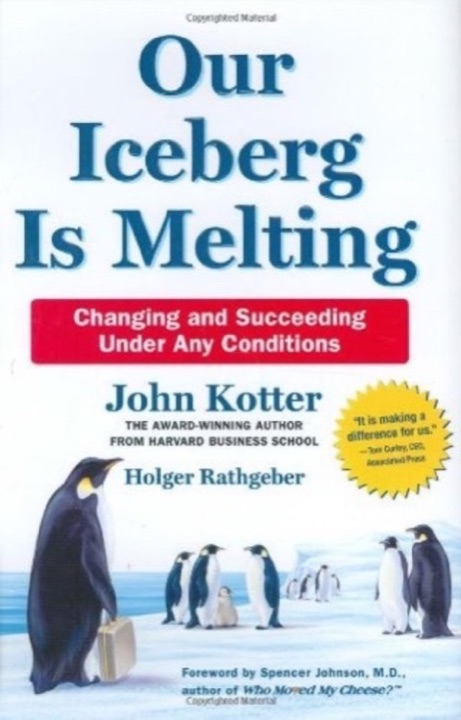
"Our Iceberg Is Melting: Changing and Succeeding Under Any Conditions" by John Kotter and Holger Rathgeber is a fable that illustrates the process of leading change. The story is set in Antarctica and revolves around a colony of Emperor Penguins. The main characters include Fred, an observant penguin who discovers that their iceberg is melting; Alice, a practical and no-nonsense penguin; Louis, the head penguin; and several others who represent different types of personalities found in any organization.
Summary:
-
Discovery of the Problem: - Fred, a curious and observant penguin, discovers that the iceberg the colony lives on is melting. He realizes that this poses a significant threat to their survival.
-
Convincing the Leadership: - Fred presents his findings to Alice, who is skeptical but open-minded. Together, they approach Louis, the head penguin. Convincing the leadership is a critical step, as they need buy-in from those in power to initiate change.
-
Forming a Guiding Coalition: - Louis forms a team to address the issue, including Fred, Alice, and a few other penguins with different skills and perspectives. This coalition is tasked with guiding the colony through the change process.
-
Creating a Vision and Strategy: - The team develops a vision for finding a new home and a strategy to achieve it. They communicate this vision to the rest of the colony to gain widespread support.
-
Communicating the Vision: - The guiding coalition works to communicate the urgency of the situation and the vision for change to the entire colony. They use various methods to ensure that the message is understood and embraced by all.
-
Empowering Others to Act: - The team encourages other penguins to contribute ideas and take action. They remove obstacles that might hinder progress, such as resistance from skeptical penguins.
-
Generating Short-Term Wins: - To maintain momentum, the team focuses on achieving short-term wins that demonstrate the benefits of the change. These wins help to build confidence and reduce resistance.
-
Consolidating Gains and Producing More Change: - The colony builds on the short-term wins to drive further change. They continue to adapt and refine their strategies as they search for a new home.
-
Anchoring New Approaches in the Culture: - Once the colony successfully relocates, the new behaviors and strategies are embedded into their culture to ensure long-term success.
Key Takeaways and Lessons:
-
Importance of Leadership and Vision: Effective change requires strong leadership and a clear vision that is communicated effectively to all stakeholders.
-
Building a Guiding Coalition: Change is more successful when driven by a diverse team that can guide and support the process.
-
Communication is Key: Consistent and clear communication helps to overcome resistance and align everyone with the change initiative.
-
Empowerment and Participation: Engaging others and empowering them to act fosters a sense of ownership and commitment to the change.
-
Short-Term Wins: Achieving and celebrating short-term successes can help maintain momentum and build confidence in the change process.
-
Adaptability and Resilience: Organizations must be adaptable and resilient to navigate challenges and sustain change over time.
-
Cultural Integration: For change to be lasting, new approaches must be integrated into the organizational culture.
Overall, "Our Iceberg Is Melting" provides a simple yet powerful framework for understanding and implementing change in any organization, emphasizing the importance of leadership, communication, and adaptability.