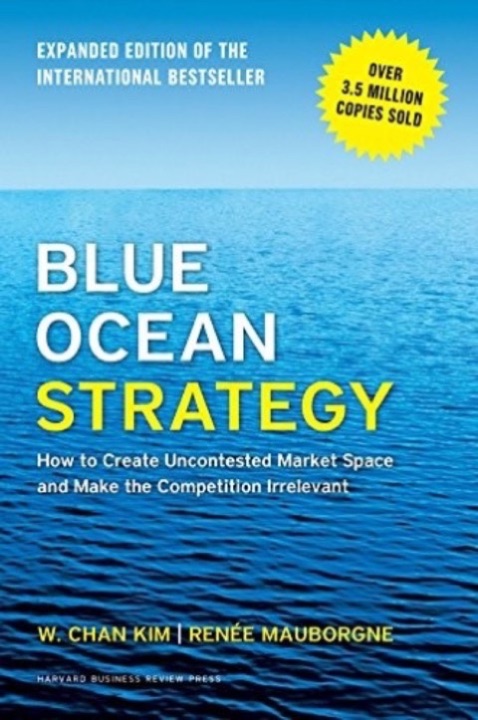
Blue Ocean Strategy, Expanded Edition: How to Create Uncontested Market Space and Make the Competition Irrelevant
Applying the lessons from "Blue Ocean Strategy" to your life involves embracing innovation, seeking new opportunities, and focusing on creating unique value in various aspects of your personal and professional endeavors. Here are some ways you might apply these concepts:
-
Value Innovation in Personal Growth: Just as value innovation is about creating a leap in value for companies and customers, you can apply this to your personal growth. Identify areas in your life where you can innovate or improve, such as learning new skills or exploring new hobbies like skydiving. This can lead to personal fulfillment and growth.
-
The Four Actions Framework for Self-Improvement: - Eliminate: Identify habits or beliefs that no longer serve you and work to eliminate them. - Reduce: Consider reducing activities or commitments that drain your energy or time. - Raise: Focus on enhancing qualities or skills that align with your core values, such as kindness and empathy. - Create: Develop new habits or routines that bring joy and fulfillment, like spending more time with family or pursuing new adventures.
-
The Strategy Canvas for Life Goals: Use the strategy canvas to map out your current life goals and visualize how you can differentiate yourself. Identify areas where you can stand out or create unique experiences, such as through your advocacy work or personal achievements.
-
The Six Paths Framework for New Opportunities: Explore new opportunities by looking beyond traditional boundaries. This could involve engaging in new social causes, exploring different career paths, or finding innovative ways to connect with others.
-
The Buyer Utility Map for Relationships: Consider what brings value to your relationships and how you can enhance them. Focus on understanding what your loved ones truly value and find ways to meet those needs, whether through quality time, support, or shared experiences.
-
The Three Tiers of Noncustomers for Expanding Your Network: Just as businesses look to convert noncustomers, you can expand your social network by reaching out to new people or communities. This can lead to new friendships, collaborations, and opportunities for growth.
-
Strategic Alignment in Life: Ensure that your actions and decisions align with your core values and long-term goals. This alignment will help you stay focused and motivated, even when faced with challenges.
-
Focus on Creating New Demand in Your Career: In your professional life, look for ways to innovate and create new demand. This could involve developing new services, exploring different career paths, or finding unique ways to contribute to your field.
-
Risk Management in Personal Decisions: While pursuing new opportunities involves risk, use the tools and frameworks from the book to minimize these risks. Evaluate potential outcomes and make informed decisions that align with your values and goals.
-
Sustainability in Personal Growth: Just as Blue Ocean Strategy emphasizes sustaining new market spaces, focus on sustaining your personal growth by continuously learning, adapting, and innovating in your life.
By applying these principles, you can create a life that is not only fulfilling and aligned with your values but also one that continuously evolves and adapts to new opportunities and challenges.
What the book covers
"Blue Ocean Strategy, Expanded Edition: How to Create Uncontested Market Space and Make the Competition Irrelevant" by W. Chan Kim and Renée Mauborgne is a seminal work in the field of business strategy. The book introduces the concept of "Blue Ocean Strategy," which encourages companies to pursue innovation and create new market spaces, rather than competing in saturated markets, referred to as "Red Oceans."
Summary:
Introduction:
The authors begin by explaining the difference between Red Oceans and Blue Oceans. Red Oceans represent all the industries in existence today, characterized by fierce competition and shrinking profit margins. In contrast, Blue Oceans denote untapped market spaces ripe for innovation, where competition is irrelevant because the rules of the game are yet to be set.
Key Concepts:
-
Value Innovation: The cornerstone of Blue Ocean Strategy, value innovation is about making the competition irrelevant by creating a leap in value for both the company and its customers. It focuses on aligning innovation with utility, price, and cost positions.
-
The Four Actions Framework: This framework helps companies reconstruct buyer value elements in crafting a new value curve. It involves four key actions: - Eliminate: Which factors that the industry takes for granted should be eliminated? - Reduce: Which factors should be reduced well below the industry’s standard? - Raise: Which factors should be raised well above the industry’s standard? - Create: Which factors should be created that the industry has never offered?
-
The Strategy Canvas: A diagnostic and action framework for building a compelling Blue Ocean Strategy. It captures the current state of play in the known market space and helps visualize how a company can differentiate itself.
-
The Six Paths Framework: This framework helps break out of accepted boundaries and create blue oceans by looking across alternative industries, strategic groups, buyer groups, complementary product and service offerings, functional-emotional orientation, and time.
-
The Buyer Utility Map: This tool helps identify the full range of utility spaces that a product or service can fill, ensuring that the innovation is aligned with what buyers truly value.
-
The Three Tiers of Noncustomers: The book identifies three tiers of noncustomers that can be converted into customers, expanding the market beyond existing demand.
Implementation:
The authors provide a systematic approach to implementing Blue Ocean Strategy, emphasizing the importance of overcoming organizational hurdles, building execution into strategy, and aligning the organization’s activities with the new strategic direction.
Case Studies:
Throughout the book, Kim and Mauborgne provide numerous case studies from various industries, illustrating how companies have successfully applied Blue Ocean Strategy to achieve significant growth and market leadership.
Key Takeaways and Lessons:
-
Focus on Creating New Demand: Instead of competing for existing demand, focus on creating new demand by identifying and serving unmet needs.
-
Innovation is Key: True innovation comes from creating value in a way that makes the competition irrelevant, not just improving on existing products or services.
-
Strategic Alignment: Ensure that the entire organization is aligned with the new strategy, from leadership to operations, to effectively execute the Blue Ocean Strategy.
-
Think Beyond the Status Quo: Challenge industry norms and think creatively about how to deliver unique value to customers.
-
Risk Management: While creating a Blue Ocean involves risk, the book provides tools and frameworks to minimize these risks and increase the likelihood of success.
-
Sustainability: Blue Ocean Strategy is not just about creating a new market space but also about sustaining it by continuously innovating and adapting to changes.
In conclusion, "Blue Ocean Strategy" provides a comprehensive guide for businesses seeking to break away from the competition and create new market spaces. By focusing on value innovation and strategic alignment, companies can achieve sustainable growth and make the competition irrelevant.