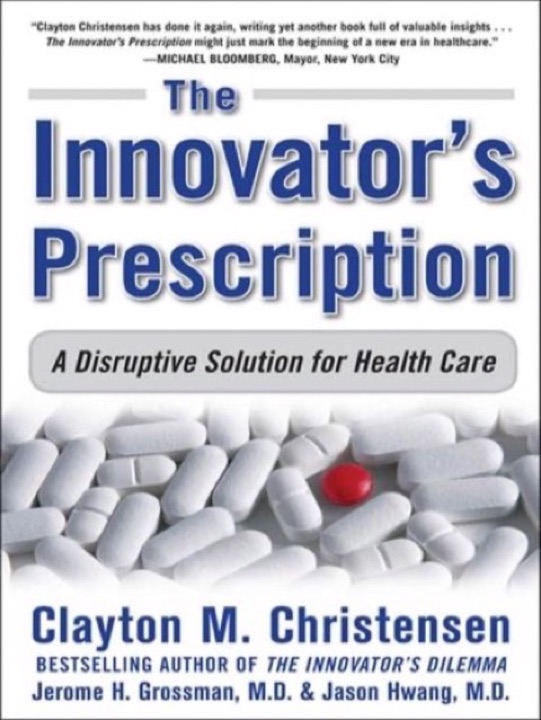
The Innovator's Prescription
Applying the lessons from "The Innovator’s Prescription" by Clayton Christensen to your life involves embracing the principles of disruptive innovation and integrating them into your personal and professional endeavors. Here’s how you might do that:
-
Embrace Disruption in Personal Growth: - Just as disruptive innovation involves adopting simpler, more efficient solutions, you can apply this to your personal growth by seeking out new experiences and learning opportunities that challenge your current perspectives. This aligns with your aspiration to be a lifelong learner and your belief in constant self-improvement.
-
Leverage Technology: - Given your forward-thinking attitude towards technology, consider how you can use technological advancements to enhance your hobbies and interests. For instance, you could explore virtual reality experiences for flying or use health apps to optimize your exercise routine.
-
Innovate Your Daily Routine: - Apply innovative thinking to your daily routine by experimenting with new activities or approaches that could improve your productivity or well-being. This could involve trying new workout techniques or incorporating mindfulness practices to help you live more in the moment.
-
Advocate for Change: - In your advocacy work related to social issues, use the principles of disruptive innovation to challenge the status quo and promote new, more effective solutions. This might involve supporting grassroots movements or leveraging social media to raise awareness and drive change.
-
Empower Others: - Just as the book advocates for consumer-driven healthcare, you can empower those around you by encouraging them to take control of their own lives and decisions. This aligns with your values of kindness and empathy, as well as your belief in giving everyone a chance.
-
Focus on Long-Term Impact: - In your professional life, particularly in healthcare, focus on long-term impact by prioritizing preventive care and integrated care models. This approach can help improve patient outcomes and align with your desire to leave the world a better place.
-
Reform and Educate: - As someone who values education and personal growth, consider how you can contribute to reforming educational practices in your field. This could involve mentoring younger professionals or advocating for curriculum changes that incorporate new technologies and innovative care models.
-
Adapt to Change: - Your resilience and adaptability are strengths that can help you navigate the rapidly changing landscape of both healthcare and society. Embrace change as an opportunity for growth and innovation, and encourage others to do the same.
By integrating these principles into your life, you can continue to grow personally and professionally while contributing to meaningful change in the world around you.
What the book covers
"The Innovator’s Prescription: A Disruptive Solution for Health Care" by Clayton M. Christensen, along with co-authors Jerome H. Grossman and Jason Hwang, applies Christensen's theory of disruptive innovation to the healthcare industry. The book explores how innovative business models can transform healthcare, making it more affordable and accessible while improving quality.
Summary:
-
Understanding Disruption in Healthcare: - The book begins by explaining the concept of disruptive innovation, where simpler, more affordable solutions displace established, complex, and expensive services. In healthcare, this means shifting from hospital-centric care to more distributed, patient-centered models.
-
The Role of Technology: - Technological advancements, such as diagnostic devices and telemedicine, are highlighted as key enablers of disruption. These technologies allow for more precise and less invasive treatments, often at a lower cost.
-
Business Model Innovation: - Christensen argues that new business models are essential for healthcare transformation. He identifies three types of business models: solution shops (diagnostic services), value-adding process businesses (treatment services), and facilitated networks (patient communities and support groups).
-
Regulatory and Policy Challenges: - The book discusses how current regulations and policies often hinder innovation. It suggests that reforms are needed to encourage competition and allow new entrants to challenge incumbents.
-
The Role of Providers: - Christensen emphasizes the need for healthcare providers to adopt new roles and responsibilities. This includes embracing team-based care and utilizing nurse practitioners and physician assistants to extend care delivery.
-
Consumer-Driven Healthcare: - The authors advocate for a shift towards consumer-driven healthcare, where patients have more control over their healthcare decisions. This includes transparency in pricing and outcomes, enabling patients to make informed choices.
-
Chronic Disease Management: - The book highlights the importance of managing chronic diseases through integrated care models that focus on prevention and long-term management rather than acute interventions.
-
Education and Training: - Christensen calls for reforms in medical education to prepare future healthcare professionals for a disrupted industry. This includes training in new technologies and business models.
Key Takeaways and Lessons:
-
Embrace Disruption: Healthcare organizations should be open to disruptive innovations that can improve efficiency and patient outcomes.
-
Leverage Technology: Utilize technology to decentralize care, making it more accessible and affordable.
-
Innovate Business Models: Adopt new business models that align with the changing landscape of healthcare delivery.
-
Regulatory Reform: Advocate for policy changes that support innovation and competition in the healthcare sector.
-
Empower Patients: Shift towards a consumer-driven model where patients have more control and transparency in their healthcare choices.
-
Focus on Chronic Care: Prioritize integrated care models for chronic disease management to improve long-term health outcomes.
-
Reform Education: Update medical education to include training in new technologies and innovative care models.
Overall, "The Innovator’s Prescription" provides a comprehensive roadmap for transforming healthcare through disruptive innovation, emphasizing the need for systemic change to achieve better, more affordable care.