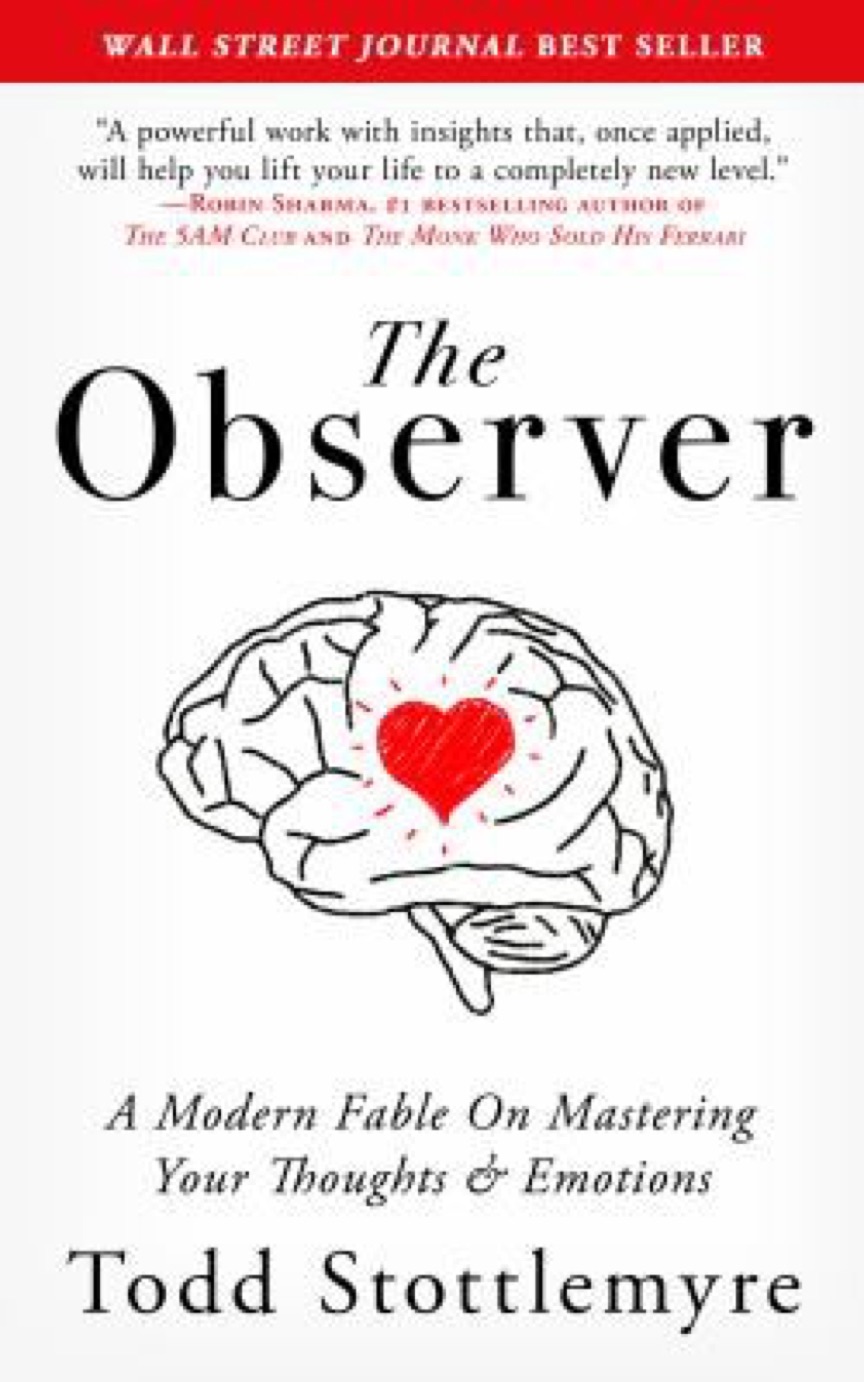
The Observer: A Modern Fable on Mastering Your Thoughts & Emotions
Applying the lessons from "The Observer: A Modern Fable on Mastering Your Thoughts & Emotions" by Todd Stottlemyre to your life can be a transformative journey toward mental clarity and emotional resilience. Here are some ways you might integrate these lessons:
- Mastering the Internal Cockpit: - Much like a pilot must trust their instruments over their physical sensations during a storm, you must learn to trust disciplined logic over your fleeting emotional impulses. In the high-stakes environment of emergency medicine or venture capital, practice being the "Observer" who monitors the stress response without being hijacked by it, ensuring your decisions remain objective and precise.
- Utilizing the 180-Degree Shift in Leadership: - When a portfolio company faces a crisis or a legal negotiation turns hostile, your instinct may be to react defensively. Instead, consciously pivot 180 degrees to seek the strategic opportunity hidden within the conflict; ask yourself what a completely detached, calm version of yourself would do to turn the situation into a win-win scenario.
- Building Your Wall of Success Daily: - Treat every single thought and minor decision as a brick you are laying in your personal foundation. For a serial entrepreneur, this means auditing your morning routine and mental habits to ensure you aren't laying "failure bricks" like procrastination or negativity, but rather "success bricks" of focused vision and disciplined execution.
- Separating Identity from Outcome: - It is vital to remember that you are not your latest business acquisition or your most recent professional setback. By practicing the mental detachment taught by the Observer, you can maintain a "Stay Humble" mindset during your biggest wins and a "Stay Hungry" drive during losses, keeping your core identity independent of external volatility.
- Creating Mental White Space for Observation: - Incorporate intentional periods of silence into your schedule to observe your thoughts without judgment. This practice, similar to a pre-flight checklist, allows you to identify and correct cognitive biases or recurring negative patterns that might be hindering your growth as a leader, family member, or lifelong learner.
By integrating these lessons, you move beyond the exhausted cycle of reactive living and into a state of proactive mastery. Embracing the role of the Observer allows you to lead with a steady hand, ensuring that your significant external achievements are matched by a profound sense of internal stability and enduring purpose.
What the book covers
"The Observer: A Modern Fable on Mastering Your Thoughts & Emotions" by Todd Stottlemyre is a narrative-driven guide to personal transformation that uses a fictional story to illustrate profound psychological and performance-based principles. The book follows Kat, a high-achieving entrepreneur who, despite her outward success, finds herself on the brink of personal and professional collapse due to overwhelming stress and a toxic internal monologue. Through her interactions with a mysterious and wise mentor known as the Observer, Kat learns how to regain control over her internal narrative and emotional responses to achieve sustainable fulfillment and professional excellence.
Summary:
- The High-Achiever’s Breaking Point: - The story introduces Kat, a dedicated entrepreneur whose life is spiraling out of control despite her business accomplishments. She faces a "perfect storm" of professional setbacks and personal exhaustion, highlighting the common trap where external success masks a crumbling internal foundation and a lack of mental peace.
- The Introduction of the Observer: - Kat meets Charles, a calm and composed mentor who identifies himself as the Observer. He explains that most people are slaves to their reactive thoughts and emotions, and he offers to teach Kat how to step outside her own mental noise to gain a clearer, more objective perspective on her life and business.
- The 180-Degree Rule: - A central pillar of the teaching is the "180-degree rule," which instructs Kat to look in the opposite direction of her habitual, fear-based reactions. By consciously choosing a response that is the polar opposite of her initial impulse to panic or retreat, she begins to break the cycle of self-sabotaging behavior.
- Mastering the Internal Dialogue: - The Observer teaches Kat that she is not the voice in her head, but the one listening to it. This distinction allows her to audit her internal dialogue and silence the "Inner Critic" that fuels her anxiety, replacing it with a disciplined, intentional focus that supports her long-term goals.
- The Wall of Success vs. the Wall of Failure: - Stottlemyre introduces a metaphorical framework where every thought and action is a brick. Kat learns that a "Wall of Success" is built through disciplined mental habits and intentionality, while a "Wall of Failure" is constructed brick-by-brick through reactive emotions and unexamined negative beliefs.
- The Power of Intentional Choice: - As the fable progresses, Kat is forced to apply these lessons to a high-stakes business crisis. She learns that while she cannot control external events or the actions of others, she has absolute sovereignty over her internal interpretation of those events and her subsequent strategic choices.
- Emotional Regulation and Presence: - The final stages of Kat's apprenticeship focus on presence and emotional intelligence. She learns to observe her emotions as temporary data points rather than permanent realities, allowing her to remain centered and effective even when facing intense pressure or public scrutiny.
"The Observer" is a compelling reminder that peak performance and leadership start with the mastery of one's own mind. By blending an engaging story with actionable strategies for mental discipline, Stottlemyre provides a roadmap for anyone looking to navigate the complexities of high-stakes environments while maintaining their inner stability and purpose.