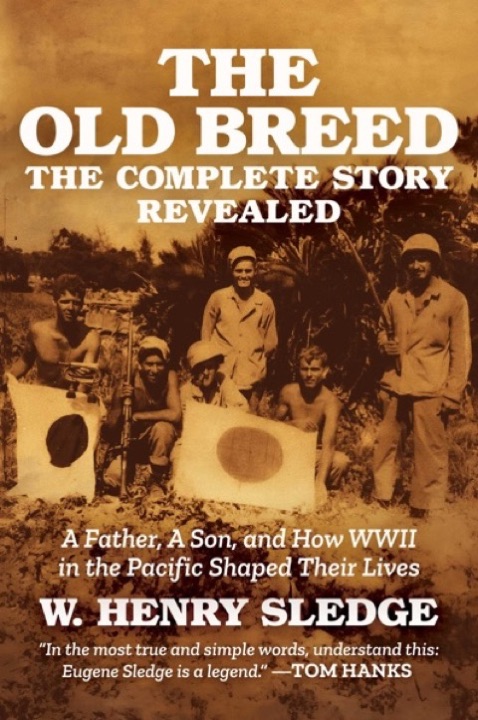
The Old Breed... The Complete Story Revealed: A Father, A Son, and How WWII in the Pacific Shaped Their Lives
Applying the lessons from "The Old Breed... The Complete Story Revealed: A Father, A Son, and How WWII in the Pacific Shaped Their Lives" by W. Henry Sledge to your life can be a transformative exercise in empathy, resilience, and the intentional preservation of personal and professional legacy. Here are some ways you might integrate these lessons:
-
Leading with Quiet Integrity: - Observe the example of Eugene Sledge, who transitioned from a lethal combatant to a respected academic without losing his core values. In your own leadership—whether in a clinic, a boardroom, or a cockpit—strive for a "quiet authority" that is rooted in competence and humility rather than ego or title. - Understand that true respect is earned through the consistency of your actions and your willingness to endure the same hardships as those you lead, much like the officers and NCOs Sledge admired in the 1st Marine Division.
-
Harnessing the Power of Documentation: - Recognize that your experiences, especially the challenging ones in medicine or entrepreneurship, hold immense value for those who follow you. Like Sledge scrawling notes in his Bible, you should find a medium—journaling, writing, or recording—to capture the "ground truth" of your journey while it is fresh. - Documentation serves a dual purpose: it acts as a mental health tool for processing high-stress environments and creates a roadmap for future generations to learn from your successes and failures.
-
Recognizing and Managing the "Long War": - Acknowledge that high-stakes environments leave lasting imprints on the psyche. You must be proactive in managing the long-term effects of stress, recognizing that "staying hungry" also requires staying healthy and seeking the necessary support to process professional trauma. - Foster an environment where your colleagues and family feel safe discussing the mental toll of their work, ensuring that the "silence of the veteran" is replaced by a culture of open communication and mutual support.
-
Cultivating Enduring Brotherhoods: - Build and nurture a "tribe" of peers who understand the unique pressures of your specific field. These relationships are vital for longevity and provide a baseline of reality that can be lost when operating in the vacuum of high-level leadership or solo ventures. - Prioritize these connections not just for networking, but for the psychological safety they provide; having people who "speak your language" is an essential buffer against burnout and isolation.
-
Intentional Legacy Building: - Take an active role in how your story and the stories of your organizations are told. Legacy is not just about what you leave behind, but how you prepare the next generation—be it your children or your professional proteges—to carry the torch. - Ensure they understand the historical context and the "why" behind your missions, so the values of discipline and grit are not just relics of the past but living principles.
By integrating these lessons, you can bridge the gap between your professional achievements and your personal evolution. Like the Sledge family, you can ensure that the "Old Breed" values of discipline, grit, and humility are not just relics of the past, but living principles that guide your future and the futures of those you influence.
What the book covers
"The Old Breed... The Complete Story Revealed: A Father, A Son, and How WWII in the Pacific Shaped Their Lives" by W. Henry Sledge is an intimate and profound examination of the life and legacy of Eugene B. Sledge, the author of the seminal World War II memoir "With the Old Breed." Henry Sledge, Eugene’s son, provides a secondary narrative that contextualizes his father’s battlefield experiences with his post-war life as a husband, father, and scholar. The book acts as a vital bridge for history enthusiasts and families of veterans, offering a behind-the-scenes look at how one of the most significant war memoirs of the 20th century came to be written. Ultimately, it is a story about the enduring bond between a father and son and the long shadows cast by the Pacific War across multiple generations.
Summary:
-
The Silence of the Veteran: - Henry Sledge begins by describing the quiet dignity and the "hidden" nature of his father's past during his upbringing in Alabama. While Eugene Sledge was a gentle biology professor, there were flashes of the "Old Breed" Marine that surfaced through his disciplined habits, his night terrors, and his occasional, intense reflections on his service in the 1st Marine Division. - This section explores the paradox of the "Greatest Generation," where the most horrific experiences were often buried under a veneer of suburban normalcy. Henry recounts how he slowly pieced together his father’s identity not through stories told at the dinner table, but through the artifacts his father kept and the eventual publication of his war journals.
-
The Genesis of a Classic: - The book provides an in-depth look at the labor-intensive process Eugene Sledge underwent to write his masterpiece. Henry details how his father used the notes he had scrawled in the margins of his New Testament during the battles of Peleliu and Okinawa to reconstruct the visceral reality of combat decades later. - Henry emphasizes that the writing was a form of catharsis for Eugene, a way to exorcise the demons of "The Abyss" while ensuring that the sacrifices of his fellow Marines were never forgotten. The son's perspective highlights the emotional toll this retrospective journey took on his father throughout the late 1970s.
-
The Bonds of Brotherhood: - A significant portion of the book is dedicated to the men Eugene served with, such as R.V. Burgin and Bill Leyden, who were immortalized in his father's writing. Henry describes meeting these men as an adult and witnessing the unbreakable bond of the 1st Marine Division, characterized by a shared language and a mutual understanding that outsiders could never fully grasp. - These relationships served as a vital support system for the elder Sledge, providing a space where he did not have to explain the "uncommon valor" or the "uncommon squalor" of the Pacific theater, as they had all lived through the same mud and carnage together.
-
The Physical and Psychological Toll: - Henry does not shy away from the darker aspects of his father’s transition back to civilian life, discussing what the modern world recognizes as Post-Traumatic Stress Disorder. He describes how the sights, sounds, and smells of the Pacific stayed with Eugene for decades, influencing his need for order and his deep-seated skepticism of bureaucratic leadership. - The narrative explains how Eugene found solace in nature and the study of ornithology. He used the quietude of the natural world and the scientific observation of birds to balance the chaotic, violent memories of the "meat grinder" battles that defined his youth.
-
The Cultural Impact and Legacy: - The latter part of the book covers the reception of "With the Old Breed" and its eventual adaptation into the HBO miniseries "The Pacific." Henry recounts the family's reaction to their father's sudden international fame and the responsibility they felt to protect his integrity as the world began to view him as a historical icon. - This section reflects on the importance of primary source accounts in military history. Henry argues that his father’s refusal to sanitize the war was his greatest contribution, providing a necessary, gritty antidote to the romanticized versions of conflict often portrayed in popular media.
-
A Son’s Pilgrimage: - The book concludes with Henry's own journey to understand his father by visiting the places he fought and speaking with the families of other veterans. This personal pilgrimage allows Henry to finally reconcile the "Daddy" he knew with the "Sledgehammer" of the Marines. - This final chapter serves as a meditation on the concept of heritage, suggesting that the lessons learned on the battlefield are passed down not just through stories, but through the character and values modeled by survivors for their children.
"The Old Breed... The Complete Story Revealed" is a significant contribution to military literature, offering a unique perspective on the long-term effects of combat on the human soul. It validates the experiences of veteran families and highlights the importance of storytelling as a tool for healing and historical preservation. By humanizing a legendary figure, W. Henry Sledge ensures that the reality of the Pacific War remains grounded in the human heart rather than just the history books.