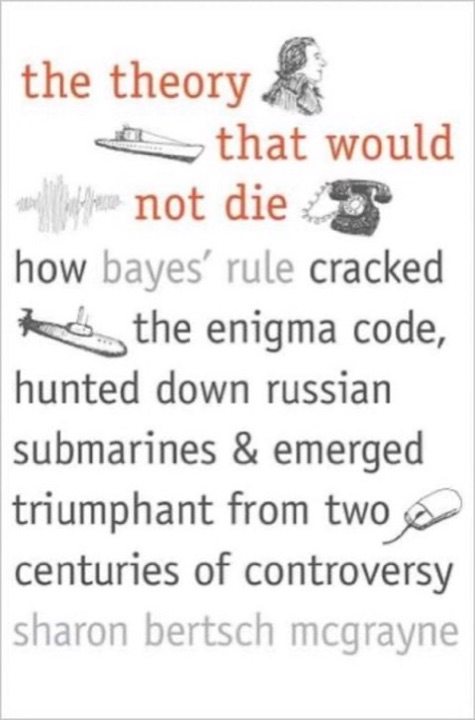
The Theory That Would Not Die
"The Theory That Would Not Die" explores the journey of Bayesian statistics, emphasizing the importance of persistence, adaptability, and the integration of prior knowledge into decision-making. Here are some ways you might apply these lessons to your life:
-
Persistence in the Face of Resistance: Just as Bayesian statistics faced skepticism but eventually gained acceptance, your life experiences, such as overcoming near-death situations and advocating for friends, demonstrate resilience. Continue to persist in your beliefs and endeavors, even when faced with opposition.
-
Incorporating Prior Knowledge: Bayesian methods highlight the value of using prior information to make informed decisions. You can apply this by drawing on your extensive life experiences and insights when making decisions, whether in your personal life, career, or activism efforts.
-
Adaptability and Evolution: The evolution of Bayesian statistics underscores the importance of adapting to new challenges. Embrace change and be open to evolving your perspectives, especially in areas like technology and social issues, where you are already forward-thinking.
-
Interdisciplinary Impact: Recognize the power of interdisciplinary approaches in your pursuits. Whether it's in your medical career, advocacy work, or personal interests, integrating diverse perspectives can lead to innovative solutions and greater impact.
-
Balancing Subjectivity and Objectivity: Bayesian statistics blend subjective prior beliefs with objective data. In your life, balance your personal beliefs and values with objective information, especially when navigating complex social and political issues.
-
Philosophical Insights: The book encourages philosophical reflection on statistical methods. Similarly, continue to reflect on your personal philosophy and values, ensuring they guide your actions and decisions in a meaningful way.
By applying these lessons, you can continue to navigate life's challenges with resilience, informed decision-making, and a commitment to personal growth and societal betterment.
What the book covers
"The Theory That Would Not Die" by Sharon Bertsch McGrayne is a comprehensive exploration of the history and impact of Bayesian statistics. The book traces the development of Bayes' theorem from its inception in the 18th century to its widespread application in various fields today. Here’s a detailed summary of the book, along with key takeaways and lessons:
Summary:
Origins and Development:
-
Thomas Bayes and the Theorem: The book begins with the story of Thomas Bayes, an 18th-century Presbyterian minister who formulated the initial ideas behind Bayes' theorem. His work was posthumously published by Richard Price, who recognized its potential.
-
Early Applications and Resistance: Initially, Bayes' theorem was met with skepticism and resistance, particularly from the frequentist school of statistics, which dominated the field. The theorem was seen as subjective because it incorporated prior beliefs into probability calculations.
-
World War II and Cold War: The book details how Bayesian methods were secretly used during World War II for code-breaking and later during the Cold War for missile tracking. These applications demonstrated the practical utility of Bayesian statistics, even as they remained controversial in academic circles.
-
Revival and Acceptance: The latter half of the 20th century saw a revival of Bayesian statistics, driven by advances in computing power and successful applications in diverse fields such as medicine, economics, and artificial intelligence. Key figures like Harold Jeffreys, Alan Turing, and later, Dennis Lindley and Leonard Jimmie Savage, played crucial roles in advocating for Bayesian methods.
Key Applications:
- Medicine: Bayesian methods have been used to improve diagnostic tests and clinical trials, allowing for more personalized medicine.
- Economics and Finance: Bayesian statistics help in modeling economic phenomena and in risk assessment.
- Artificial Intelligence: The development of machine learning and AI has heavily relied on Bayesian networks and algorithms.
Philosophical and Practical Implications:
- The book discusses the philosophical debates surrounding Bayesian versus frequentist approaches, highlighting the strengths and weaknesses of each.
- It also emphasizes the practical implications of Bayesian statistics in decision-making processes, where incorporating prior knowledge can lead to more informed and accurate outcomes.
Key Takeaways and Lessons:
-
Interdisciplinary Impact: Bayesian statistics have had a profound impact across various disciplines, demonstrating the power of a mathematical theory to influence real-world applications.
-
Overcoming Resistance: The history of Bayes' theorem illustrates how scientific ideas can face significant resistance but eventually gain acceptance through demonstrated utility and the persistence of advocates.
-
Subjectivity as Strength: While initially criticized for its subjectivity, the Bayesian approach's ability to incorporate prior information is now seen as a strength, allowing for more flexible and adaptive models.
-
Technological Advancements: The resurgence of Bayesian methods was significantly aided by advancements in computing, highlighting the interplay between technology and theoretical development.
-
Philosophical Insights: The book encourages readers to appreciate the philosophical underpinnings of statistical methods and to understand the implications of choosing one approach over another.
-
Adaptability and Evolution: The evolution of Bayesian statistics underscores the importance of adaptability in scientific theories, as they evolve to meet new challenges and incorporate new information.
In summary, "The Theory That Would Not Die" provides a rich narrative of the development and impact of Bayesian statistics, offering insights into the nature of scientific progress and the enduring relevance of Bayes' theorem in modern science and decision-making.