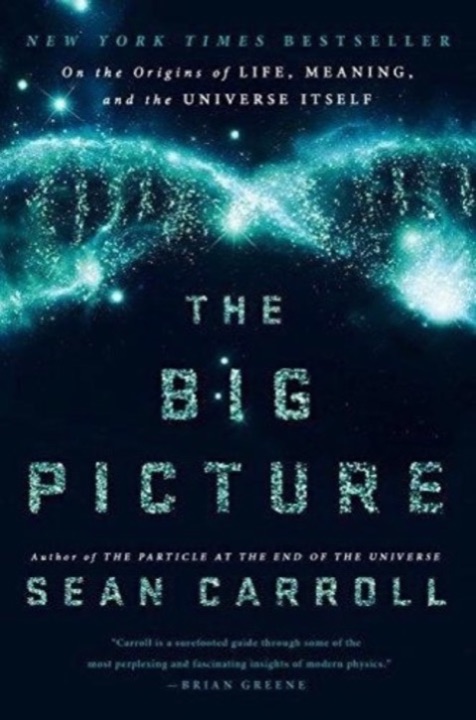
The Big Picture: On the Origins of Life, Meaning, and the Universe Itself
Applying the lessons from Sean Carroll's "The Big Picture" to your life can enhance your understanding of the universe and your place within it, aligning with your existing beliefs and values. Here are some ways you might integrate these lessons:
-
Embrace Poetic Naturalism: - Given your spiritual beliefs and skepticism towards organized religion, poetic naturalism can resonate with your worldview. It encourages you to appreciate multiple perspectives and narratives, allowing you to find personal meaning in a universe that doesn't inherently provide it.
-
Interconnectedness of Science and Philosophy: - Your interest in lifelong learning and personal growth aligns with the book's emphasis on the interconnectedness of science and philosophy. Continue exploring these fields to deepen your understanding of existence and enhance your personal philosophy.
-
Emergence and Complexity: - Reflect on how complex phenomena, like your experiences and personal growth, emerge from simple actions and decisions. This perspective can help you appreciate the journey of life and the development of your character over time.
-
Constructed Meaning: - You already create meaning through your relationships, hobbies, and values. Continue to construct meaning by engaging in activities that bring you joy and fulfillment, like spending time with family, flying, and advocating for social issues.
-
Ethical Responsibility: - Your commitment to kindness and empathy aligns with the book's view on morality. Continue refining your ethical framework to enhance well-being and social harmony, both personally and professionally.
-
Open-Minded Inquiry: - Maintain your open-minded approach to life, being willing to revise beliefs and perspectives as you encounter new experiences and information. This mindset supports your goal of being a lifelong learner.
-
Living in the Moment: - Your aspiration to live in the moment can be supported by the book's lessons on finding personal meaning. Practice mindfulness and presence in your daily activities, savoring each experience as it comes.
By integrating these lessons, you can continue to navigate life's challenges with resilience, humor, and empathy, while finding deeper meaning and purpose in your journey.
What the book covers
"The Big Picture: On the Origins of Life, Meaning, and the Universe Itself" by Sean Carroll is a comprehensive exploration of the fundamental questions about the universe, life, and our place within it. Carroll, a theoretical physicist, delves into the realms of science, philosophy, and meaning, offering a cohesive narrative that connects the dots between the physical laws governing the cosmos and the human experience.
Summary:
1. Cosmic Perspective:
- Carroll begins by setting the stage with a cosmic perspective, emphasizing the vastness of the universe and the fundamental laws of physics that govern it. He introduces the concept of "poetic naturalism," which suggests that while there is one world, there are many ways of talking about it, each with its own vocabulary and rules.
2. The Laws of Nature:
- The book delves into the laws of nature, particularly focusing on quantum mechanics and the role of probability in the universe. Carroll explains how these laws are not just abstract concepts but are deeply intertwined with the reality we experience.
3. The Origin of Life:
- Carroll explores the origins of life from a scientific standpoint, discussing how life emerged from non-life through natural processes. He examines the role of entropy and the arrow of time in the development of complex systems.
4. Consciousness and Free Will:
- The book tackles the complex topics of consciousness and free will. Carroll argues that consciousness arises from physical processes in the brain and that free will is compatible with a deterministic universe when understood as emergent phenomena.
5. Meaning and Purpose:
- Carroll addresses the age-old question of meaning and purpose in a universe that is indifferent to human concerns. He suggests that meaning is not inherent in the universe but is something humans create through their experiences and interactions.
6. Morality and Ethics:
- The discussion extends to morality and ethics, proposing that moral values are not handed down from a higher power but are constructed by humans to enhance well-being and social harmony.
7. The Nature of Reality:
- Carroll examines different philosophical perspectives on the nature of reality, including reductionism and emergentism, and argues for a layered understanding of reality where different levels of description are valid and useful.
Key Takeaways and Lessons:
-
Poetic Naturalism: Embrace the idea that there are multiple ways to understand the world, each with its own validity. This perspective allows for a richer appreciation of both scientific and humanistic approaches to knowledge.
-
Interconnectedness of Science and Philosophy: Recognize that science and philosophy are not isolated disciplines but are interconnected in exploring fundamental questions about existence.
-
Emergence and Complexity: Understand that complex phenomena, including life and consciousness, can emerge from simple physical laws through natural processes.
-
Constructed Meaning: Accept that meaning and purpose are not given by the universe but are constructed by individuals and societies, providing a framework for living a fulfilling life.
-
Ethical Responsibility: Acknowledge that morality is a human construct aimed at improving well-being, and it is our responsibility to continually refine our ethical frameworks.
-
Open-Minded Inquiry: Maintain an open-minded approach to understanding the universe, being willing to revise beliefs in light of new evidence and perspectives.
Sean Carroll's "The Big Picture" encourages readers to appreciate the beauty and complexity of the universe while finding personal meaning and purpose within it. It is a call to embrace both scientific inquiry and philosophical reflection as complementary tools for navigating the mysteries of existence.