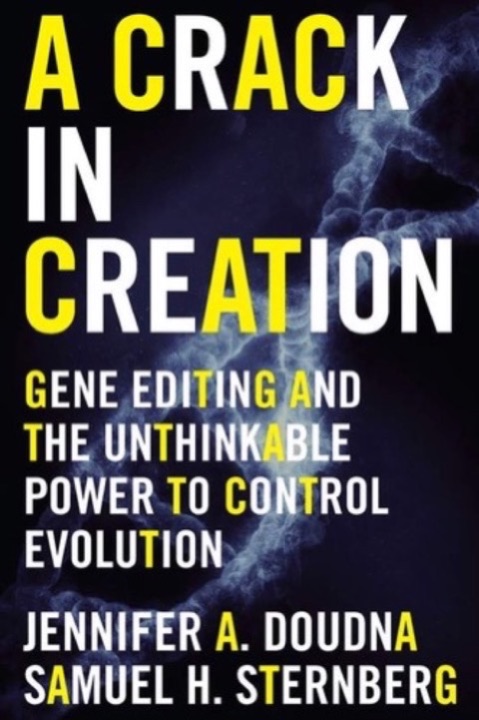
A Crack in Creation: Gene Editing and the Unthinkable Power to Control Evolution
Applying the lessons from "A Crack in Creation" to your life involves integrating the insights and ethical considerations of CRISPR technology with your personal values and experiences. Here’s how you might do that:
-
Embrace Interdisciplinary Collaboration: Given your background and interests, you can foster collaboration between different fields, such as medicine, ethics, and technology. This aligns with your belief in teamwork and could enhance your work in the medical field or advocacy efforts.
-
Engage in Public Dialogue: Use your communication skills and direct style to engage others in discussions about the ethical implications of gene editing. Your ability to connect with people can help bridge the gap between scientific advancements and public understanding.
-
Advocate for Responsible Use of Technology: Your passion for social issues and equality can drive you to advocate for ethical guidelines in gene editing. You can leverage your influence to ensure that CRISPR technology is used to benefit society equitably.
-
Reflect on Personal Growth and Resilience: The book’s themes of innovation and responsibility resonate with your personal philosophy of resilience and lifelong learning. Continue to apply these principles in your personal and professional life, especially when facing challenges.
-
Promote Education and Awareness: Given your belief in public engagement, you can contribute to educational initiatives that inform others about the potential and risks of gene editing. This aligns with your commitment to transparency and education.
-
Balance Optimism with Caution: As an eternal optimist, you can balance your hopeful outlook with the caution advised by the authors. This approach can guide your decision-making in both personal and professional contexts, ensuring that you remain open to innovation while considering ethical implications.
-
Incorporate Ethical Considerations in Decision-Making: Your strong ethical beliefs can guide you in making decisions related to gene editing, whether in your medical practice or advocacy work. Ensure that kindness and empathy remain at the forefront of these decisions.
By integrating these lessons into your life, you can contribute to the responsible development and application of gene editing technologies while staying true to your core values and beliefs.
What the book covers
"A Crack in Creation: Gene Editing and the Unthinkable Power to Control Evolution" is a compelling exploration of the revolutionary technology known as CRISPR-Cas9, co-authored by Jennifer A. Doudna, one of the pioneers of this groundbreaking gene-editing tool, and Samuel H. Sternberg. The book delves into the science behind CRISPR, its development, and the profound implications it holds for the future of biology, medicine, and society.
Summary:
-
Origins and Discovery: - The book begins with the story of how CRISPR was discovered. Initially observed in bacteria as a natural defense mechanism against viruses, CRISPR-Cas9 was later harnessed as a precise tool for editing genes. Doudna and her colleagues played a crucial role in transforming this natural process into a powerful technology.
-
Mechanism of CRISPR-Cas9: - CRISPR-Cas9 works like molecular scissors, allowing scientists to cut DNA at specific locations. This enables the removal, addition, or alteration of genetic material with unprecedented precision. The authors explain the science in an accessible manner, making it understandable for readers without a background in genetics.
-
Applications and Potential: - The book explores the vast potential applications of CRISPR, from curing genetic diseases to improving agricultural crops. It highlights successful experiments, such as correcting genetic defects in animals and developing disease-resistant plants.
-
Ethical and Social Implications: - Doudna and Sternberg address the ethical dilemmas posed by gene editing. They discuss the potential for "designer babies," the risks of unintended consequences, and the moral responsibility of wielding such a powerful tool. The authors advocate for a global dialogue to establish guidelines and regulations.
-
Personal Reflections: - Doudna shares her personal journey and the challenges faced during the development of CRISPR. Her reflections provide insight into the scientific process and the collaborative nature of research.
-
Future Prospects: - The book concludes with a look at the future of gene editing. The authors express optimism about the potential benefits but caution against unchecked use. They emphasize the need for responsible stewardship of this technology.
Key Takeaways and Lessons:
-
Power and Responsibility: CRISPR-Cas9 offers immense power to alter life at its most fundamental level. With this power comes the responsibility to use it ethically and wisely.
-
Interdisciplinary Collaboration: The development of CRISPR underscores the importance of collaboration across disciplines. Scientists, ethicists, policymakers, and the public must work together to navigate the challenges and opportunities presented by gene editing.
-
Public Engagement: Engaging the public in discussions about gene editing is crucial. Transparency and education can help build trust and ensure that societal values are reflected in the development and application of this technology.
-
Regulation and Oversight: Establishing clear guidelines and regulations is essential to prevent misuse and ensure that the benefits of gene editing are realized safely and equitably.
-
Continued Research and Innovation: While CRISPR is a powerful tool, ongoing research is necessary to refine its accuracy and address potential risks. Innovation should be encouraged, but with careful consideration of ethical implications.
In summary, "A Crack in Creation" is both an informative and thought-provoking book that provides a comprehensive overview of CRISPR-Cas9. It challenges readers to consider the profound impact of gene editing on the future of humanity and the natural world.