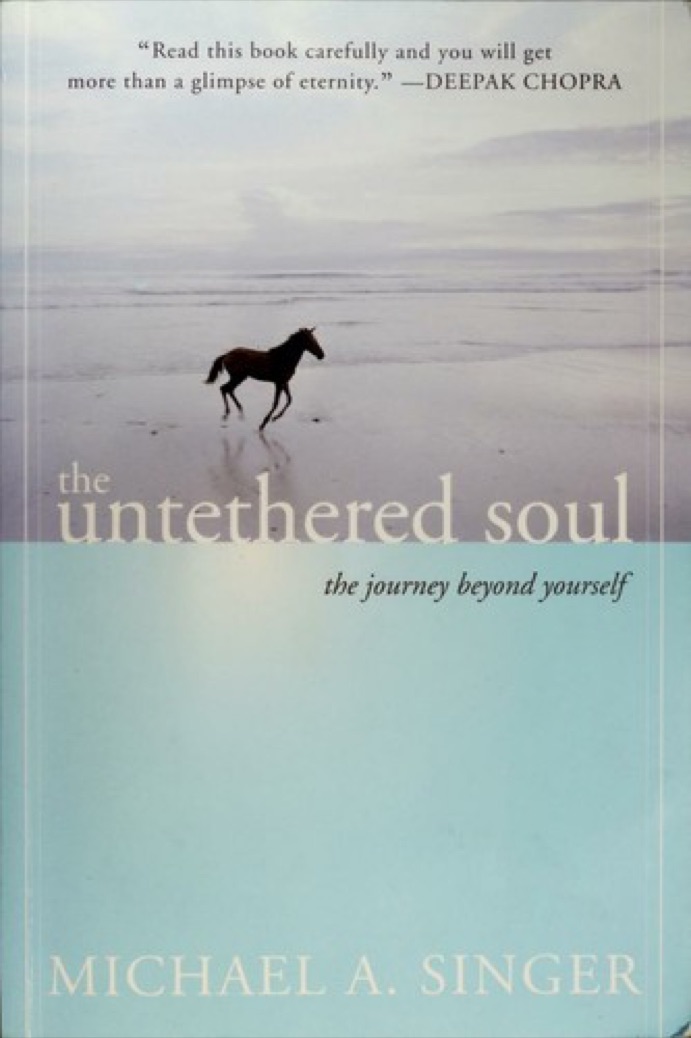
The Untethered Soul: The Journey Beyond Yourself
Applying the lessons from "The Untethered Soul: The Journey Beyond Yourself: Key Takeaways, Analysis & Review" by Eureka Books to your life can be a transformative exercise in developing psychological resilience and peak performance. Here are some ways you might integrate these lessons:
-
Develop Operational Equanimity: - In high-stakes environments like the emergency room or the cockpit, the ability to remain the "Witness" is critical. You can practice detaching from the immediate physiological surge of adrenaline or stress by recognizing them as external signals rather than your core identity, allowing you to make more objective, life-saving decisions under pressure.
-
Master the Inner Dialogue in Leadership: - As an entrepreneur or venture capitalist, your "inner roommate" may fluctuate between overconfidence and paralyzing doubt. By identifying this voice as a byproduct of the ego rather than a source of strategic truth, you can filter out emotional noise and focus on the fundamental data and long-term vision of your ventures.
-
Practice the "Relax and Release" Method: - When faced with legal setbacks, failed investments, or clinical complications, your instinct may be to tighten up and resist the situation. Instead, consciously practice relaxing your body and releasing the mental resistance; this prevents the formation of "Samskaras" or emotional baggage that could cloud your judgment in future professional endeavors.
-
Commit to Unconditional Presence: - Whether you are in a boardroom or with your family, the quality of your presence is your most valuable asset. Integrate the habit of staying "open" even when tired or frustrated, ensuring that your interactions are driven by your conscious intent rather than reactive patterns or past grievances.
-
Leverage Mortality for Strategic Focus: - Use the perspective of death as a tool for prioritization. In a career defined by diverse interests—from medicine to aviation to law—regularly ask yourself if your current project is worth your finite time, using the clarity of mortality to prune away distractions and double down on your most impactful work.
-
Foster a Culture of Consciousness: - In your leadership roles, model the behavior of non-attachment to ego. When a team member offers a critique or a market shift occurs, show that you are not tethered to being "right," but rather to finding the truth, thereby encouraging a culture of agility and transparency within your organizations.
By integrating these lessons, you move beyond the reactive patterns of the psyche to a state of proactive, conscious leadership. This shift not only enhances your effectiveness across multiple disciplines but also ensures that your drive to "Stay Hungry" is balanced by an internal peace that is independent of your professional achievements.
What the book covers
"The Untethered Soul: The Journey Beyond Yourself: Key Takeaways, Analysis & Review" by Eureka Books is a comprehensive distillation of Michael A. Singer’s foundational work on spiritual consciousness and self-realization. This analysis breaks down complex metaphysical concepts into actionable insights, focusing on the mechanics of the human mind and the path to emotional liberation. By examining the relationship between the observer and the observed, the book serves as a roadmap for anyone seeking to transcend the limitations of their ego and internal dialogue.
Summary:
-
The Nature of the Witnessing Consciousness: - The book posits that the most fundamental part of the human experience is not the thoughts we have, but the consciousness that observes those thoughts. This "Witness" is the true self, a neutral observer that exists independently of the mental chatter, emotions, and external circumstances that typically dominate human attention. - By identifying with the Witness rather than the "inner roommate"—the constant stream of mental dialogue—individuals can create a psychological distance that prevents them from being swept away by anxiety, judgment, or reactive impulses.
-
Silencing the Inner Roommate: - The analysis highlights Singer’s metaphor of the "inner roommate," the neurotic voice in our heads that constantly narrates reality and offers unsolicited opinions. This voice is often driven by fear and a desire for control, creating a barrier between the individual and the actual experience of life. - To achieve peace, one must recognize that this voice is not the self; it is simply a byproduct of the mind. Observing this voice without trying to stop it or arguing with it allows its power to dissipate, eventually leading to a state of internal quietude.
-
Managing the Heart’s Energy: - The book explores the concept of the heart as an energy center that can either be open or closed. When we experience pain or fear, our natural tendency is to close our hearts to protect ourselves, which blocks the flow of vital life energy, often referred to as Shakti or Chi. - Maintaining an "open heart" requires the conscious choice to stay present through discomfort. By refusing to close up during difficult moments, an individual allows energy to flow freely, leading to sustained states of inspiration and love regardless of external events.
-
Releasing the Samskaras: - A critical argument presented is the existence of "Samskaras," or past impressions and traumas that remain lodged in the psyche. These blockages act as filters that distort our perception of the present, causing us to overreact to situations that trigger old wounds. - The path to freedom involves "relaxing and releasing" when these triggers occur. Instead of fighting the discomfort, one should lean into it and let the energy pass through the consciousness, effectively clearing the blockage and preventing it from influencing future behavior.
-
The Trap of the Ego and the Psyche: - The text examines how the ego builds a "house" of preferences, dislikes, and self-concepts to feel safe in a world it cannot control. This mental structure creates a limited reality where the individual is constantly trying to make the world conform to their specific needs. - True liberation comes from stepping outside this self-constructed cage. By acknowledging that the ego is a defensive mechanism, the individual can begin to live in the seat of consciousness, experiencing life as it is rather than how the ego demands it to be.
-
The Perspective of Mortality: - Death is presented as a powerful teacher and a tool for clarity. The book argues that by keeping the reality of death in mind, the trivial concerns of the ego lose their significance, and the individual is motivated to live fully in the present moment. - Contemplating mortality helps prioritize meaningful actions and relationships, encouraging a life lived with urgency and purpose. It strips away the fear of social judgment and highlights the preciousness of every conscious breath.
-
The Path of Unconditional Happiness: - The final sections focus on the choice of happiness as an absolute commitment. This involves deciding that no matter what happens—regardless of financial loss, personal tragedy, or physical pain—one will remain open and centered in their consciousness. - This is not a state of denial but a high level of spiritual discipline. It is the ultimate expression of the untethered soul: a state where internal well-being is no longer contingent upon the fluctuations of the outside world.
This analysis of Singer’s work is significant because it translates esoteric spiritual concepts into a practical framework for modern psychological health. It emphasizes that the key to a meaningful life lies not in changing one's external environment, but in fundamentally shifting the vantage point from which one experiences existence.