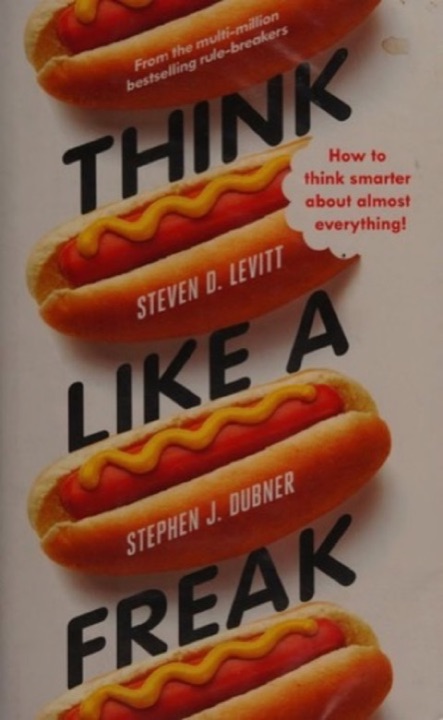
Think Like a Freak
Applying the lessons from "Think Like a Freak" by Steven D. Levitt and Stephen J. Dubner to your life can enhance your problem-solving skills and decision-making processes. Here's how you might integrate these concepts into your personal and professional life:
-
Question Assumptions: - Reflect on your beliefs and practices, especially those that have remained unchanged over time. Challenge these assumptions to see if they still hold true or if there might be a more effective approach. For instance, consider reevaluating your perspectives on organized religion or political views to ensure they align with your current values and experiences.
-
Embrace Curiosity: - Cultivate a mindset of curiosity in your daily activities. Whether it's exploring new hobbies like skydiving or delving deeper into your interests like flying and reading, maintain an open mind and seek out new experiences and knowledge.
-
Use Data Wisely: - In your professional life as a physician, rely on data and evidence-based practices to guide your decisions. Similarly, in personal matters, gather information and analyze it before making important choices, such as those related to family health or social issues.
-
Understand Incentives: - Consider the incentives that drive your behavior and those around you. This understanding can help you navigate relationships and interactions more effectively, whether in your advocacy work or personal life.
-
Be Willing to Quit: - Recognize when it's time to let go of unproductive endeavors. This could mean reassessing commitments that no longer serve you or redirecting your efforts toward more fulfilling pursuits, like spending time with family or engaging in activism.
-
Think Small: - Break down larger goals into smaller, manageable steps. For example, if you aspire to live in the moment, start by setting aside specific times each day to practice mindfulness or gratitude.
-
Communicate Effectively: - Use your direct, humorous communication style to connect with others and persuade them of your viewpoints. Incorporate storytelling and empathy to make your messages more relatable and impactful.
By integrating these principles into your life, you can approach challenges with a fresh perspective, leading to innovative solutions and personal growth. Your resilience, humor, and kindness will be valuable assets as you navigate this journey.
What the book covers
"Think Like a Freak" by Steven D. Levitt and Stephen J. Dubner is a book that encourages readers to approach problems and decision-making with a fresh perspective, challenging conventional wisdom and traditional thinking. The authors, known for their work on the "Freakonomics" series, use a combination of storytelling, economic theory, and data analysis to illustrate how thinking differently can lead to innovative solutions.
Summary:
-
Introduction to Thinking Like a Freak: - The authors introduce the concept of thinking like a "freak," which involves questioning assumptions, embracing curiosity, and being willing to look at problems from unconventional angles. They emphasize the importance of asking the right questions to get to the root of a problem.
-
The Power of Incentives: - Levitt and Dubner explore how incentives drive behavior and how understanding these incentives can help predict and influence outcomes. They discuss both positive and negative incentives and the unintended consequences that can arise from them.
-
The Importance of Admitting What You Don’t Know: - A key theme is the value of acknowledging ignorance. The authors argue that admitting what you don’t know is crucial for learning and problem-solving. They encourage readers to be open to new information and perspectives.
-
The Value of Thinking Like a Child: - The book suggests that thinking like a child—being curious, asking simple questions, and not being afraid to look foolish—can lead to breakthroughs. Children’s natural curiosity and lack of preconceived notions can be powerful tools in problem-solving.
-
The Role of Data and Experimentation: - Levitt and Dubner emphasize the importance of data and experimentation in understanding the world. They advocate for testing hypotheses and using data to inform decisions rather than relying solely on intuition or tradition.
-
The Art of Persuasion: - The authors discuss strategies for persuading others, highlighting the importance of understanding the audience’s perspective and using stories to make arguments more relatable and compelling.
-
The Benefits of Quitting: - Contrary to the common belief that quitting is inherently negative, the authors argue that knowing when to quit can be a valuable skill. They discuss the concept of opportunity cost and the importance of focusing on endeavors that offer the best potential returns.
-
The Importance of Thinking Small: - Instead of trying to solve massive, complex problems all at once, the authors suggest breaking them down into smaller, more manageable parts. This approach can make it easier to identify solutions and implement changes effectively.
Key Takeaways and Lessons:
- Question Assumptions: Always challenge the status quo and be willing to question established beliefs and practices.
- Embrace Curiosity: Cultivate a mindset of curiosity and openness to new ideas and information.
- Use Data Wisely: Rely on data and experimentation to guide decisions rather than assumptions or gut feelings.
- Understand Incentives: Recognize the power of incentives in shaping behavior and outcomes.
- Be Willing to Quit: Know when to walk away from unproductive endeavors to focus on more promising opportunities.
- Think Small: Break down large problems into smaller, more manageable parts to find effective solutions.
- Communicate Effectively: Use storytelling and empathy to persuade and communicate ideas more effectively.
Overall, "Think Like a Freak" encourages readers to adopt a mindset that is analytical, curious, and open to unconventional solutions, ultimately leading to more effective problem-solving and decision-making.