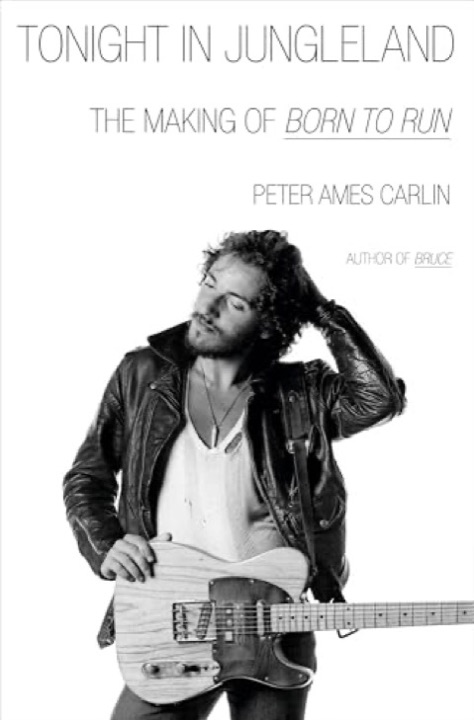
Tonight in Jungleland: The Making of Born to Run
Applying the lessons from "Tonight in Jungleland: The Making of Born to Run" by Peter Ames Carlin to your life can be a powerful catalyst for understanding the grit and precision required to achieve professional excellence. Here are some ways you might integrate these lessons:
-
Embrace Iteration as a Path to Quality: - In your professional endeavors, whether in the operating room or a corporate boardroom, you must accept that the first version is rarely the best. Just as Springsteen spent six months on one song, you should be willing to refine your processes and "re-record" your strategies until the output matches the high standards of your original vision.
-
Curate the Right Ensemble for the Mission: - Leadership requires the humility to recognize when your current team lacks the specific skills needed for the next level of growth. You must be willing to make difficult personnel changes, as Bruce did, to find the "Max Weinberg" or "Roy Bittan" of your organization—individuals whose technical precision complements your creative or strategic direction.
-
Seek the "Landau" in Your Life: - Every high-achiever needs an objective, critical voice to cut through the fog of their own obsession. You should actively seek out mentors or partners who can tell you the truth about your work, helping you distinguish between productive perfectionism and aimless over-tinkering.
-
Operate with "Last Chance" Urgency: - Even when you have achieved success, there is value in maintaining the "Stay Hungry" mindset of someone whose career is on the line. By treating every major project as a defining moment for your legacy, you ensure that you never settle for mediocrity or rely solely on past reputation.
-
Balance Vision with Technical Discipline: - Whether flying an aircraft or scaling a healthcare startup, you must bridge the gap between grand ideas and granular execution. This book teaches you that a great "song" requires both the poetic inspiration of the lyrics and the grueling, technical discipline of the mixing board.
By integrating these lessons, you move beyond the myth of the "overnight success" and embrace the reality of the relentless pursuit required for greatness. This book serves as a reminder that the most enduring achievements often come from a willingness to risk everything on a vision, provided you have the discipline to refine that vision until it is undeniable.
What the book covers
"Tonight in Jungleland: The Making of Born to Run" by Peter Ames Carlin is a definitive account of the grueling 14-month creative marathon that saved Bruce Springsteen’s career and redefined American rock and roll. The book meticulously chronicles the high-stakes recording sessions at 914 Sound Studios and the Record Plant, where a young songwriter faced the "last chance power drive" of his professional life. Carlin explores the complex interplay of artistic obsession, technical innovation, and the high-pressure dynamics between a perfectionist leader and his band. By dissecting the composition and production of each track, the narrative reveals the immense labor required to manifest a vision that would eventually catapult Springsteen onto the covers of Time and Newsweek simultaneously.
Summary:
-
The Make-or-Break Stakes: - Carlin establishes the atmospheric pressure of 1974, where Springsteen was viewed by Columbia Records as a commercial disappointment after his first two albums. With his contract on the line, the book illustrates how Springsteen internalised this pressure, viewing the "Born to Run" project not just as music, but as a final stand for his artistic survival.
-
The Evolution of the E Street Band: - The narrative details the critical personnel shifts that defined the album's sound, specifically the departure of drummer Vini Lopez and keyboardist David Sancious. Carlin describes the arrival of Max Weinberg and Roy Bittan as the missing pieces that provided the rhythmic precision and cinematic piano foundation necessary to support Bruce’s increasingly complex arrangements.
-
The Six-Month Struggle for a Single Track: - A central focus of the book is the exhaustive effort to record the title track, "Born to Run," which alone took six months to perfect. Carlin dives into the technical minutiae of the "Wall of Sound" production style, documenting how Bruce chased a specific, elusive frequency that combined the energy of early rock with the grandeur of an orchestral score.
-
The Landau Intervention: - The book highlights the pivotal relationship between Springsteen and rock critic Jon Landau, who famously wrote, "I saw rock and roll future." Carlin tracks Landau’s transition from an outside observer to a co-producer who provided the objective editorial eye Springsteen needed to cut through his own indecision and focus the album’s sprawling themes.
-
The Shift to the Record Plant: - After struggling in the rustic environment of 914 Sound Studios, the production moved to the Record Plant in Manhattan. Carlin describes this move as a turning point that brought a harder, more urban edge to the recordings, facilitating the birth of epic tracks like "Jungleland" and the bittersweet nostalgia of "Thunder Road."
-
The Perils of Perfectionism: - The final chapters detail the harrowing mixing process, where Springsteen’s obsessive attention to detail nearly led him to scrap the entire project. Carlin recounts the famous anecdote of Bruce throwing the master tapes into a hotel pool (or threatening to) in a fit of despair, illustrating the thin line between creative genius and self-destruction.
This work serves as a masterclass in the history of creative endurance, documenting the precise moment when a cult favorite became a global icon. Carlin’s account strips away the myth of effortless cool to reveal the sweat, doubt, and relentless revision that underpin one of the greatest cultural artifacts of the twentieth century.