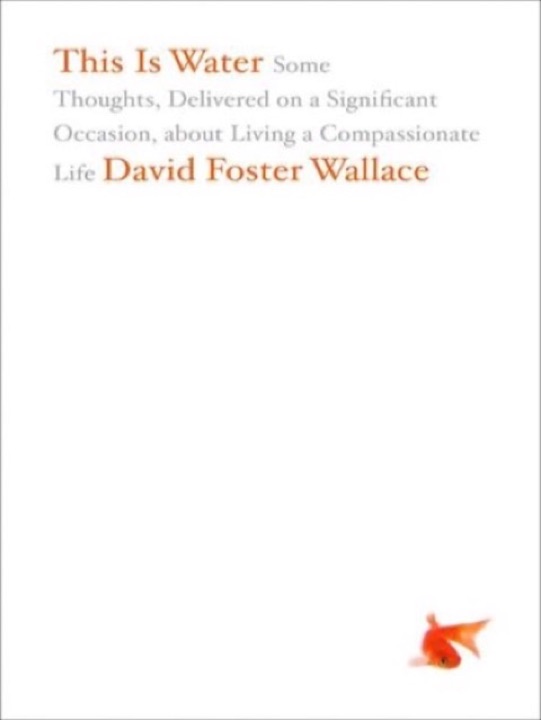
This is Water
Applying the lessons from David Foster Wallace's "This is Water" to your life can enhance your awareness, empathy, and overall fulfillment. Here’s how you might integrate these insights:
-
Cultivate Awareness: - Reflect on the "water" in your life—the everyday realities and routines that you might take for granted. Given your rich life experiences, from near-death situations to personal achievements, take time to appreciate the present moment and the subtleties of daily life. - Practice mindfulness in your daily routine, whether during your morning workout or while spending time with your grandchild. This can help you stay grounded and aware of the beauty in ordinary moments.
-
Challenge the Default Setting: - Recognize when you might be operating on autopilot, especially in stressful or routine situations. For instance, when dealing with frustrating situations at work or in daily life, consciously choose to view them from a different perspective. - Use your humor and empathy to shift your mindset from self-centered to other-centered, considering the struggles and stories of those around you.
-
Exercise the Power of Choice: - Embrace your ability to choose how you perceive and react to situations. Your resilience and persistence are strengths that can help you navigate challenges with a positive outlook. - When faced with difficult decisions or interactions, remember that you have the power to choose kindness and understanding, aligning with your core values.
-
Empathy and Perspective: - Continue to practice empathy by imagining the lives and struggles of others, as you already do in your advocacy work. This can deepen your connections and reduce frustration in challenging interactions. - Use your direct and humorous communication style to foster understanding and compassion in your relationships.
-
Value of Education and Lifelong Learning: - Embrace the idea that education is about learning how to think critically and consciously. Your commitment to being a lifelong learner aligns with this principle, allowing you to continually grow and adapt. - Encourage others, especially your children and grandchild, to value education as a tool for personal growth and awareness.
By integrating these lessons into your life, you can enhance your ability to live with greater awareness, empathy, and intentionality, ultimately leading to a more compassionate and fulfilling existence.
What the book covers
"This is Water" is a commencement speech delivered by David Foster Wallace at Kenyon College in 2005. It was later published as a book. The speech is renowned for its insightful exploration of the challenges of adult life and the importance of awareness and empathy.
Summary:
Introduction: Wallace begins with a parable about two young fish swimming along who encounter an older fish that asks them, "How's the water?" After swimming on, one young fish asks the other, "What the hell is water?" This story sets the stage for the speech's central theme: the most obvious, ubiquitous, and important realities are often the hardest to see and talk about.
Default Setting: Wallace discusses the concept of the "default setting," which is the natural, self-centered way people tend to perceive the world. He argues that our default setting is to interpret everything through the lens of our own immediate needs and desires, leading to a narrow and often selfish perspective.
Conscious Awareness: The speech emphasizes the importance of conscious awareness and choice. Wallace suggests that true freedom involves the ability to choose how to think and what to pay attention to. By being aware of our default setting, we can choose to see the world in a more empathetic and compassionate way.
Daily Life and Routine: Wallace uses the example of a mundane day in adult life, such as grocery shopping after a long day at work, to illustrate how easy it is to fall into the default setting. He describes the frustration and irritation that can arise in such situations and suggests that by choosing to think differently, we can transform our experience.
Empathy and Perspective: A key message of the speech is the importance of empathy and considering other people's perspectives. Wallace encourages graduates to imagine the lives and struggles of those around them, recognizing that everyone has their own challenges and stories.
The Value of Education: Wallace argues that the true value of a liberal arts education is learning how to think, rather than simply acquiring knowledge. This involves being aware of our thoughts and choosing how to interpret our experiences.
Key Takeaways and Lessons:
-
Awareness is Crucial: The most important realities are often the hardest to see. Being aware of our surroundings and our own thought processes can lead to a more meaningful life.
-
Challenge the Default Setting: Our natural inclination is to be self-centered. By recognizing this, we can choose to think differently and act with empathy and compassion.
-
The Power of Choice: We have the power to choose how we perceive and react to the world. This choice is a form of freedom and can lead to a more fulfilling life.
-
Empathy and Understanding: By considering other people's perspectives and struggles, we can cultivate empathy and reduce our own frustration and irritation.
-
Education's True Value: The ability to think critically and consciously is the true benefit of education, enabling us to navigate life's challenges with greater awareness and intentionality.
"This is Water" is a profound meditation on the human condition, encouraging readers to live with greater awareness and empathy, ultimately leading to a more compassionate and fulfilling life.